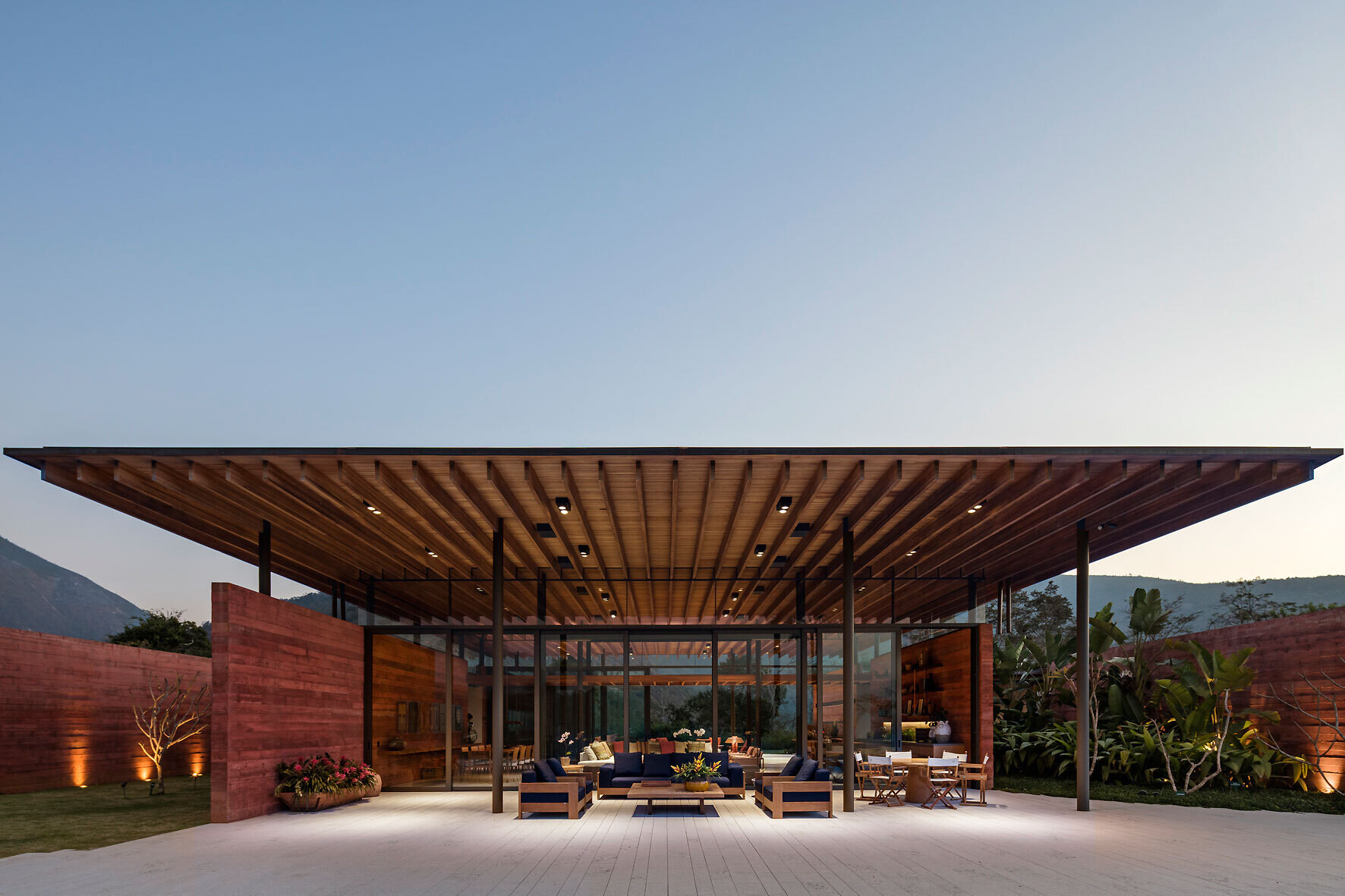

Set into the mountains of Itaipava, just outside Rio de Janeiro, Casa Terra is a modern Brazilian home that proves concrete does not have to feel cold or severe. Designed by Bernardes Arquitetura, the house uses pigmented concrete walls as both structure and statement, shaping how the spaces flow, how light moves through the home, and how the landscape is experienced at every turn.
A modern house shaped by concrete
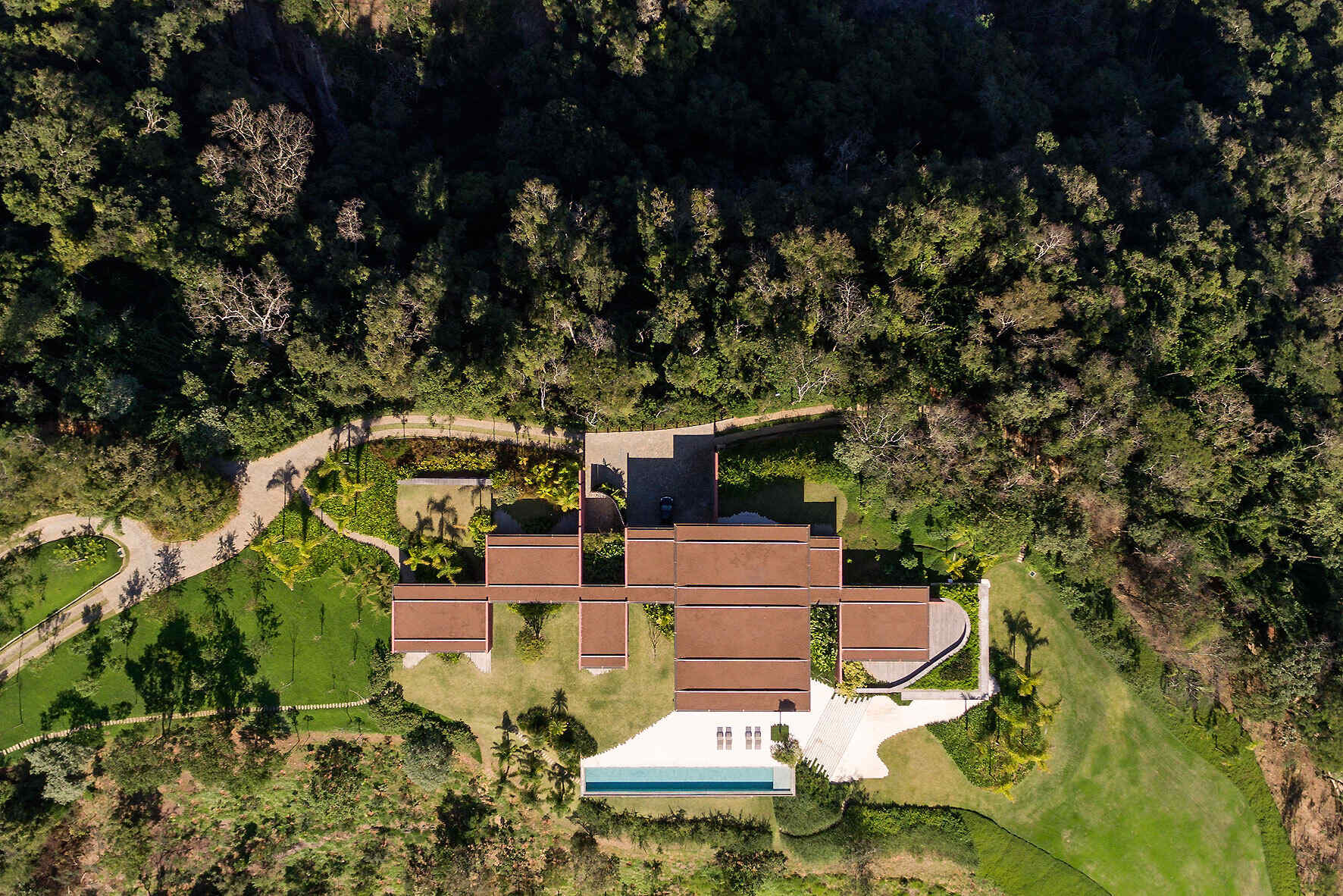
The home has been designed as a series of carefully positioned pigmented concrete walls, immediately giving the home a strong visual identity. Rather than acting as simple dividers, these walls define the architecture itself, setting the rhythm for how rooms are arranged and how the house is experienced from the moment you enter. The concrete is not hidden or softened. Instead, it is celebrated, creating a bold but refined backdrop that runs throughout the home.
A mountain setting designed for views
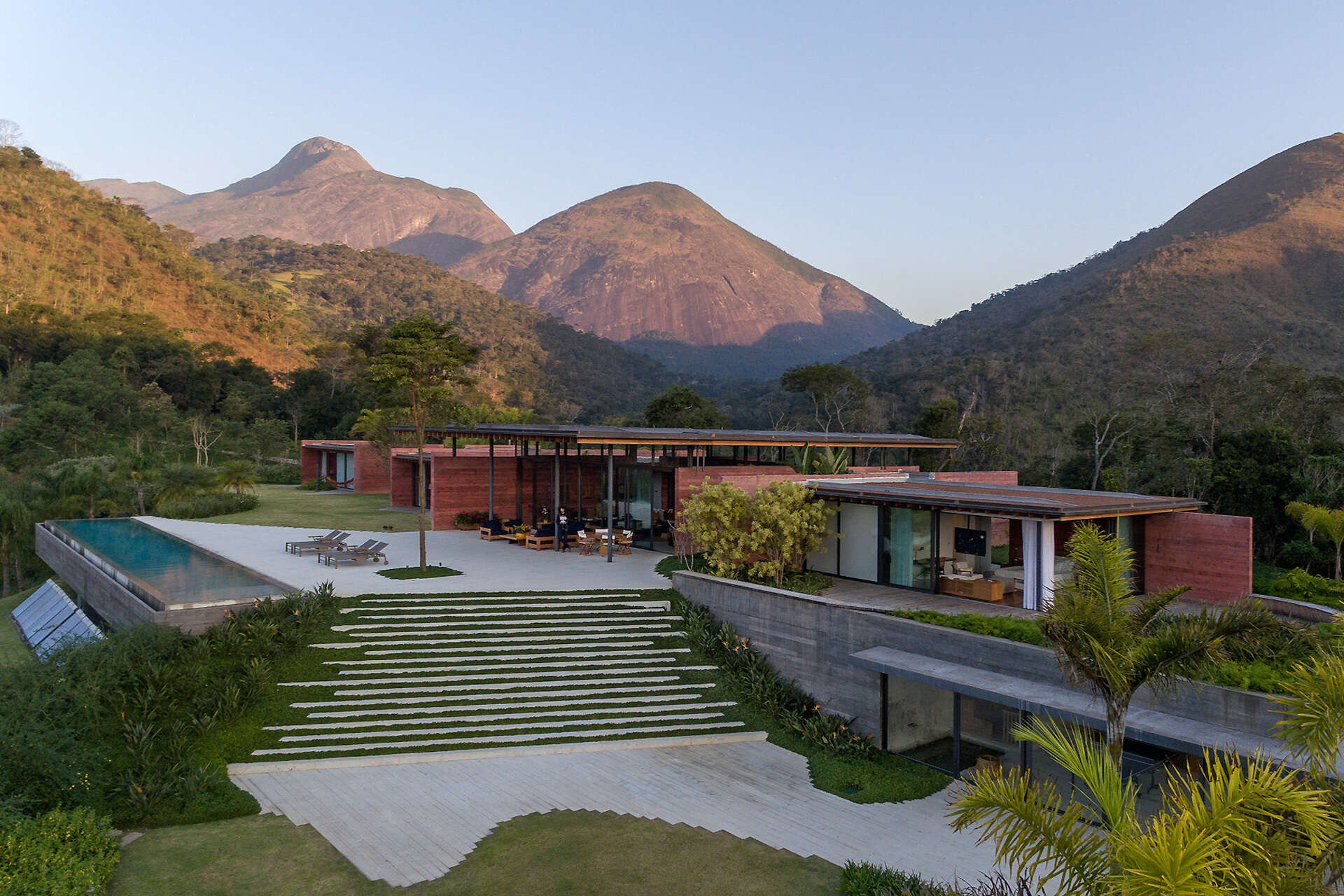
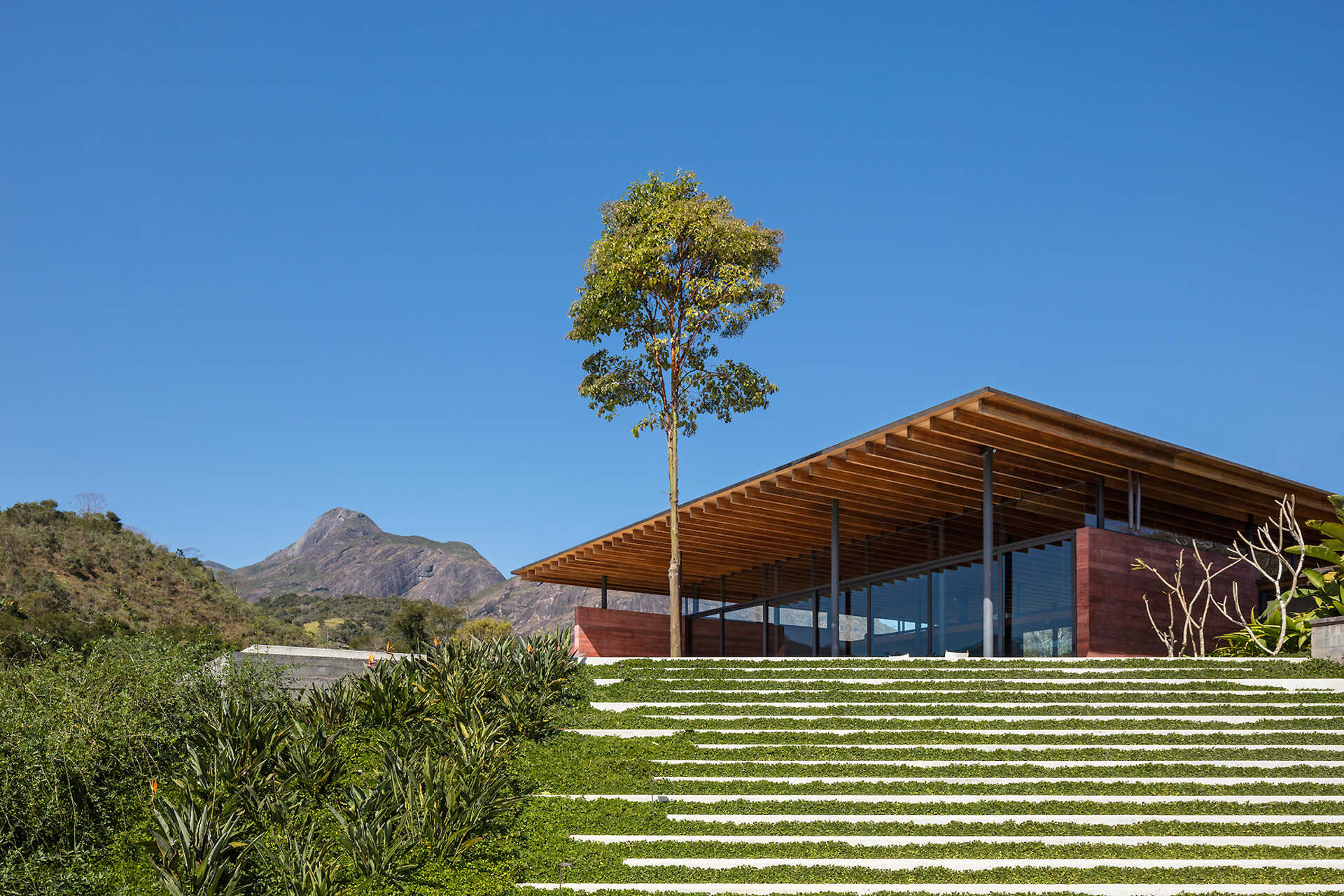
Surrounded by mountains and set on a sloped lot, the house is carefully positioned to make the most of its dramatic surroundings. Landscaping plays a key role, shaping outdoor areas that feel usable rather than purely decorative.
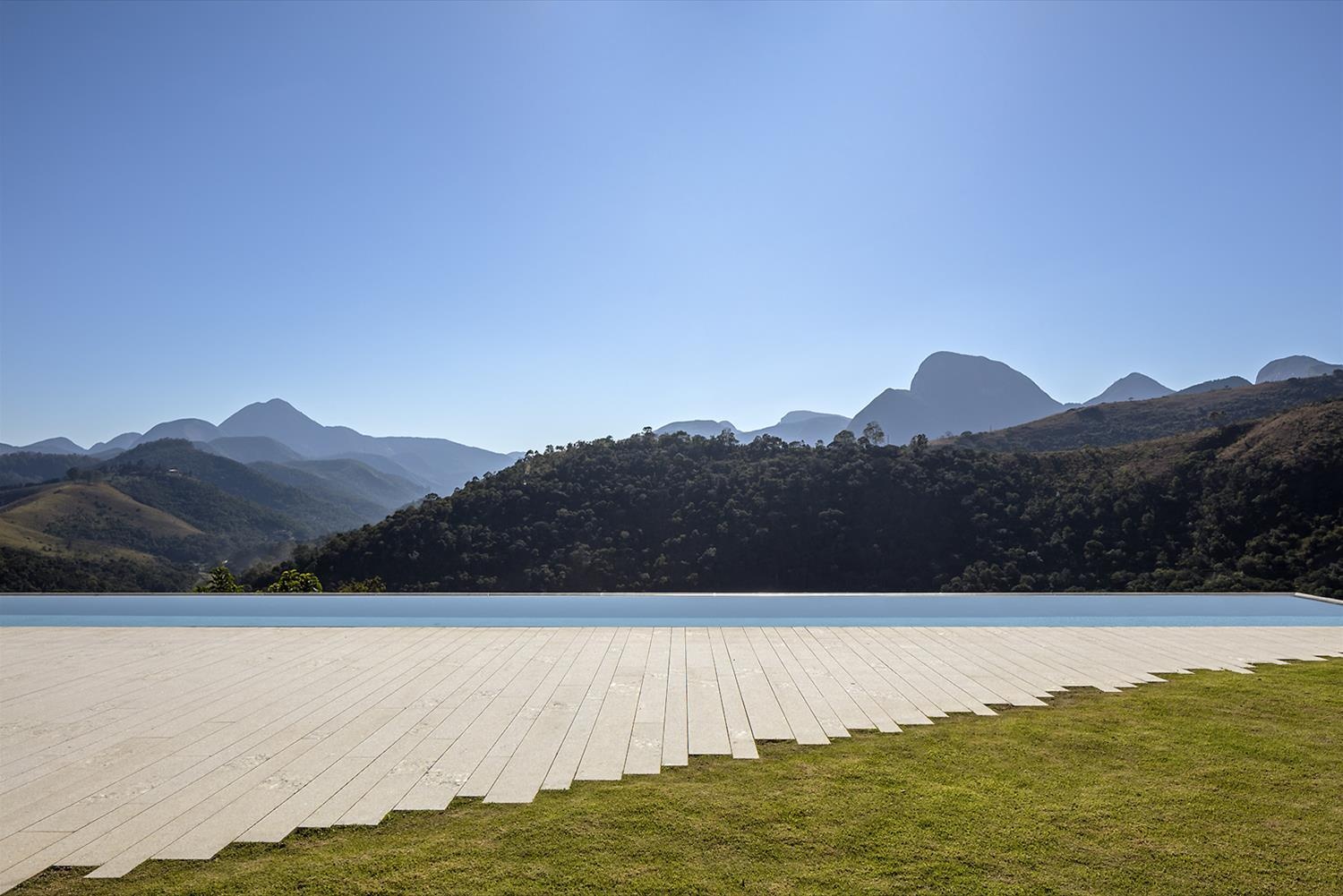
A large patio extends out toward the main garden, where an infinity edge swimming pool visually merges with the landscape beyond. From here, the mountainous setting becomes part of daily life, visible from multiple points throughout the home.
Covered outdoor living under a timber roof
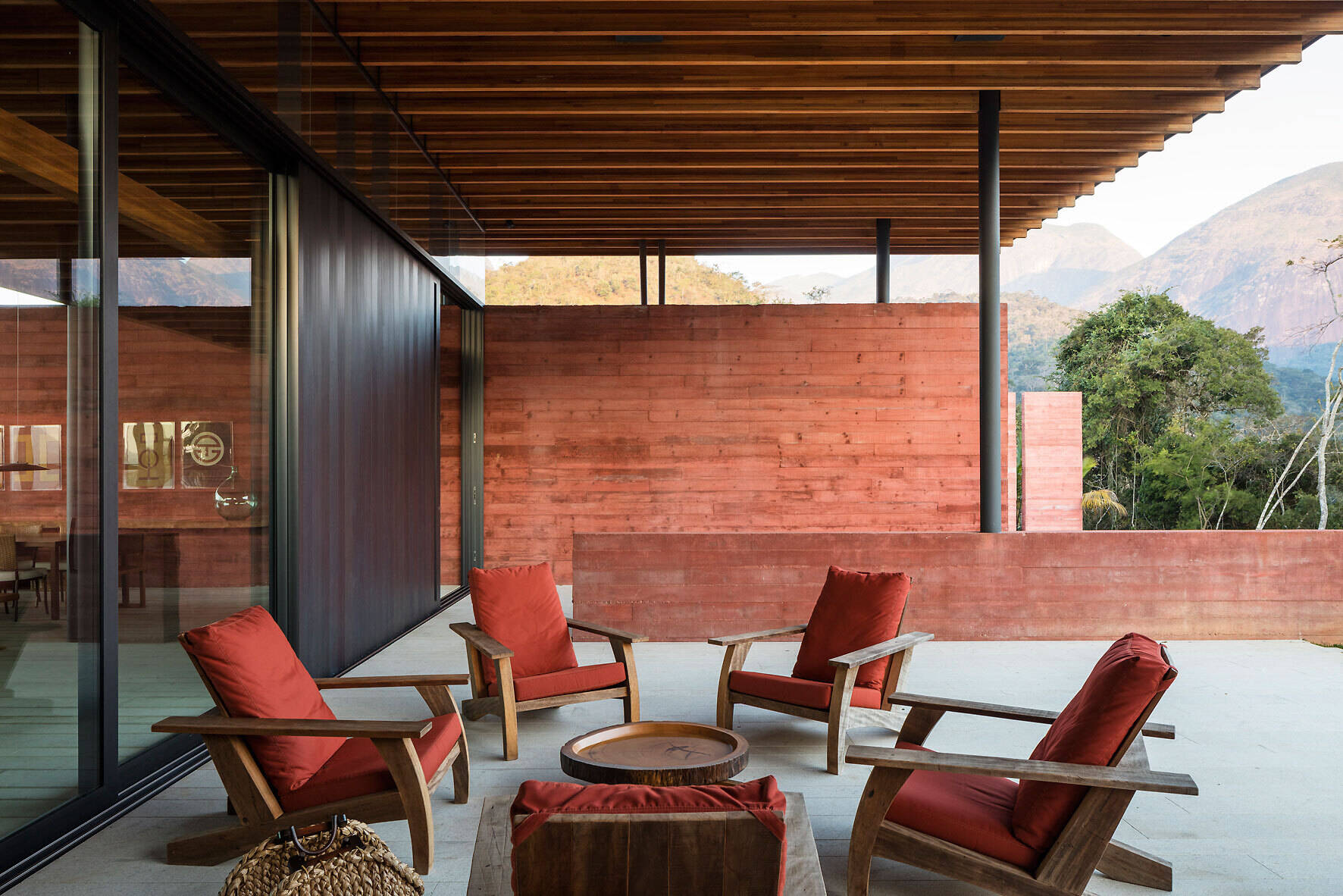
A large wood roof stretches across the main outdoor area, creating a sheltered space for seating and relaxation. This roof brings warmth and balance to the pigmented concrete below, softening the home’s strong geometry. Large windows and sliding glass doors sit beneath this timber canopy, allowing natural light to pour into the interiors while keeping a constant visual connection to the outdoors.
Concrete walls define the social spaces
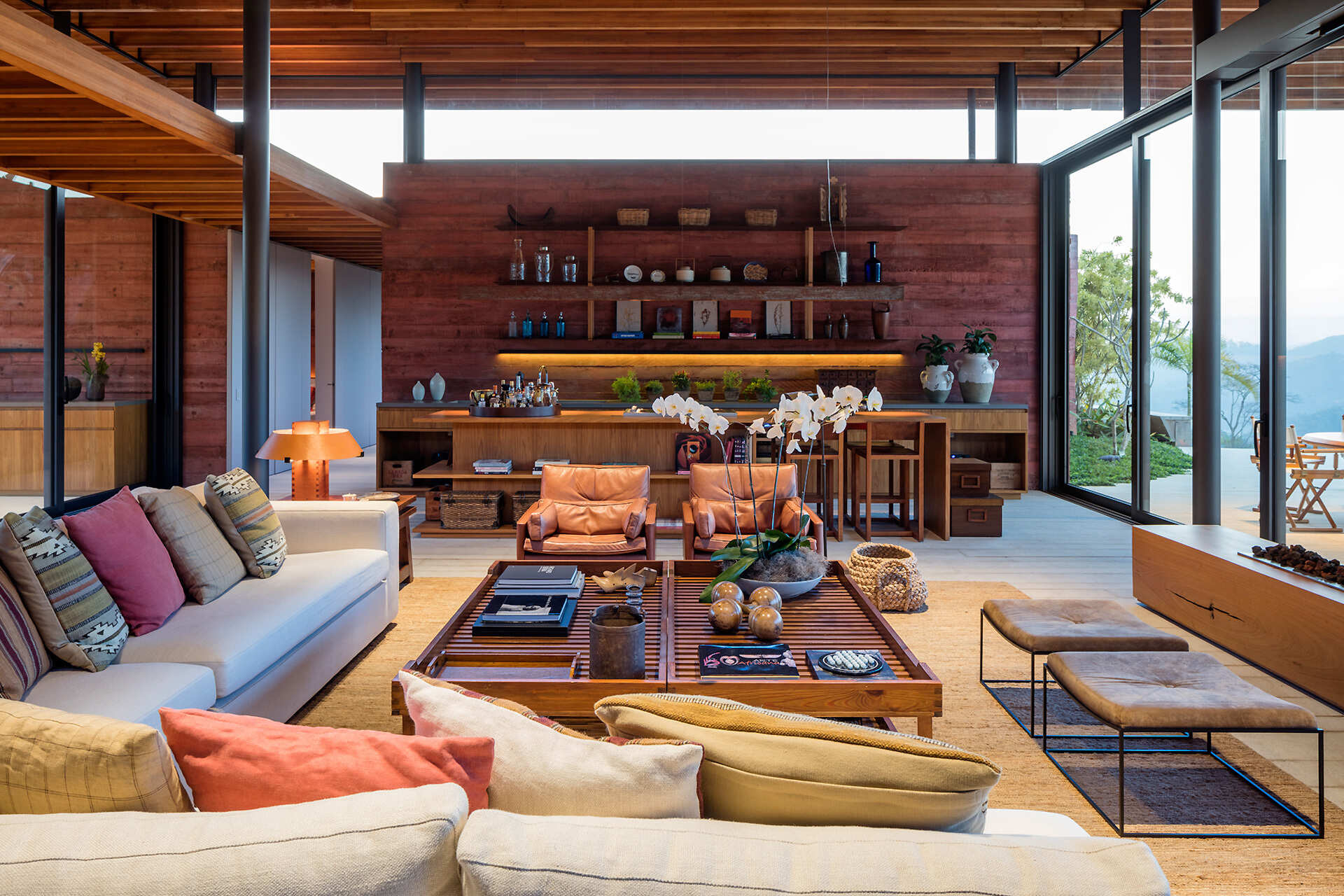
Inside, the pigmented concrete walls continue to take center stage. They form a colorful and textured backdrop for the bar, living room, and dining area, giving these shared spaces a strong sense of character.
Rather than overwhelming the interiors, the concrete adds depth and warmth, especially when paired with the natural light that flows in through the large glass openings.
A hallway that connects it all
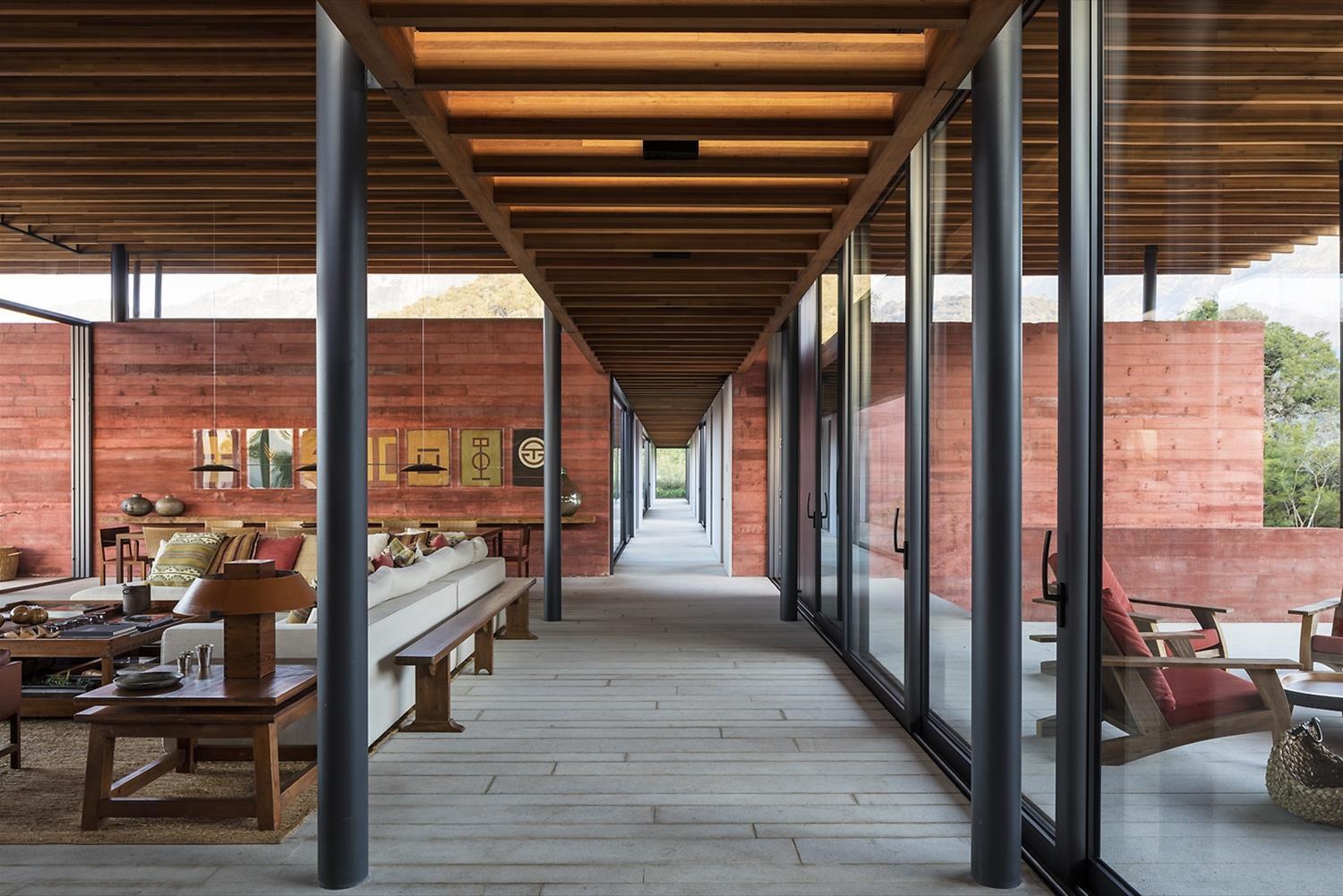
A long hallway acts as the spine of the house, connecting the social spaces to the more private areas. This central circulation route reflects the architects’ concept of parallel walls arranged perpendicular to the main axis, creating a sequence of openings and more enclosed moments along the way. As you move through the hallway, there is constant visual contact with the exterior, thanks to large glass panels that blur the boundary between inside and out.
A home office that reaches outward
Branching off from the hallway is a home office designed with both work and relaxation in mind. It includes a couch alongside the work area and subtly extends outward from the main circulation path. This outward extension reinforces the idea that even functional spaces are connected to the outdoors, rather than tucked away.
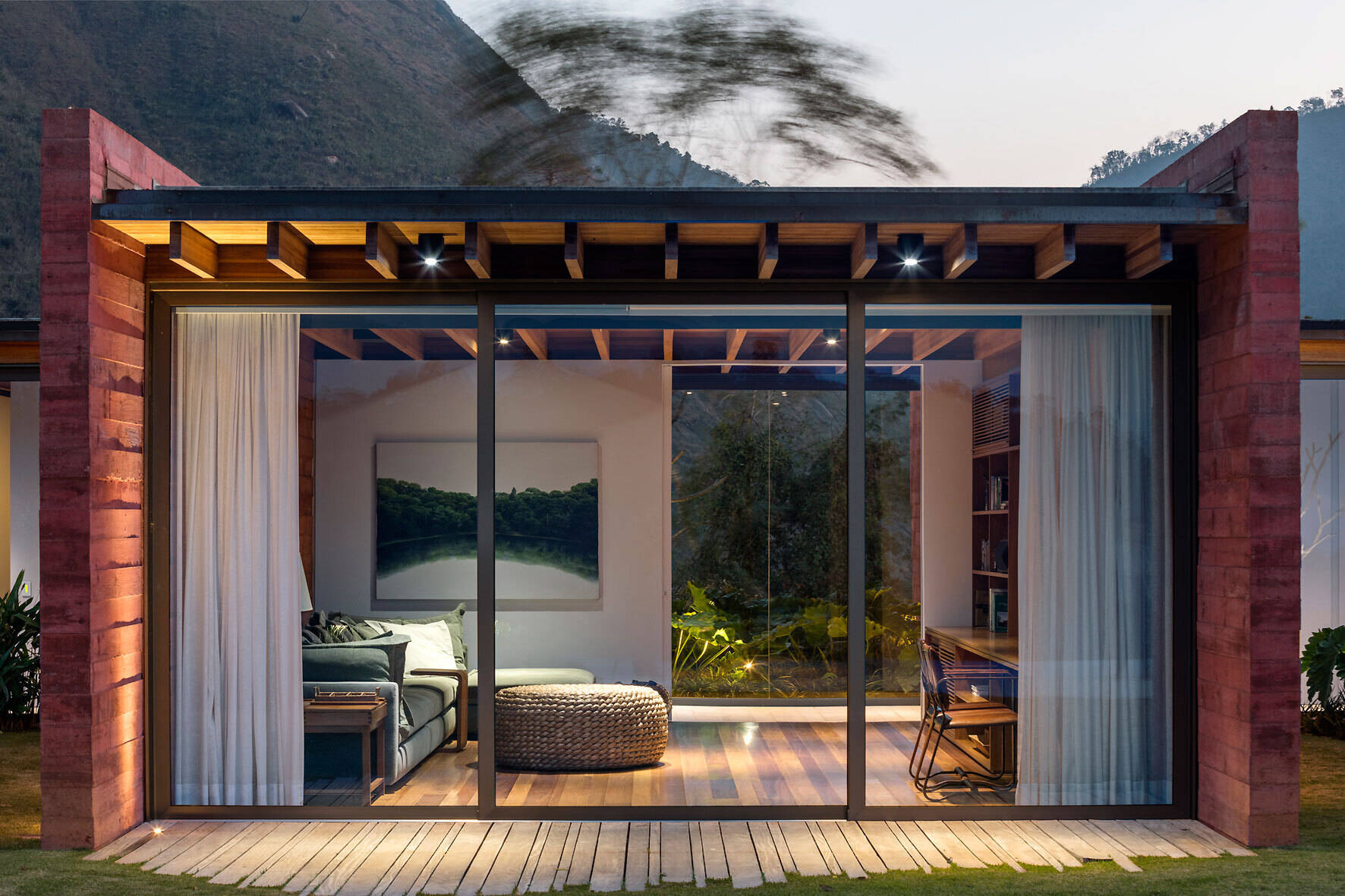
Mirrored bedrooms with private patios
At the end of the hallway, the bedrooms are arranged as mirrored spaces, creating a sense of balance within the home’s layout. Each bedroom features sliding glass doors that open directly onto small private patio areas. These patios provide quiet outdoor retreats while maintaining the same strong relationship with nature found throughout the rest of the house.
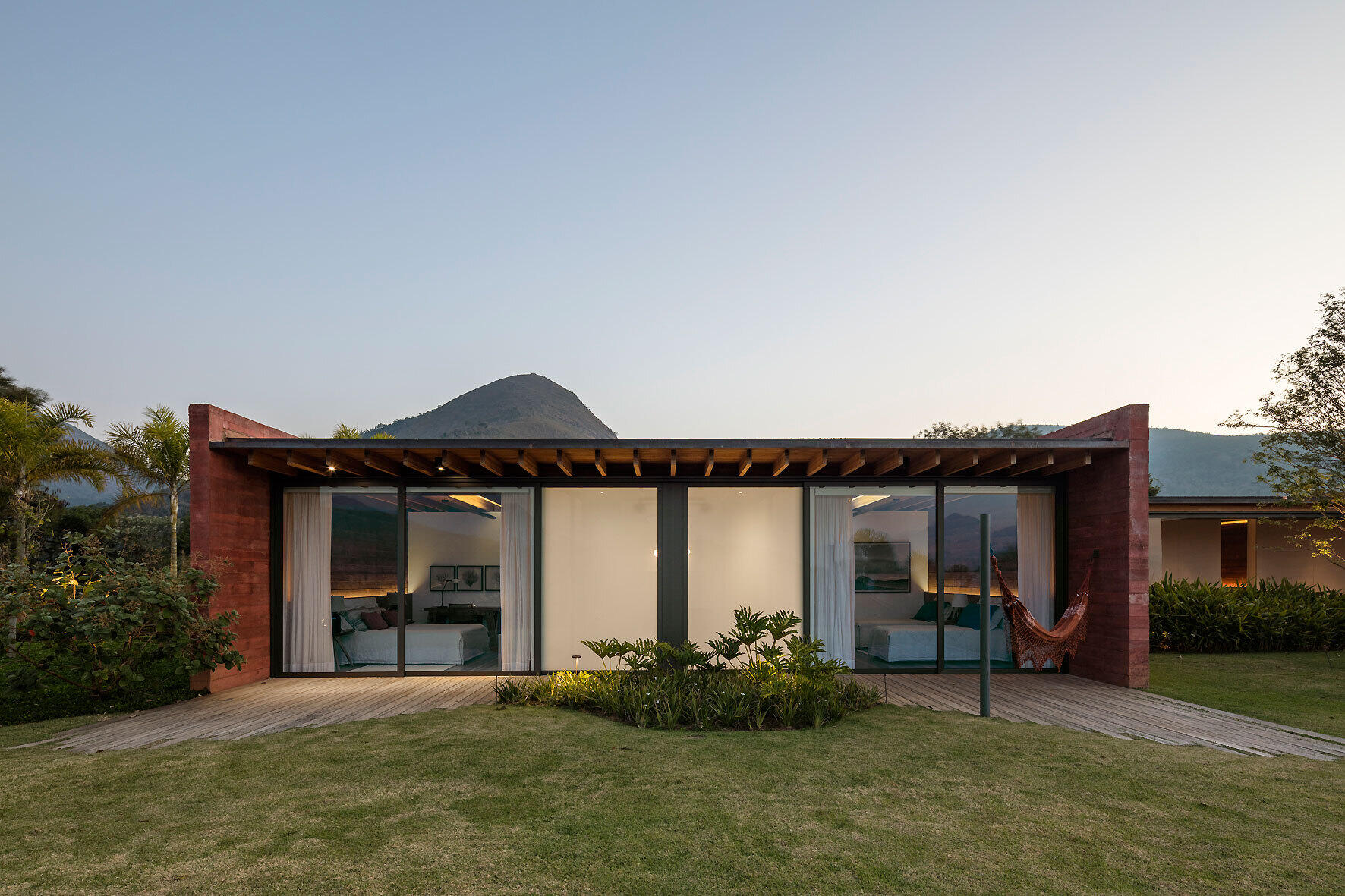
A bold form anchored by concrete and timber
From the outside, the house reveals its full architectural composition. The pigmented concrete walls, the various protruding box-like volumes, and the expansive wood roof come together to form a layered and expressive structure. This final view highlights how the home’s materials and geometry work together, creating a modern Brazilian house that feels grounded in both its site and its design philosophy.
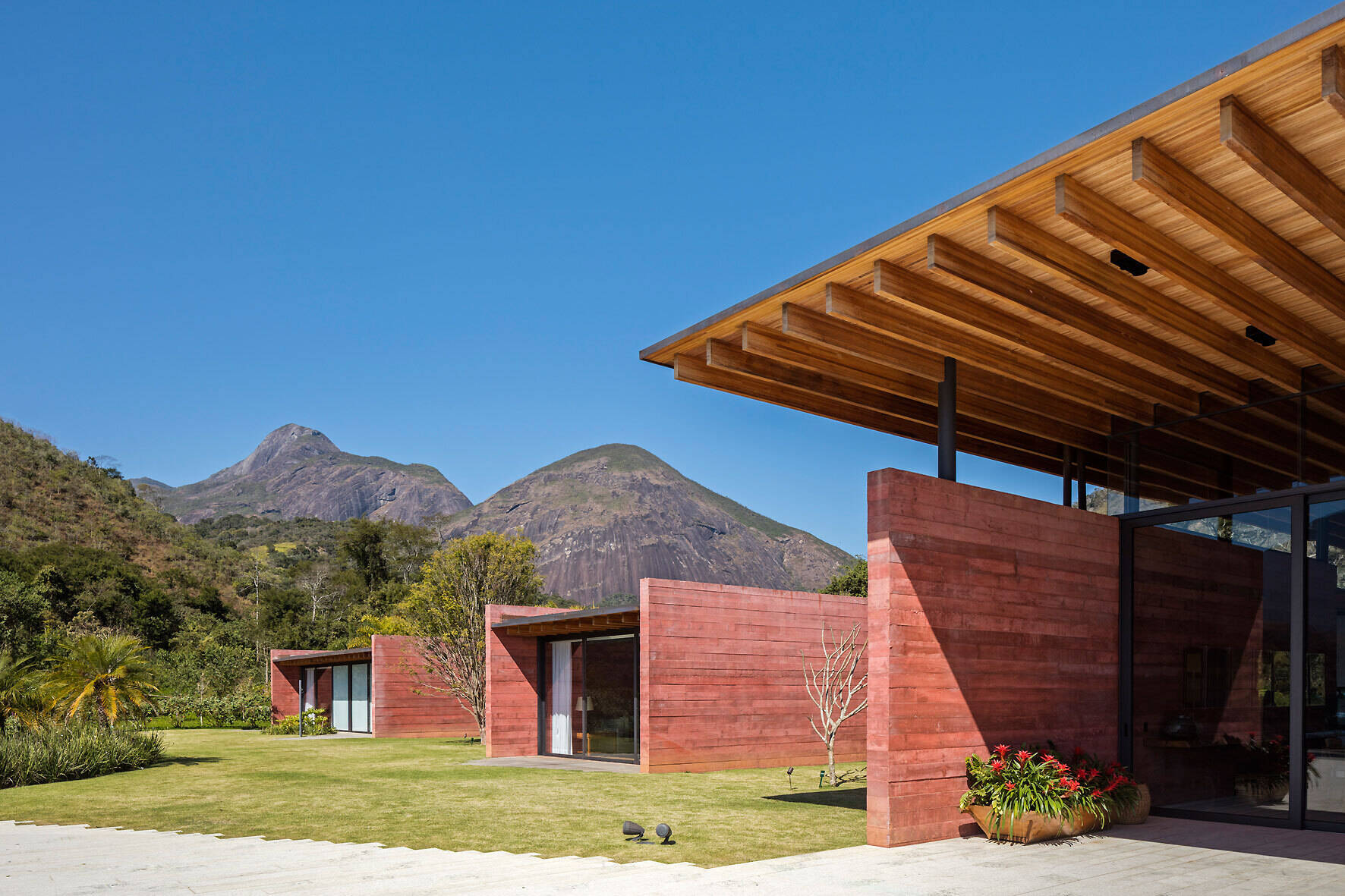
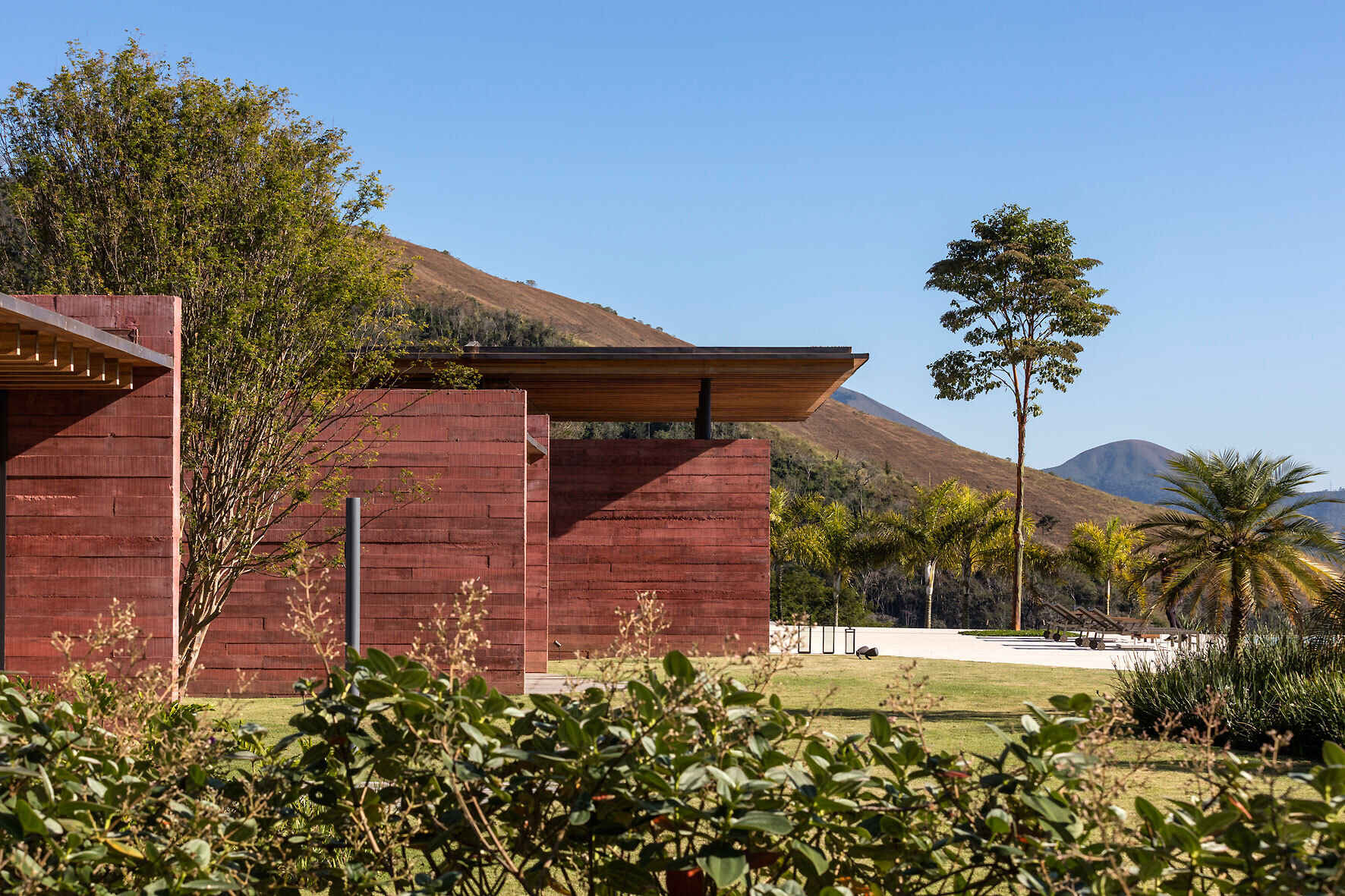
Casa Terra shows how pigmented concrete can do far more than simply hold a building up. Through careful planning, strong geometry, and constant visual links to the outdoors, Bernardes Arquitetura have created a house where concrete becomes the defining feature without sacrificing warmth, light, or connection to nature.
Photography by Leonardo Finotti | Architecture and Interior Design: Bernardes Arquitetura | Team: Thiago Bernardes, Camila Tariki, Francisco Abreu, Fabiana Porto, Daniel Vannucchi, José Miguel Ferreira, Thiago Moretti, Ilana Daylac, Renata Evaristo, Antonia Bernardes, Fernanda Lopes | Landscaping: Daniela Infante | Lighting Design: Studio Iluz and Lightworks (landscape lighting) | Acoustic: Roberto Thompson Motta | Air Conditioning: Argen | Automation: Noise | Construction Company: PH de Aquino | Electrical and Hydraulic Installations: Equilíbrio Planejamento e Projetos | Wood Structural Design: Ita Construtora | Concrete Structural Design: Ycom Engenharia
Source: Contemporist