
fbpx

How an Architect Built His Own Home to Feel Invisible From the Street
how-an-architect-built-his-own-home-to-feel-invisible-from-the-street
How an Architect Built His Own Home to Feel Invisible From the Street
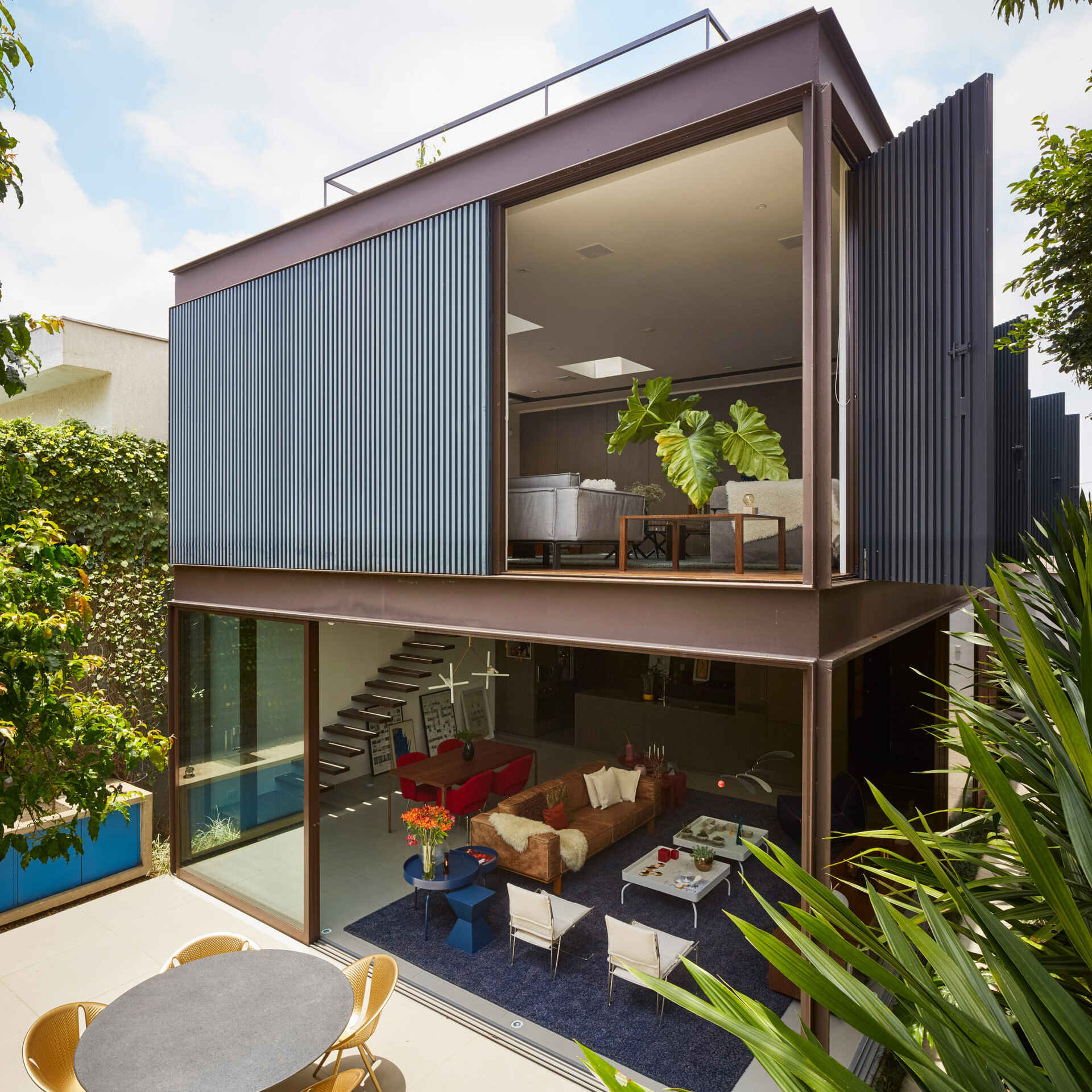
Sliding glass doors blur the line between inside and out, creating a relaxed indoor outdoor living space.

From the street, there is almost nothing to see. Just a wall, a gate, and the quiet suggestion that something private lies beyond. In São Paulo, where density and security shape daily life, one architect decided his own home would not compete for attention. Instead, it would withdraw, creating a calm interior world hidden from public view.
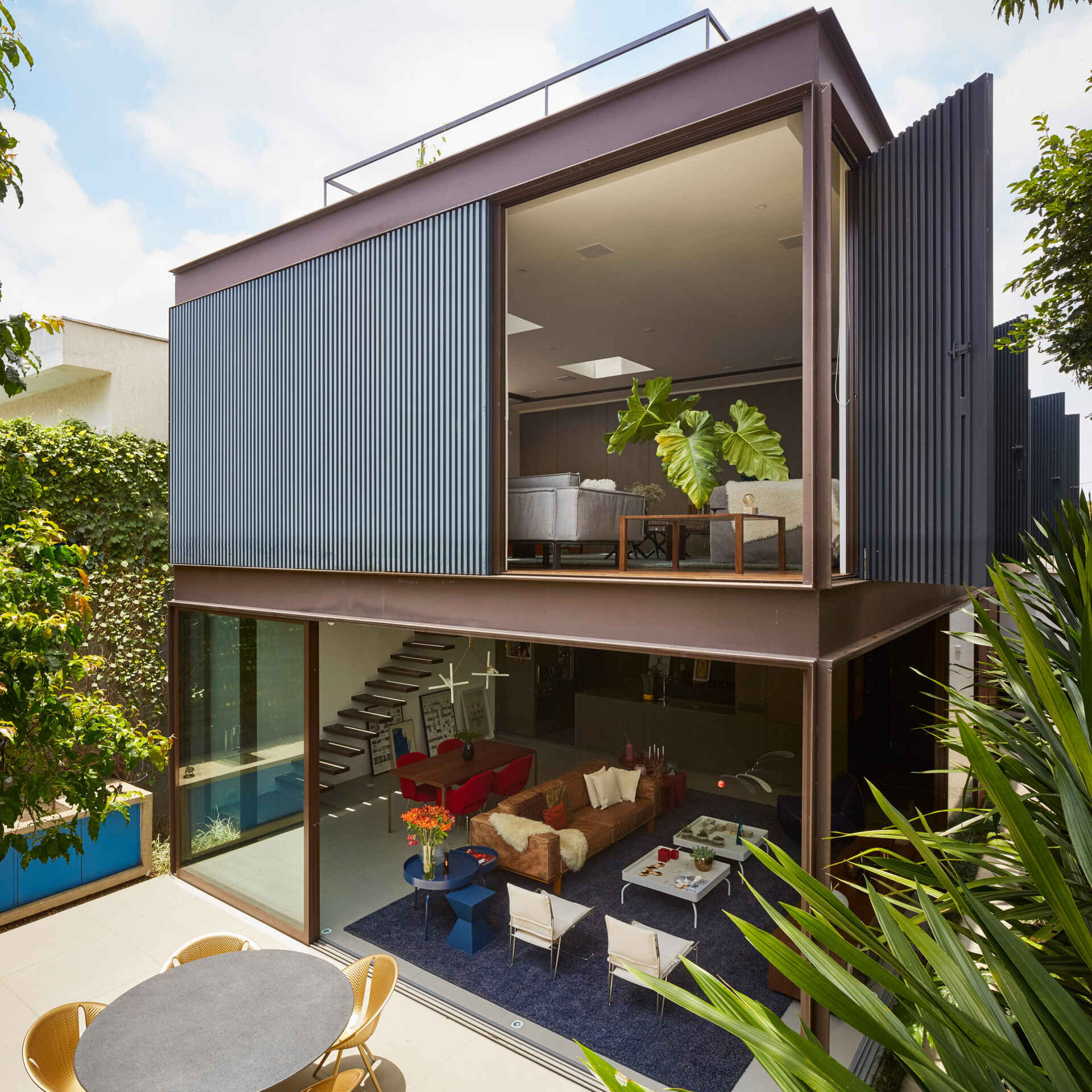
An architect designed his own São Paulo home to disappear from the street, revealing a floating concrete form, light filled interiors, and a rooftop retreat.

Located in São Paulo, Brazil, the Box House was designed by architect Flavio Castro of FCStudio as a home for himself. Set on a corner site in a low rise residential neighborhood, the proportions of the land influenced every decision. The house turns inward, presenting an opaque exterior to the street while opening selectively through only two of its four facades. A concrete privacy wall surrounds the property, intended to one day be softened with ivy, while a weathering steel front gate and garage door introduce contrast and texture against the raw concrete.
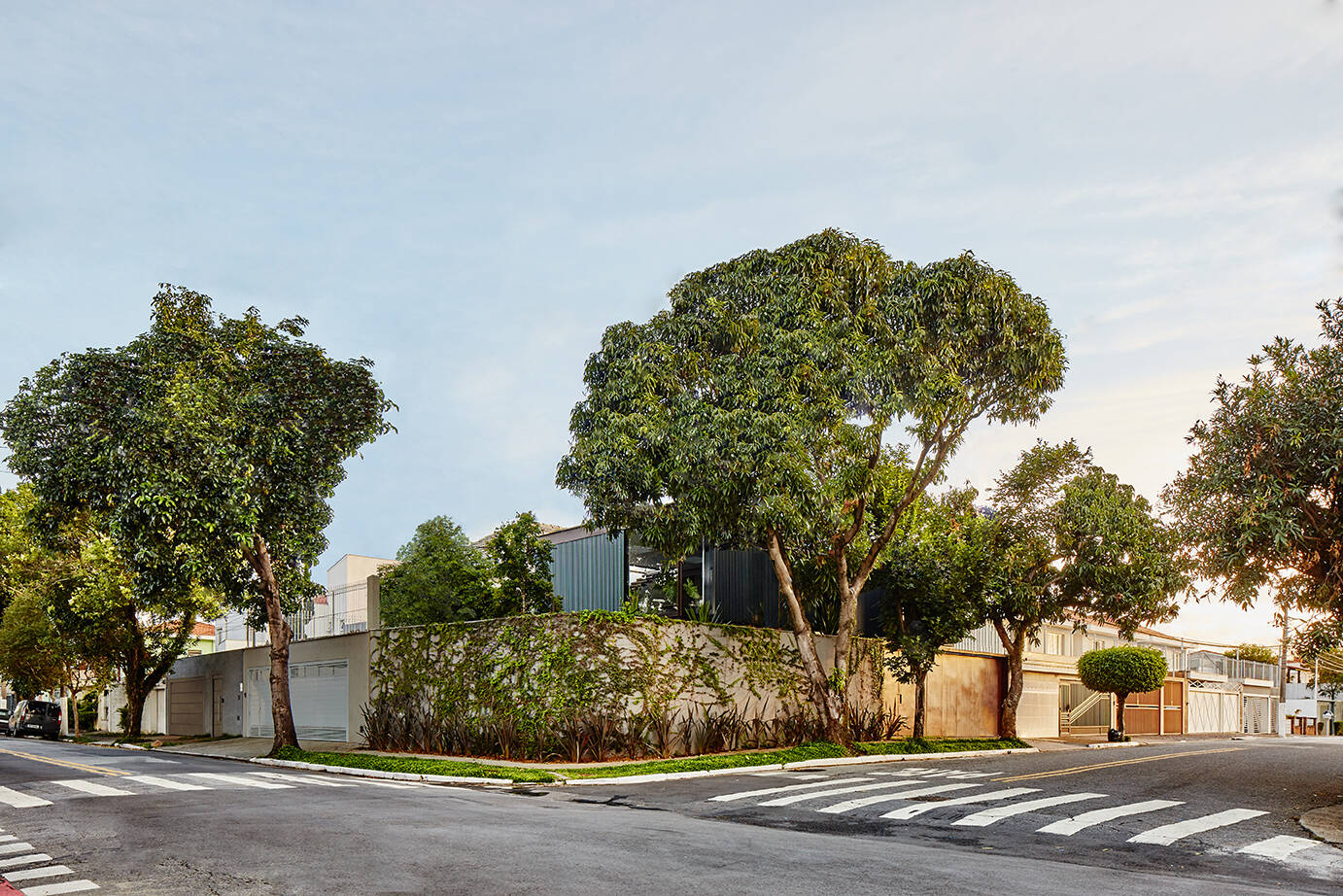
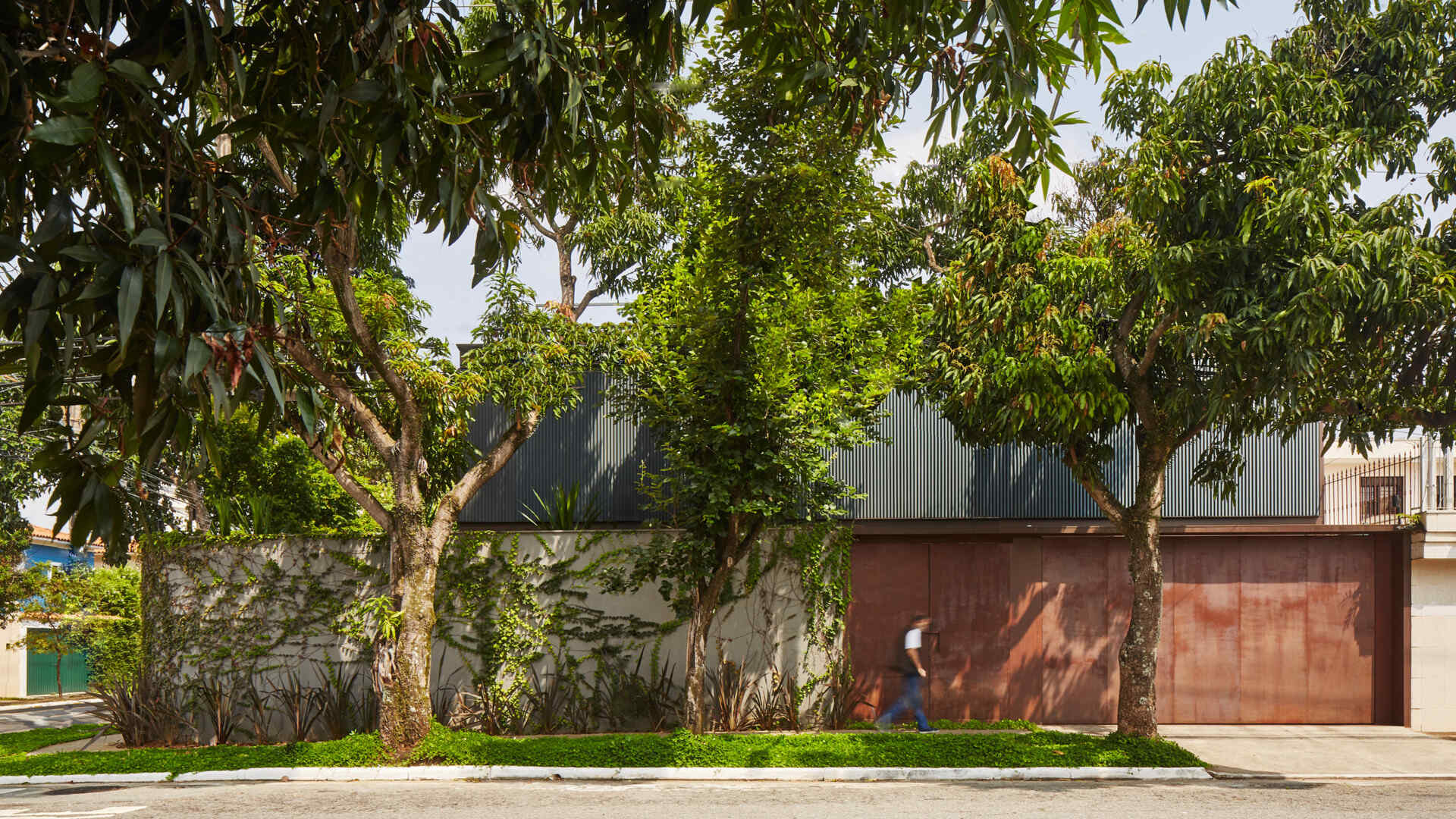
A concrete box hidden behind walls shows how an architect designed his own home to prioritize privacy in São Paulo.

The experience of the house begins at the large weathering steel gate. Once inside, the noise of the city fades and an entryway garden appears, offering the first sense of openness. From here, additional weathering steel pivot doors lead into the interior, revealing the carefully layered volumes of the home and the deliberate shift from public to private space.

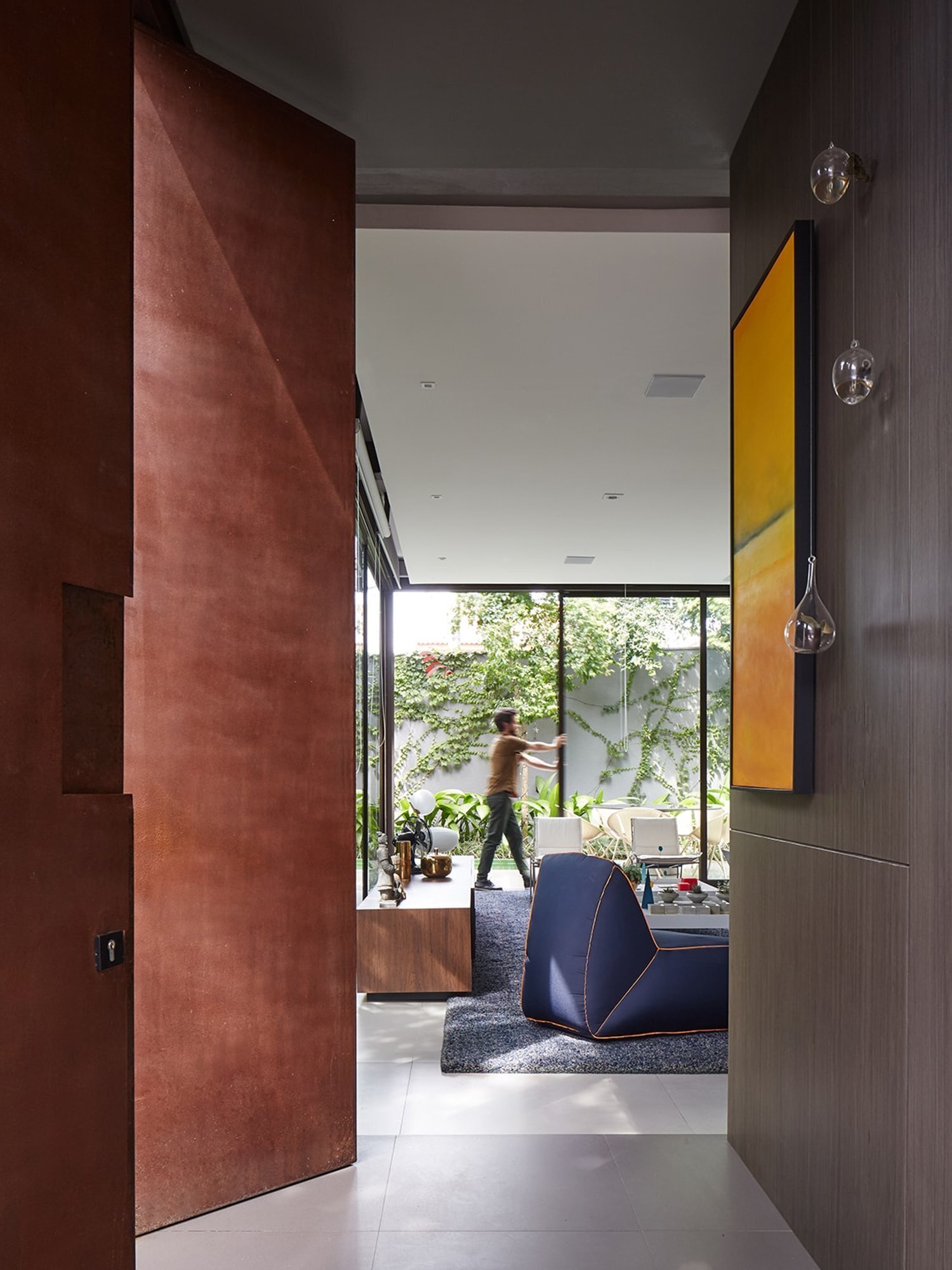
A weathering steel gate opens to a quiet garden entry, marking the transition from city street to private retreat.

Rather than separating entry from everyday living, the house opens directly into its social areas. The kitchen sits prominently within this space, designed with minimalist, hardware free cabinetry that keeps the room visually calm.
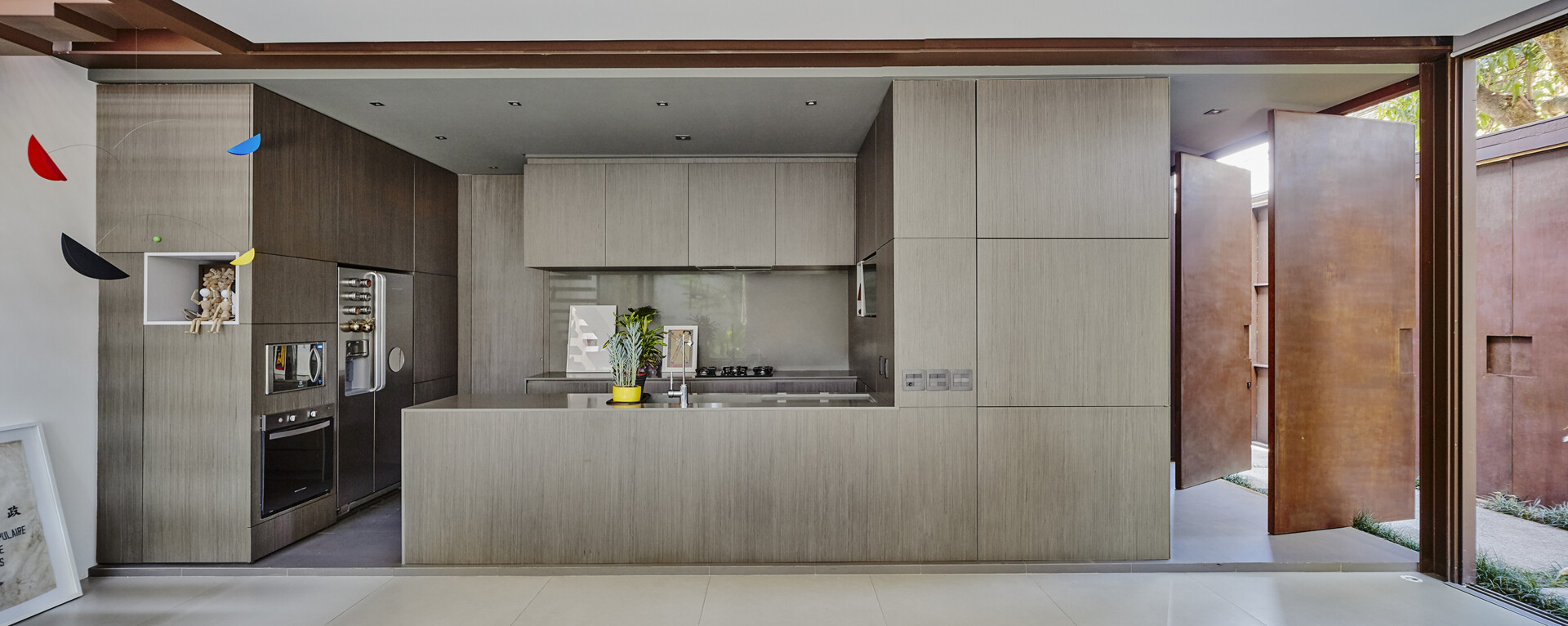
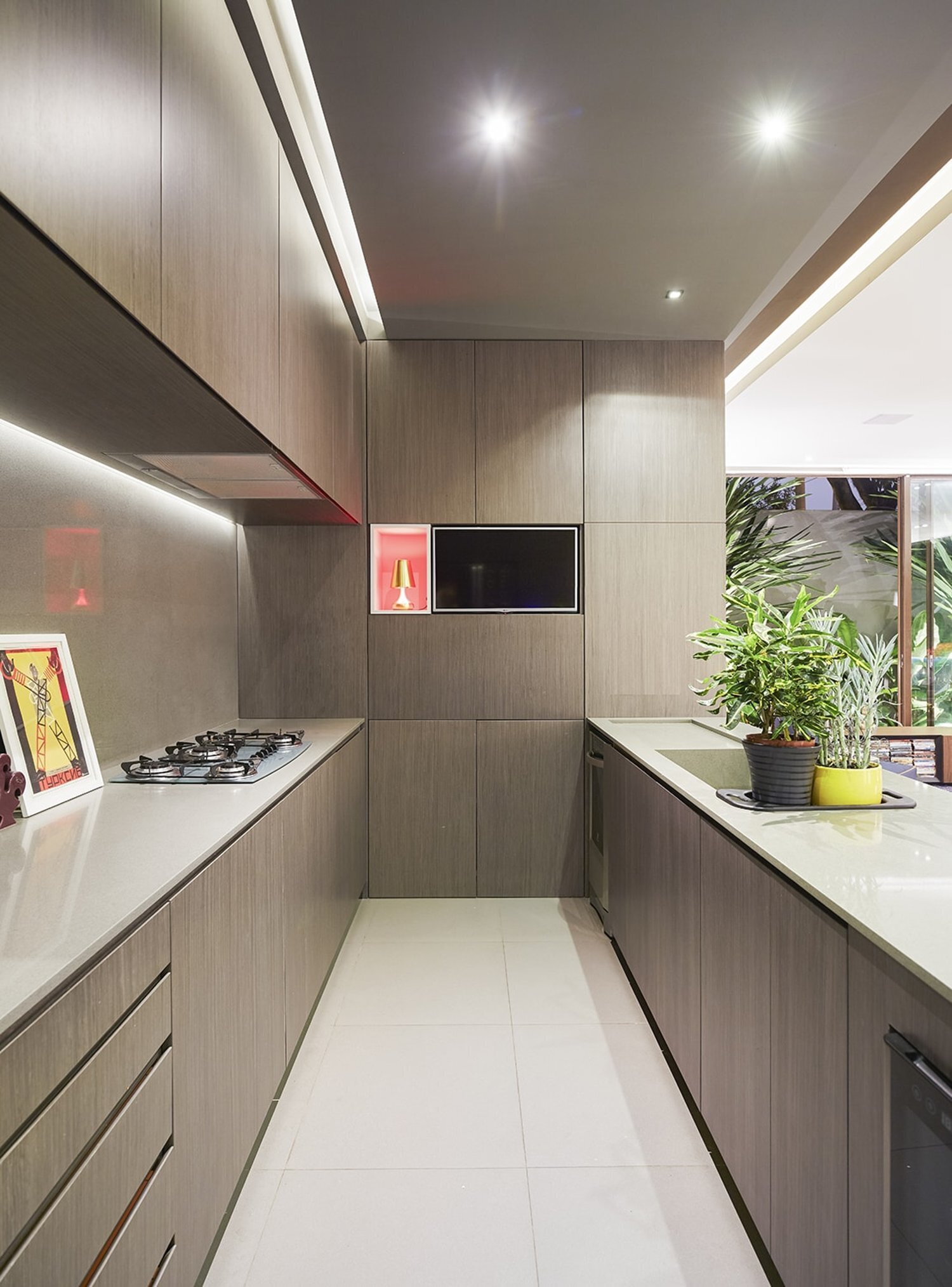
Rather than separating entry from everyday living, the house opens directly into its social areas. The kitchen sits prominently within this space, designed with minimalist, hardware free cabinetry that keeps the room visually calm.

Next to the kitchen, the dining area introduces a striking contrast. Bright red chairs bring an unexpected pop of color into the otherwise neutral interior, energizing the space and subtly defining the dining zone within the open plan layout.
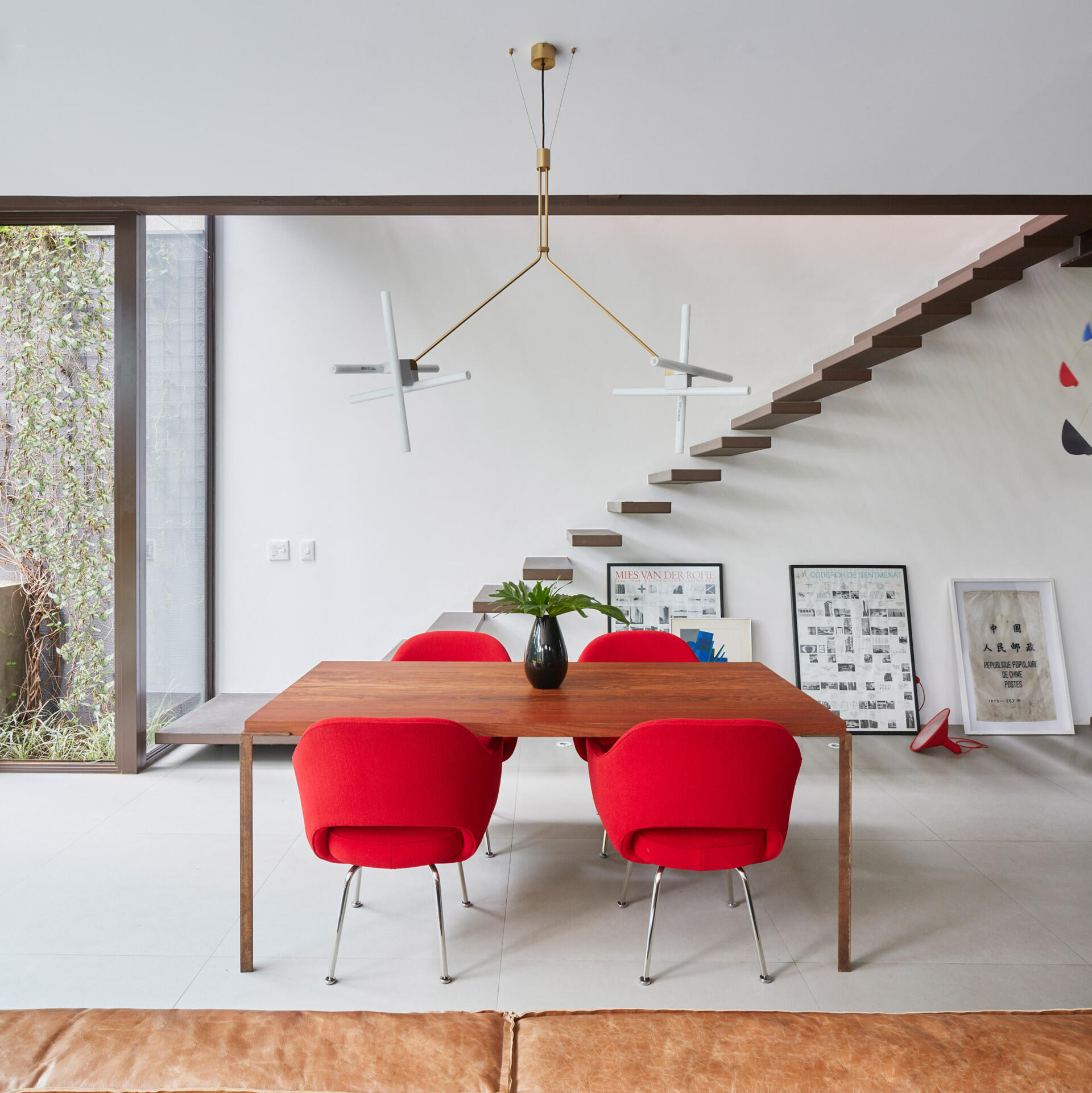
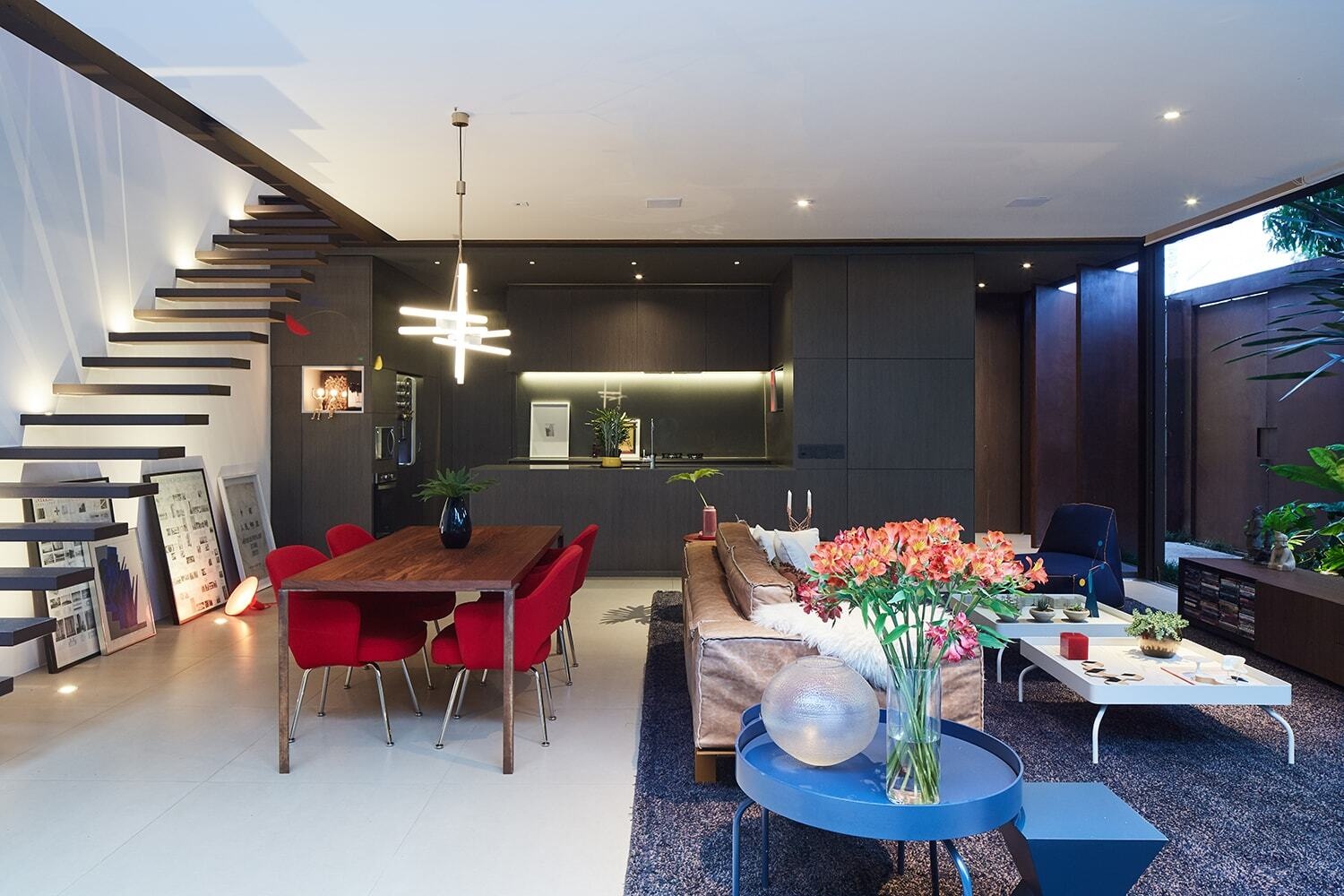
This dining area introduces a striking contrast. Bright red chairs bring an unexpected pop of color into the otherwise neutral interior, energizing the space and subtly defining the dining zone within the open plan layout.

Sliding glass doors line the dining area and living room, allowing both spaces to fully open onto the garden. When the doors are pulled back, the boundary between interior and exterior disappears. The result is a fluid indoor outdoor environment that feels expansive, especially given the house’s closed appearance from the street.
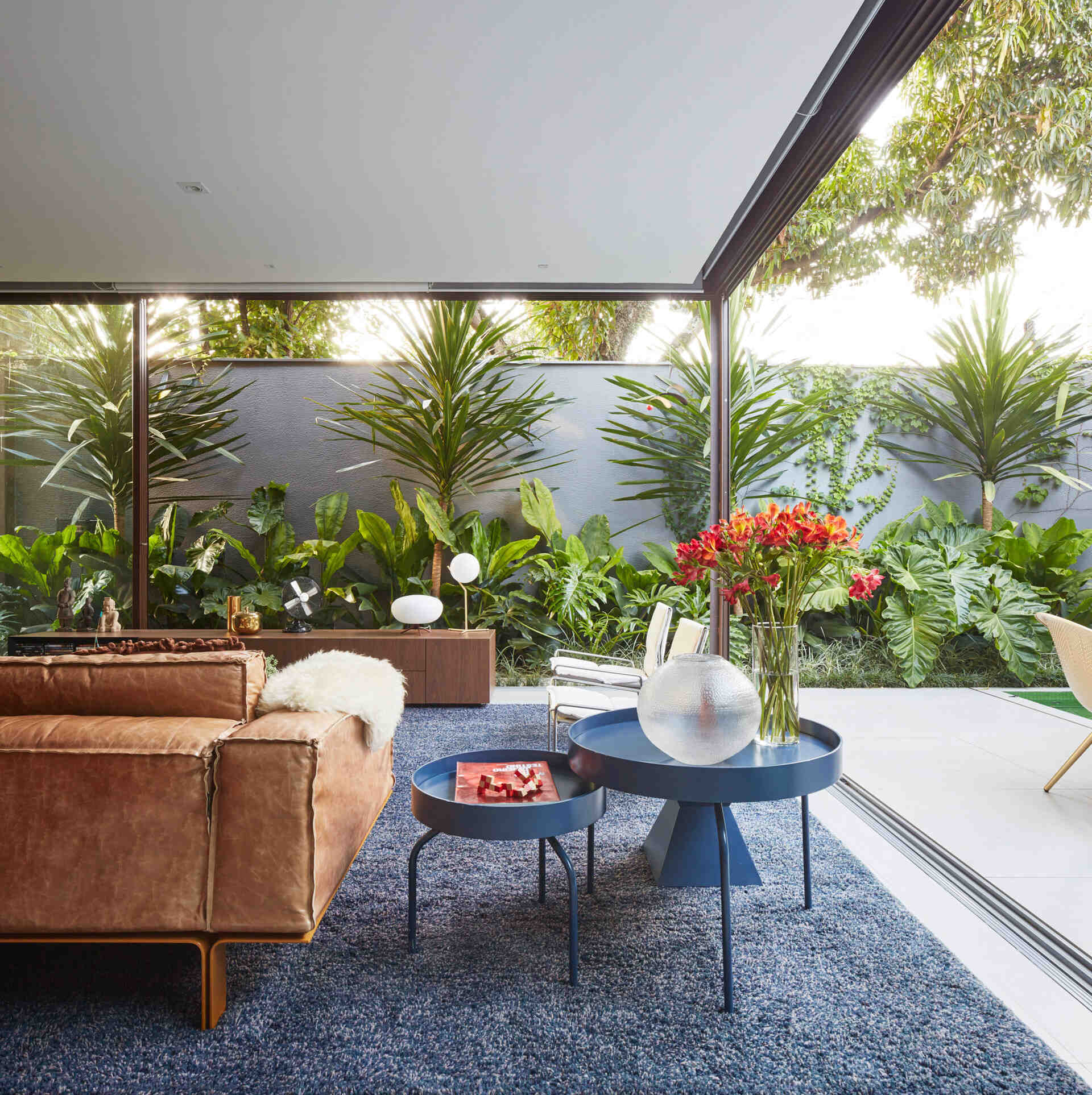
Sliding glass doors line the dining area and living room, allowing both spaces to fully open onto the garden. When the doors are pulled back, the boundary between interior and exterior disappears. The result is a fluid indoor outdoor environment that feels expansive, especially given the house’s closed appearance from the street.

From the garden, the second floor becomes a defining feature. The upper level appears to hover above the ground floor, resting on a transparent base of glass. This contrast between the heavy opaque volume above and the lightness below gives the house its distinctive floating effect. Tropical landscaping surrounds the space, softening the concrete walls and bringing greenery deep into the home.
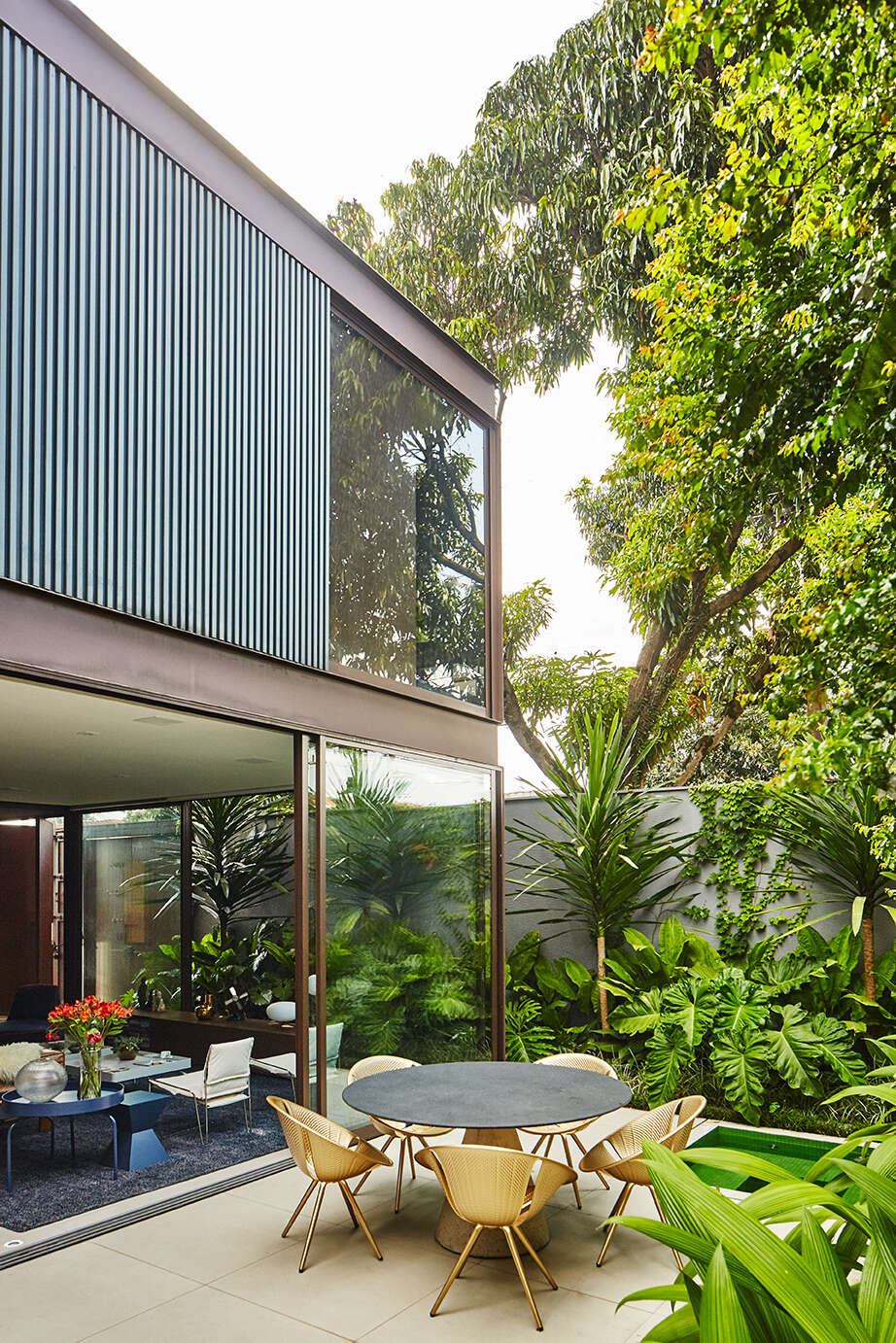
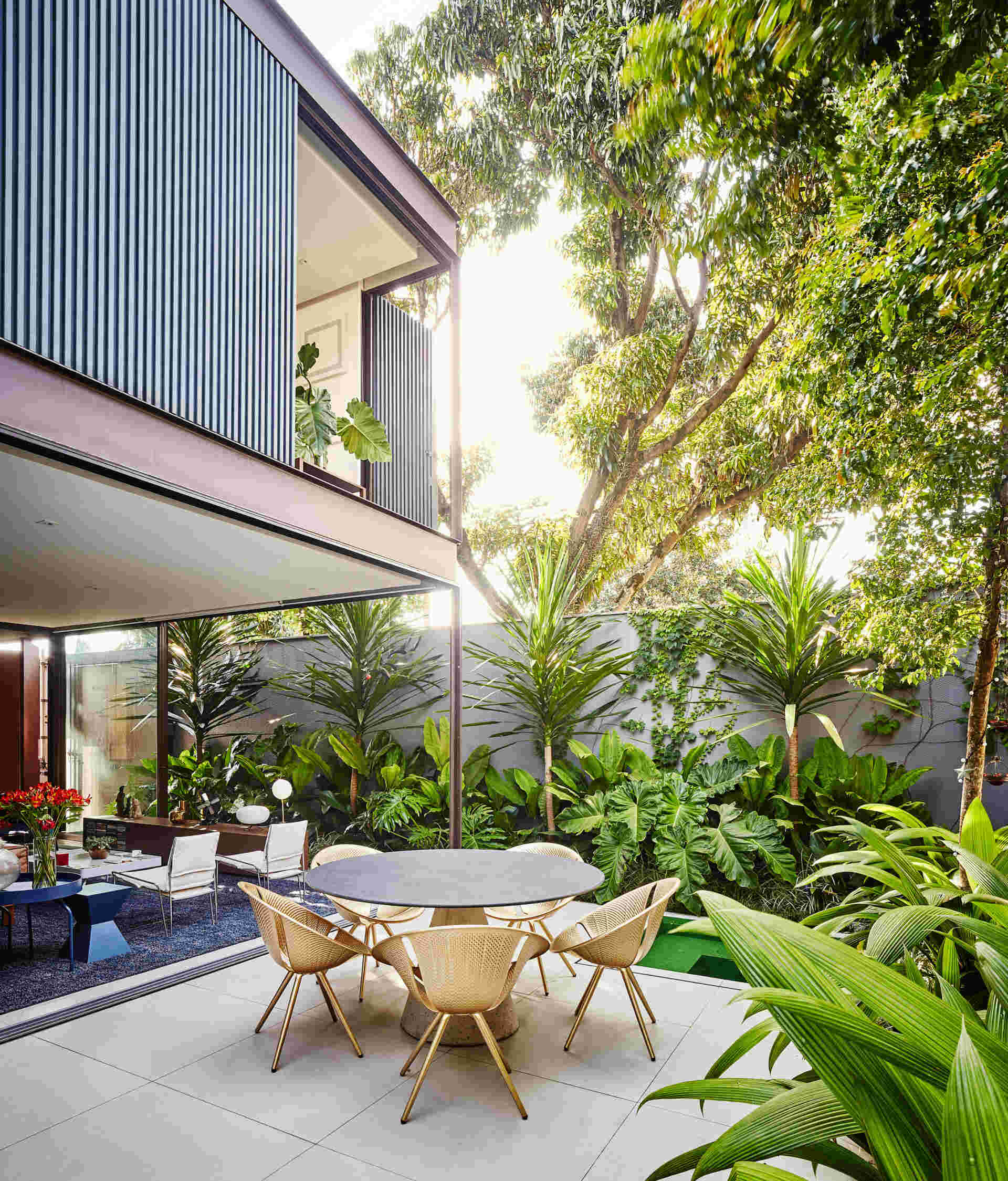
From the garden, the second floor becomes a defining feature. The upper level appears to hover above the ground floor, resting on a transparent base of glass. This contrast between the heavy opaque volume above and the lightness below gives the house its distinctive floating effect. Tropical landscaping surrounds the space, softening the concrete walls and bringing greenery deep into the home.

Along one side of the interior, floating stairs lead to the upper floor. Their light construction reinforces the sense of openness, guiding movement upward without visually interrupting the space below.
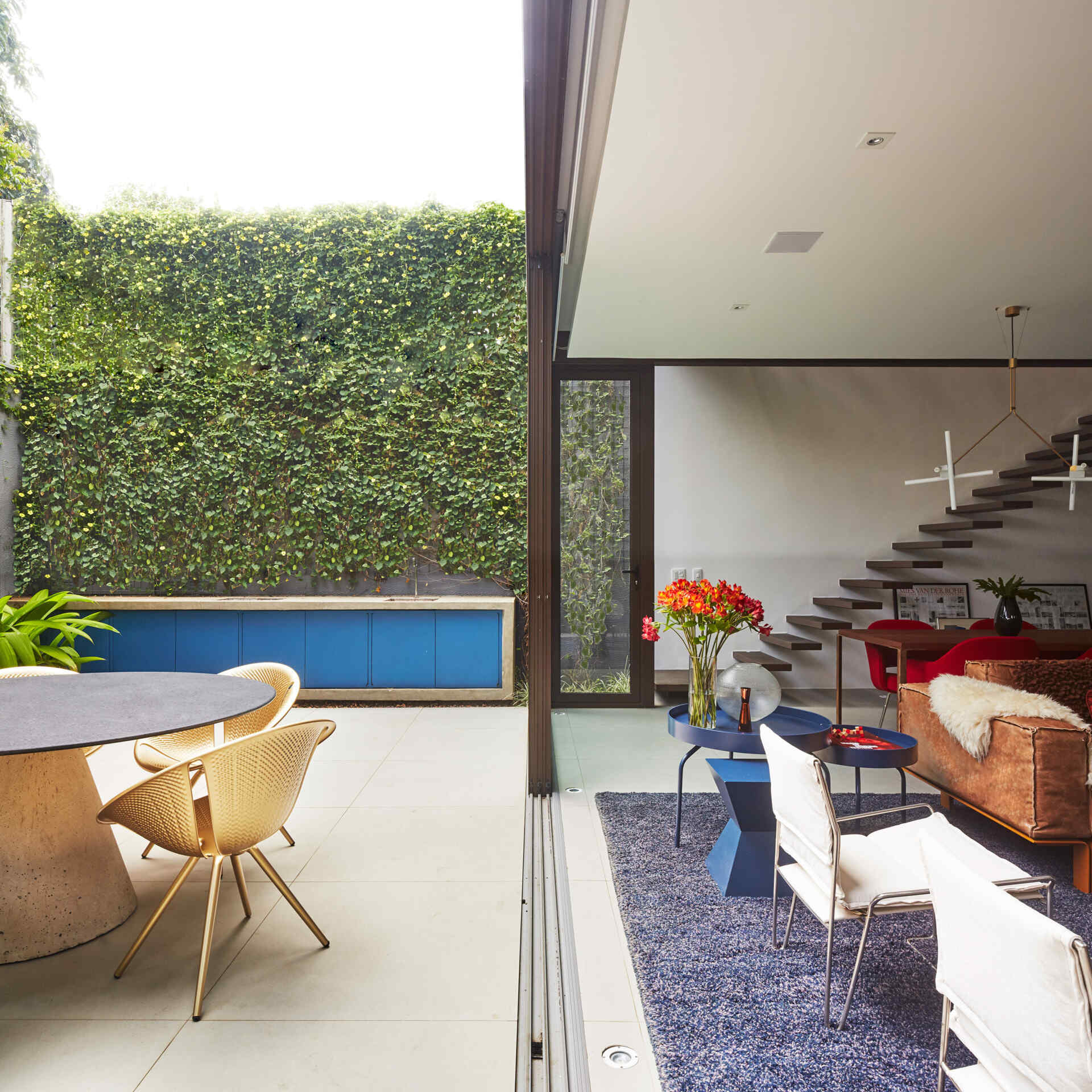
Along one side of the interior, floating stairs lead to the upper floor. Their light construction reinforces the sense of openness, guiding movement upward without visually interrupting the space below.

The upper level contains a secondary living room, designed as a quieter retreat. Here, the exterior miniwave panels play a crucial role, controlling sunlight, acoustics, and security while allowing flexibility in how the house engages with its surroundings. The facade becomes both a protective layer and a tool for comfort.
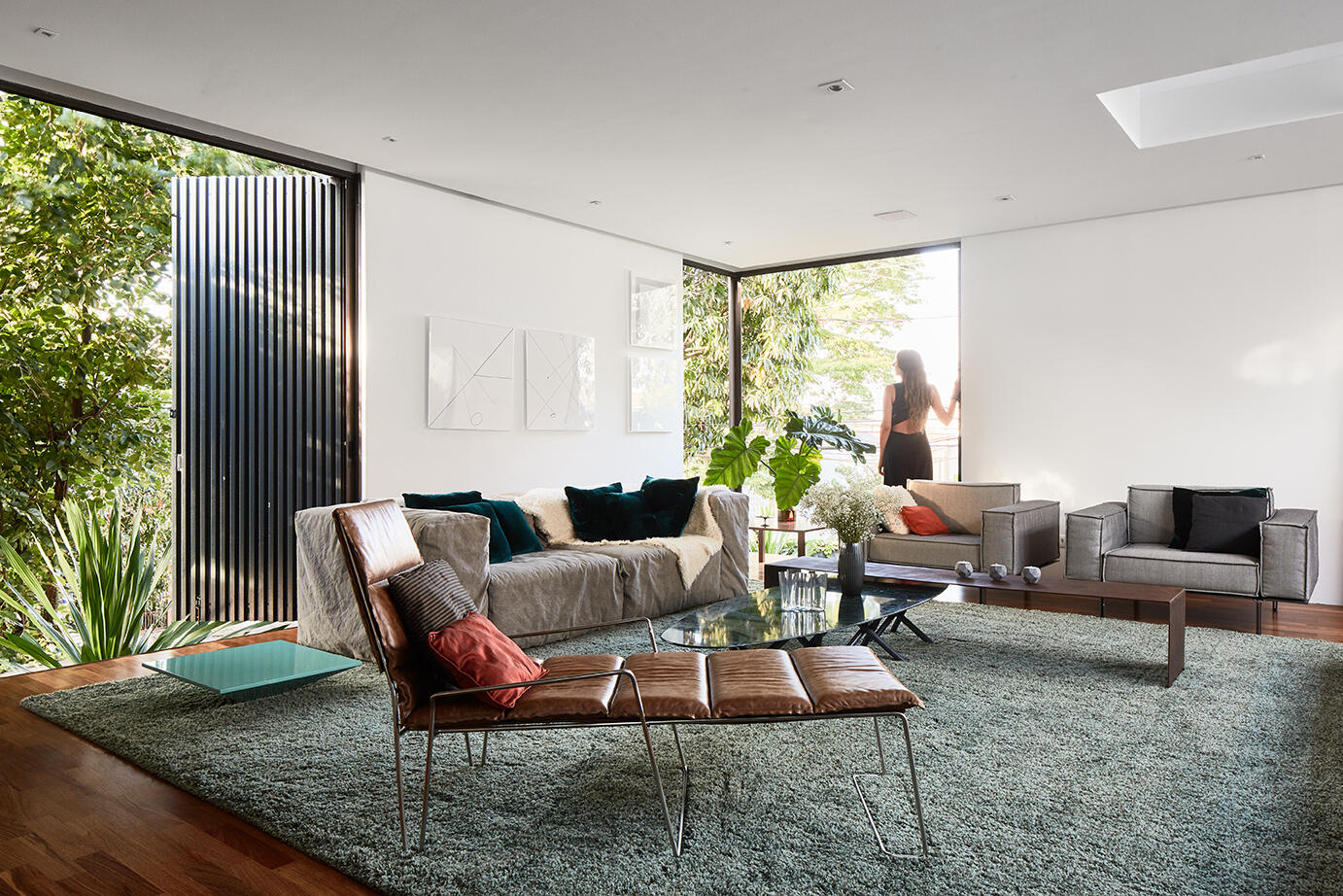
A secondary living room designed as a quieter retreat. Here, the exterior miniwave panels play a crucial role, controlling sunlight, acoustics, and security while allowing flexibility in how the house engages with its surroundings. The facade becomes both a protective layer and a tool for comfort.

A wood accent wall runs along the upper floor, introducing warmth while discreetly concealing doors to the bedroom and a powder room. The design keeps the space uncluttered, with storage and circulation integrated seamlessly into the architecture.
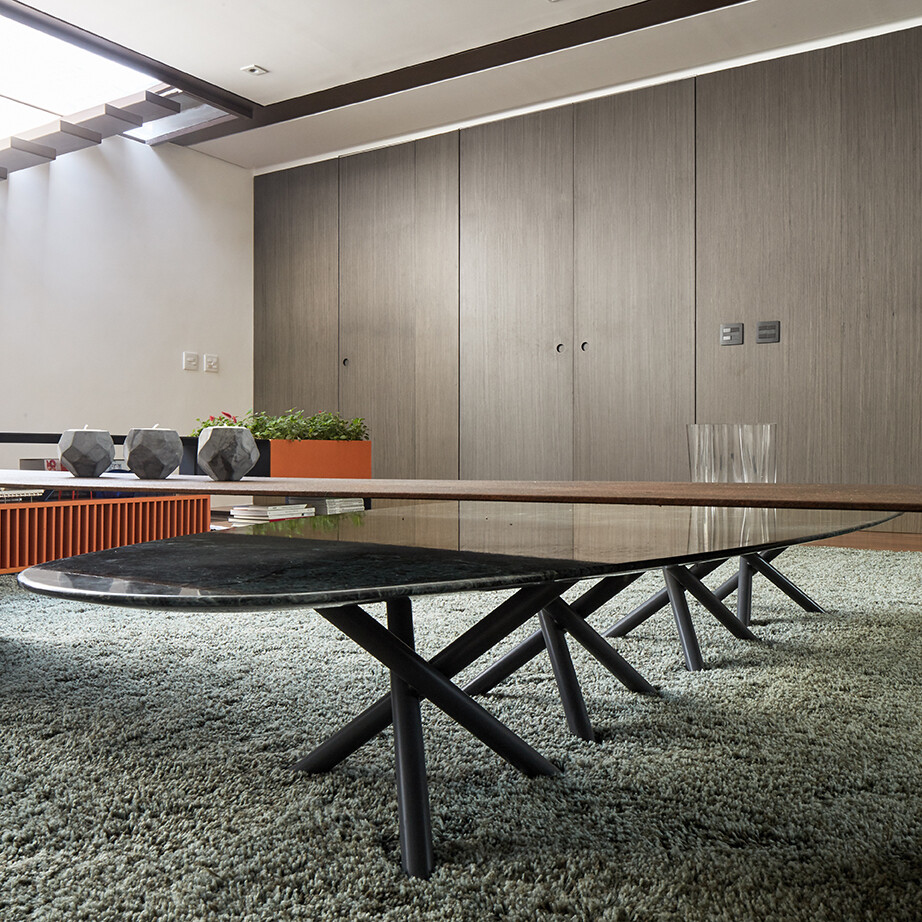
A wood accent wall runs along the upper floor, introducing warmth while discreetly concealing doors to the bedroom and a powder room. The design keeps the space uncluttered, with storage and circulation integrated seamlessly into the architecture.

Inside the bedroom, the layout breaks from convention. The bed is positioned at the center of the room, anchored by a curved wood headboard that softens the geometry of the space. Round mirrors reflect sunlight across the room, amplifying natural light and drawing attention to the cabinetry along the opposite wall.
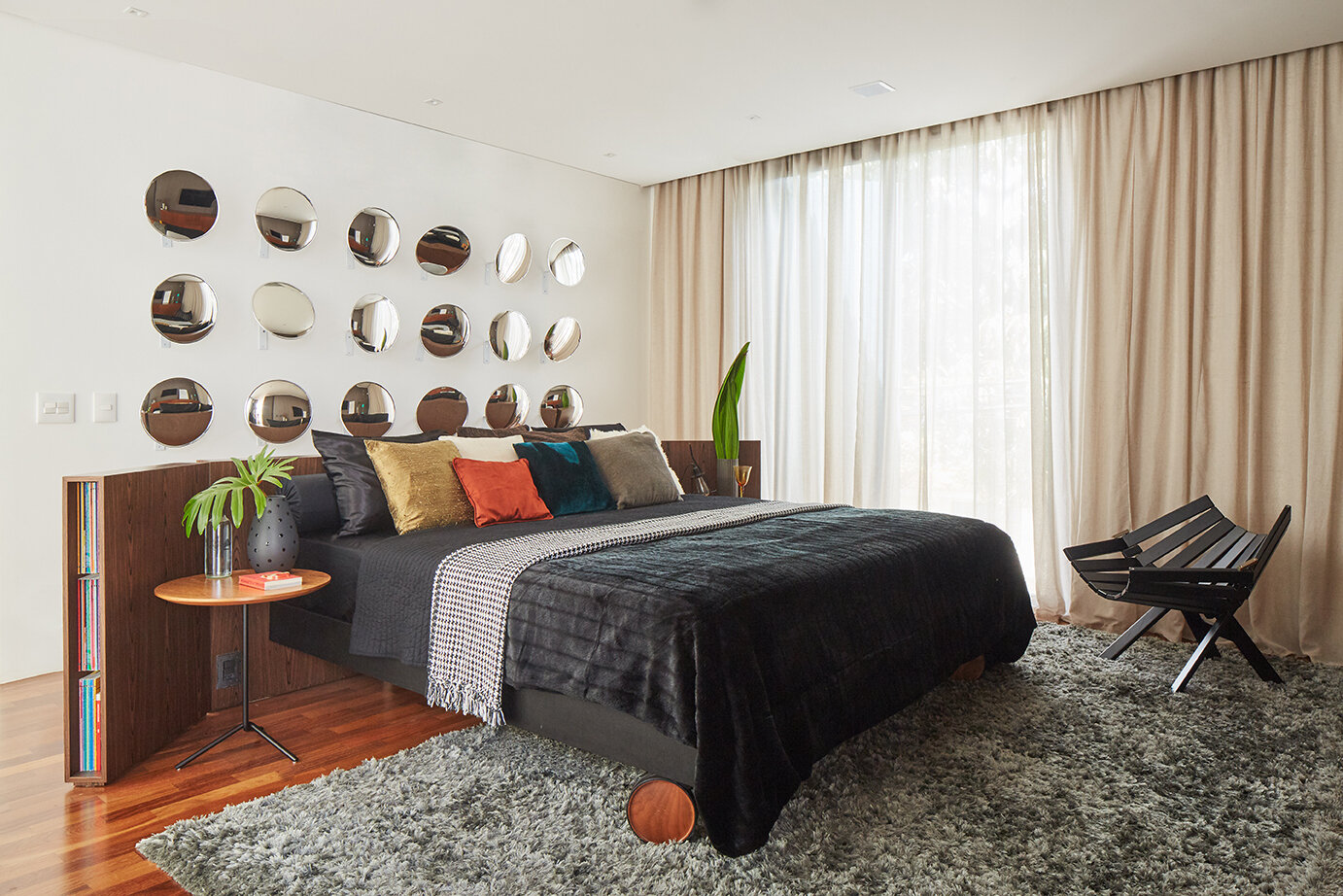
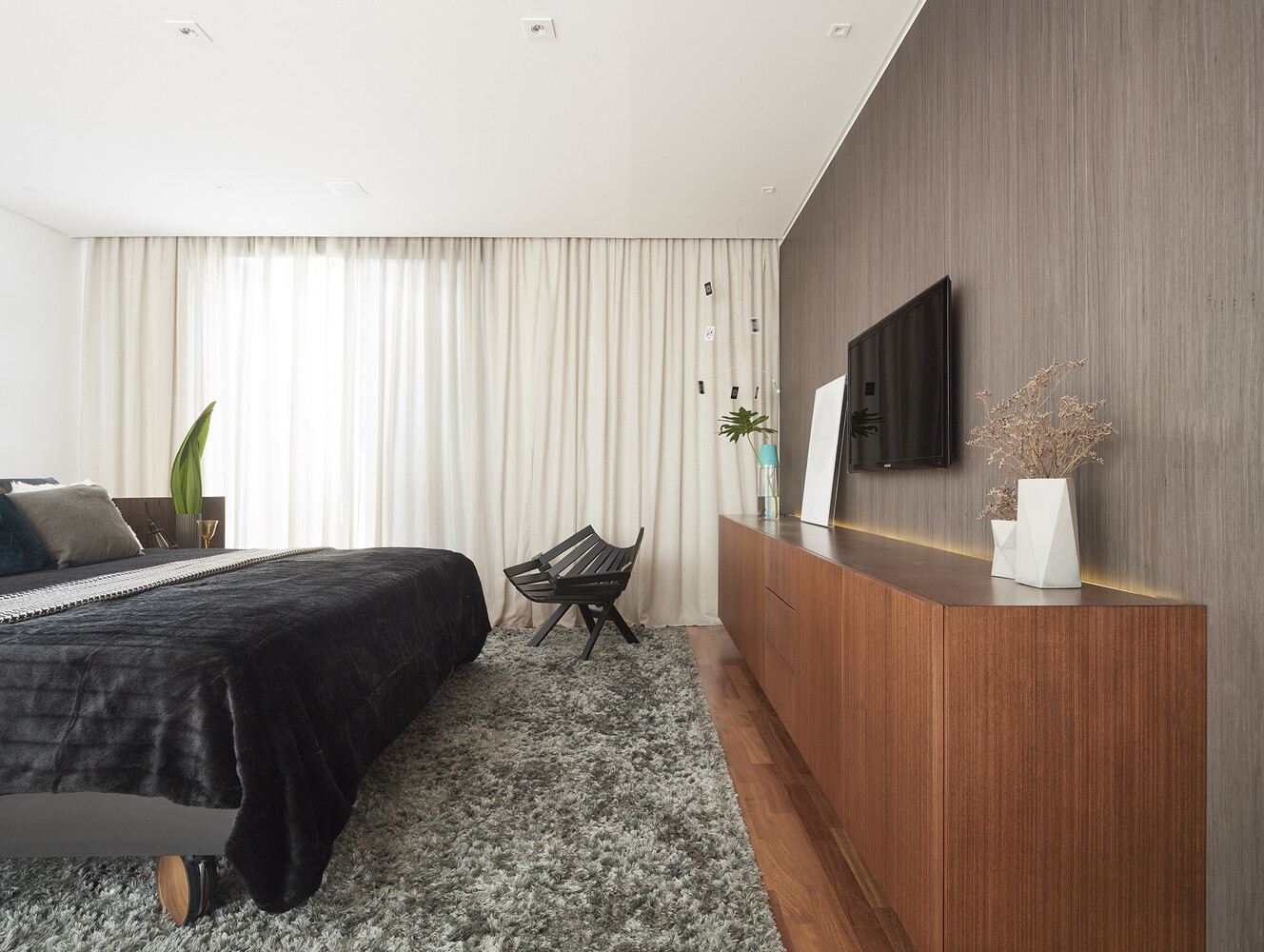
Inside the bedroom, the layout breaks from convention. The bed is positioned at the center of the room, anchored by a curved wood headboard that softens the geometry of the space. Round mirrors reflect sunlight across the room, amplifying natural light and drawing attention to the cabinetry along the opposite wall.

Behind the bed, the ensuite bathroom unfolds. A glass enclosed shower becomes the focal point, while white doors on either side lead separately to the washroom and a walk in closet. The arrangement maintains privacy while preserving a sense of openness within the bedroom.
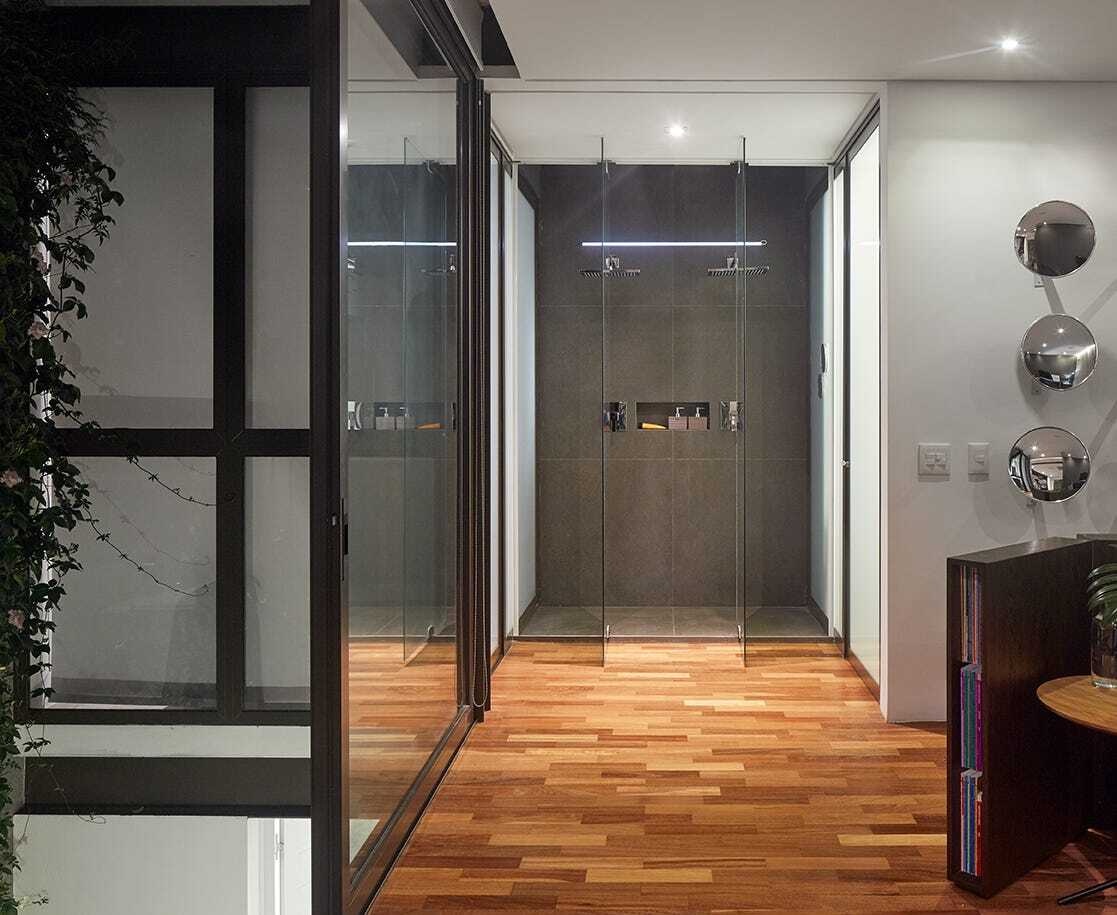
Behind the bed, the ensuite bathroom unfolds. A glass enclosed shower becomes the focal point, while white doors on either side lead separately to the washroom and a walk in closet. The arrangement maintains privacy while preserving a sense of openness within the bedroom.

Back near the secondary living area, the stairs continue upward once more, leading to the final level of the house.
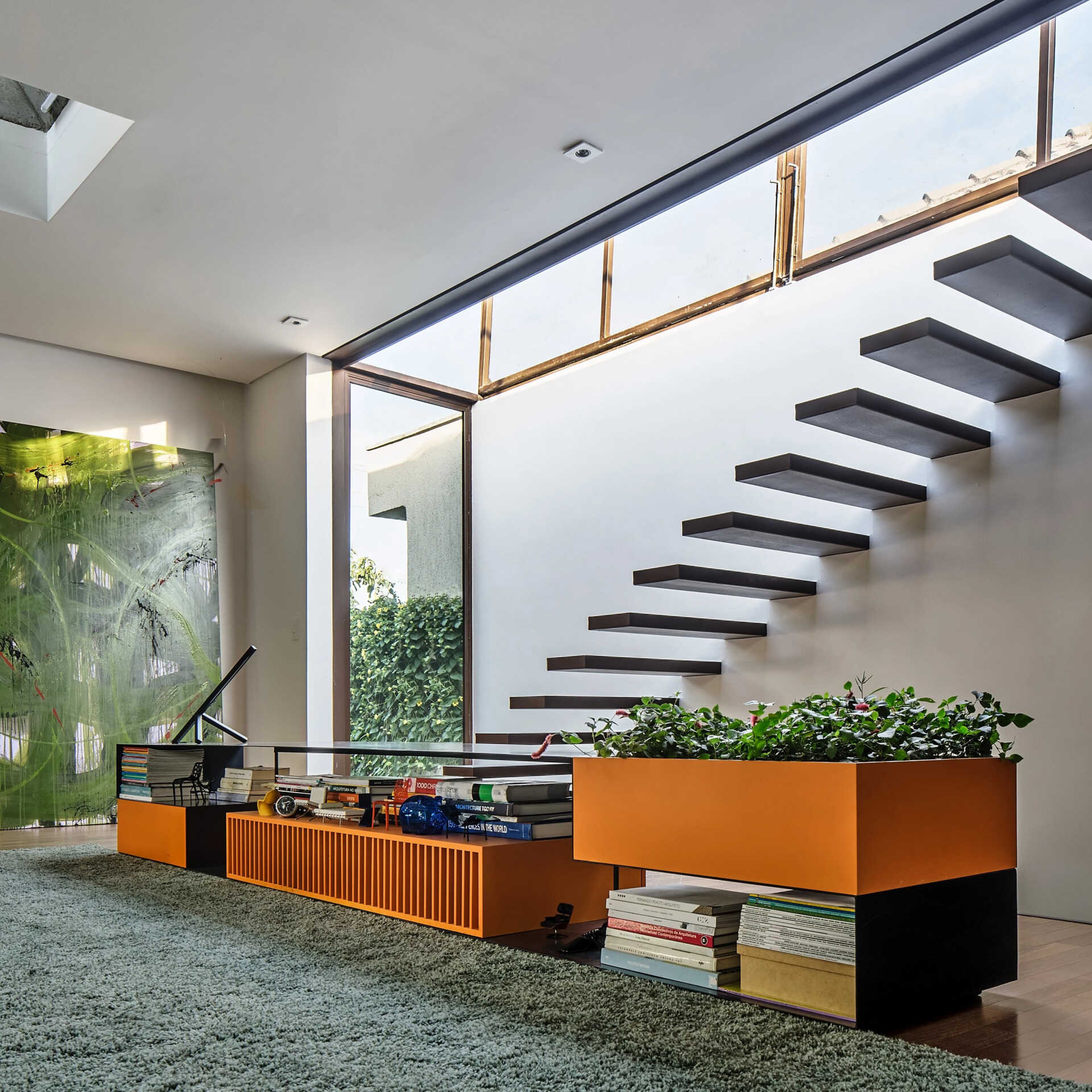
The stairs in this modern house lead up to the rooftop deck.

At the top, the rooftop opens into a lounge area overlooking the surrounding neighborhood. Here, the house establishes a new relationship with its context, offering views, air, and light. The rooftop functions like a belvedere, completing the home with a space that feels elevated and detached from the city below.
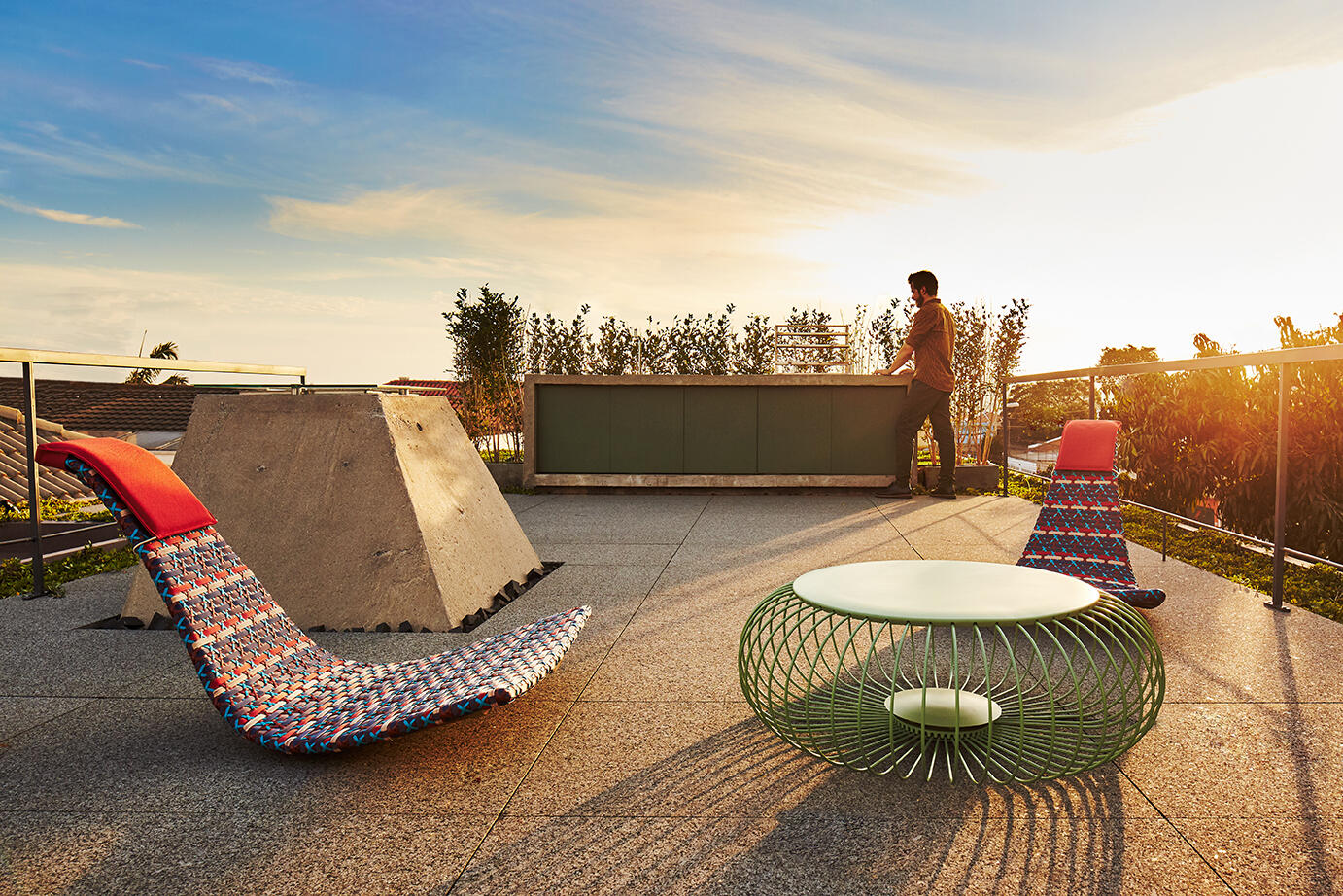
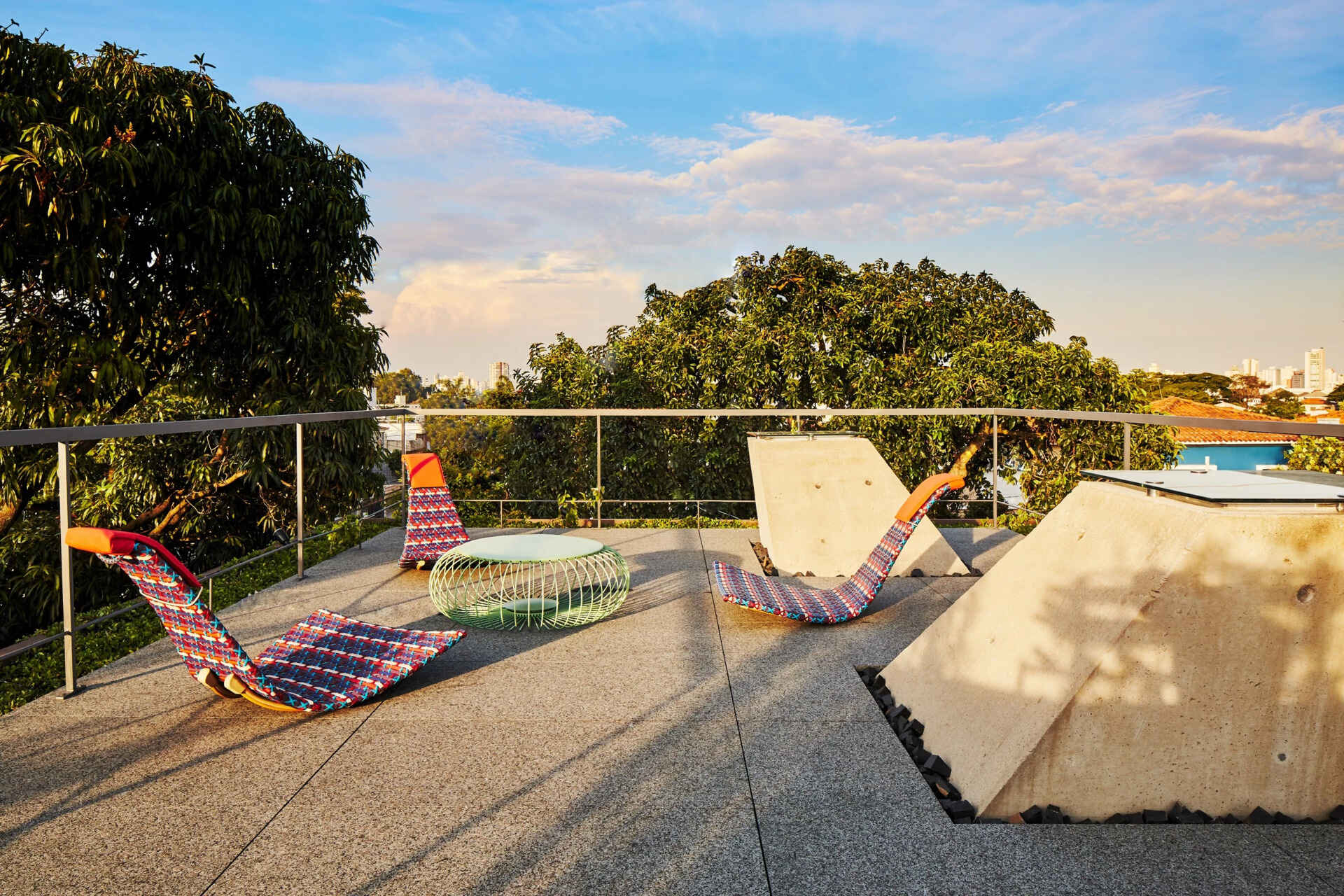
A rooftop lounge overlooks the neighborhood, offering a belvedere like escape above São Paulo.

Designed as a personal project, the Box House reflects an architect’s response to real urban conditions. By turning inward, limiting street exposure, and carefully shaping light and space, Flavio Castro created a home that balances security with openness.


Photography by Pedro Kok | Architecture, landscaping and interior design projects: FCStudio | Exterior landscaping: Rossin + Tramontina | Construction: FCStudio | Structural Engineering Project and Metal Structure: Useaco | Electrical and Hydraulic Project: Waldir Mirhan | Basic Material: C & C – House and Construction

Source: Contemporist