
Design Skill
Inside a Home Where Glass Floors Let Light Travel Between Levels
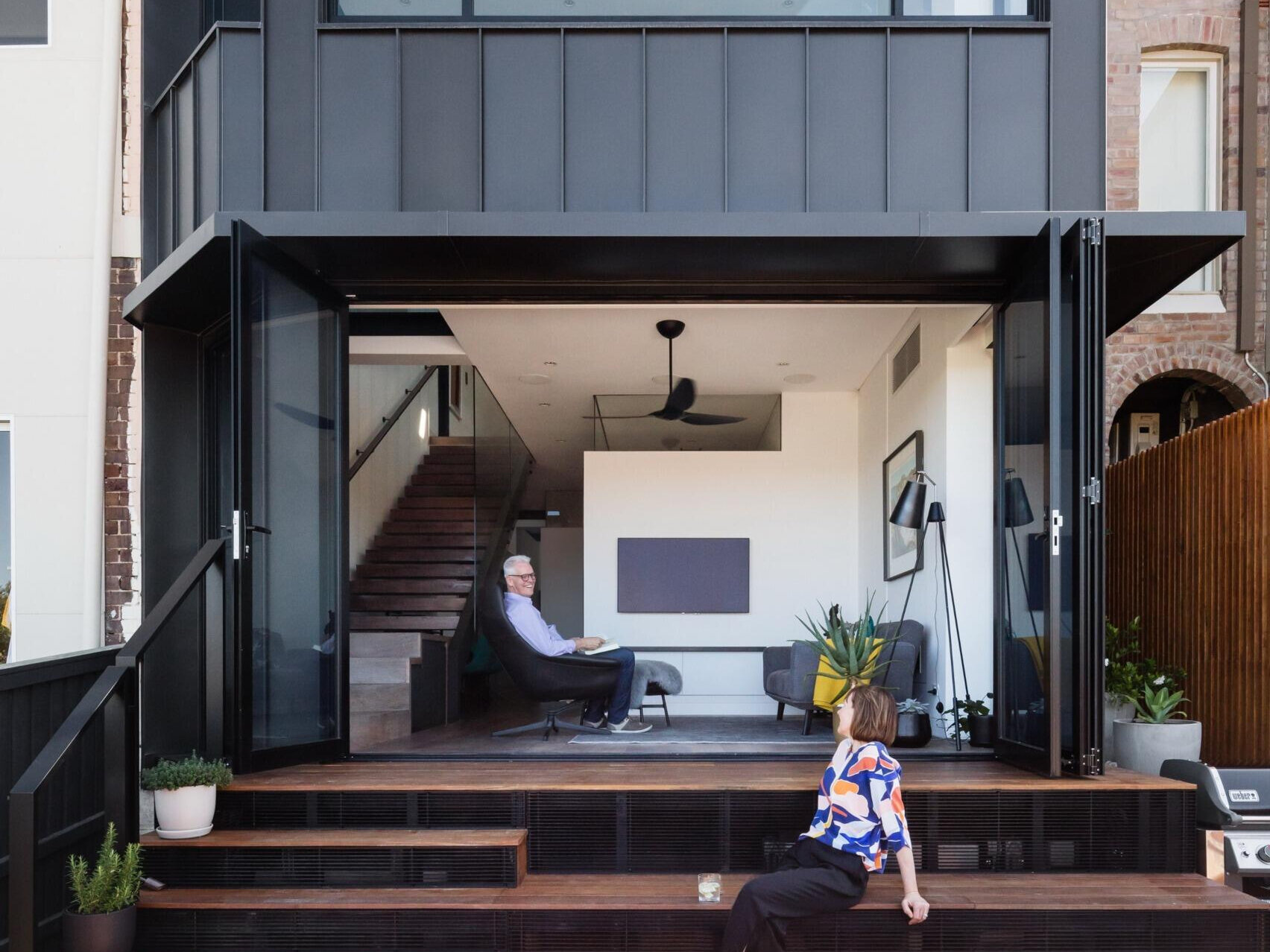
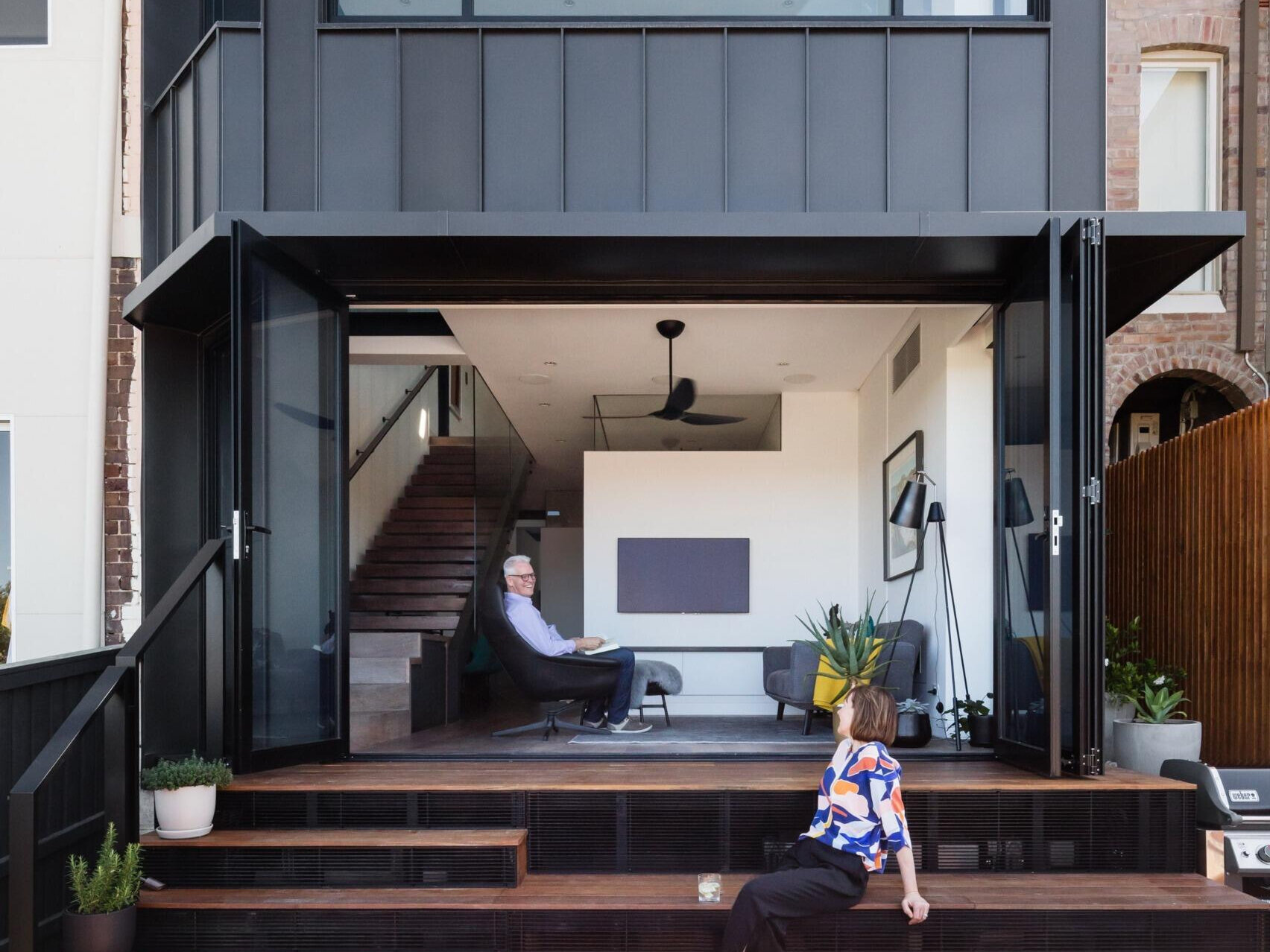
From the moment you step inside this house, it is clear this is not a typical renovation. What began as a traditional home has been carefully reworked into something far more layered and sensory, where light, materials and views guide you from one space to the next. Designed by Bijl Architecture, the project blends a modern extension with a full interior renovation, creating a home that feels open, connected and deliberately removed from the past.
A Brief That Asked for a Clean Break
The homeowners were clear about what they wanted from the start. They asked for a house where, in crossing the threshold, the past would be left behind. At the same time, they wanted living spaces that felt connected yet still able to function independently.
That idea shapes the entire experience of the home. Rather than opening everything up into one vast interior, the design allows rooms to be experienced simultaneously through layered views, changes in level and carefully placed openings. It creates a sense of movement, where you are always aware of what lies beyond without losing privacy.
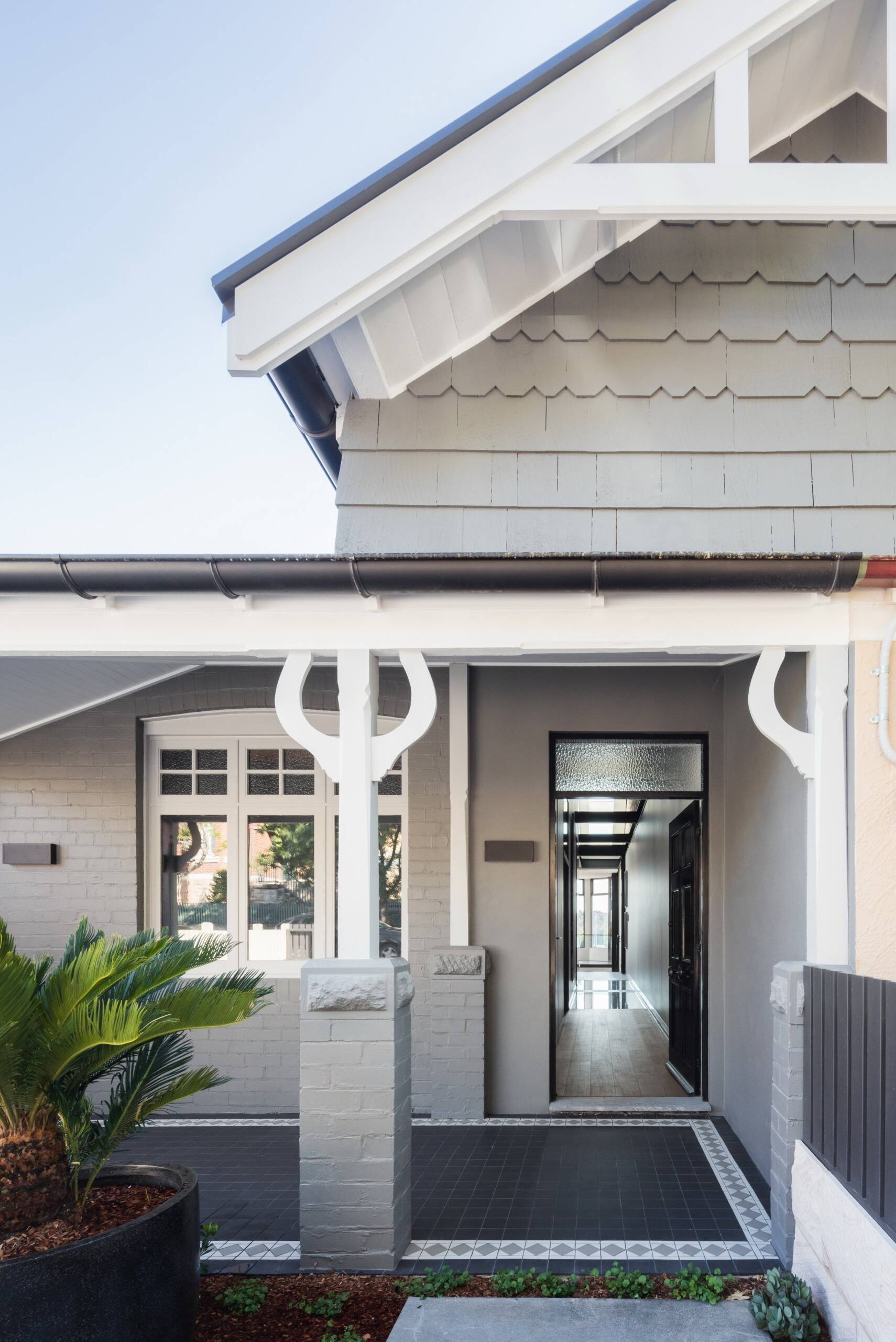
Modern Elements Set the Tone
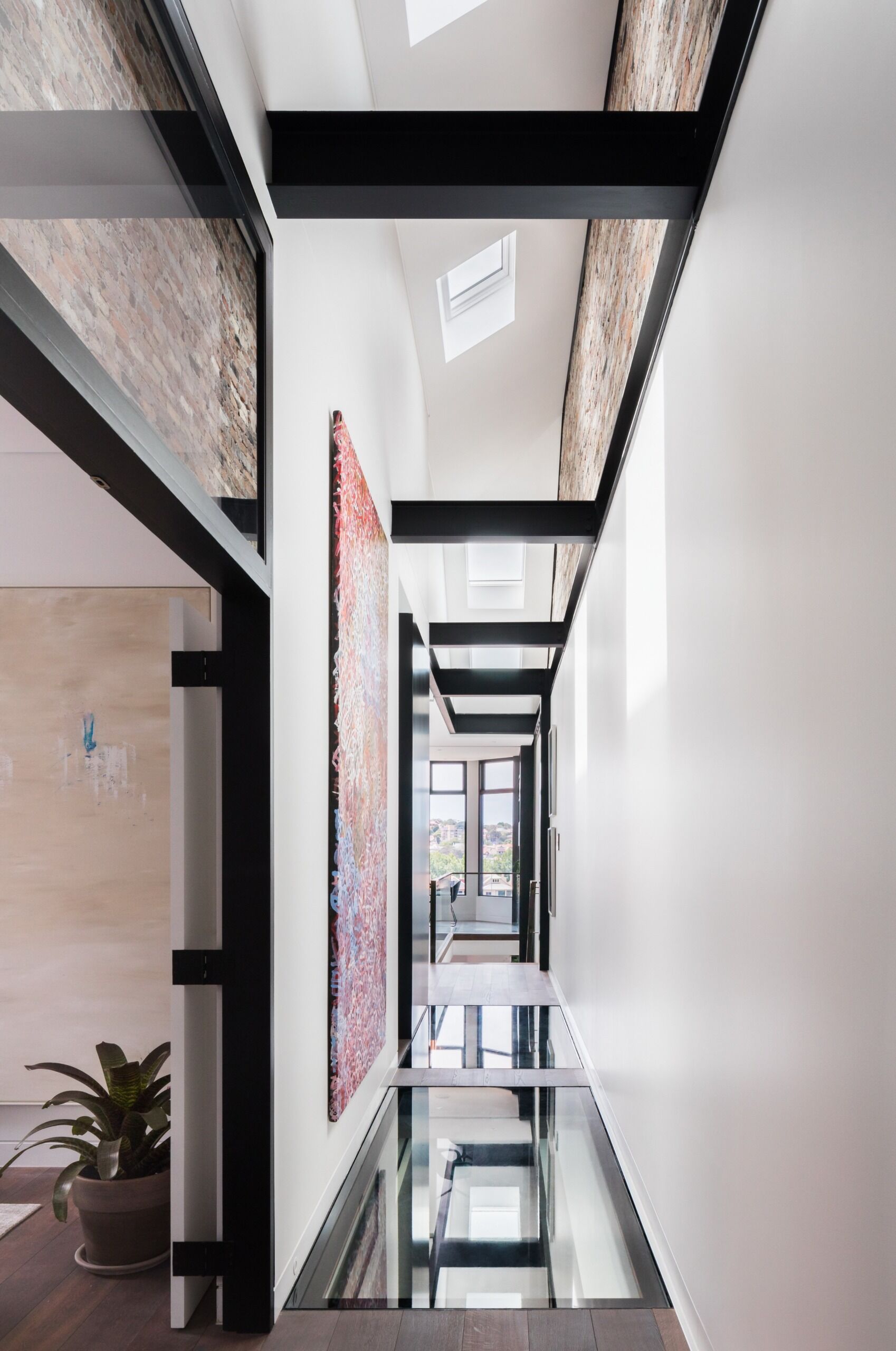
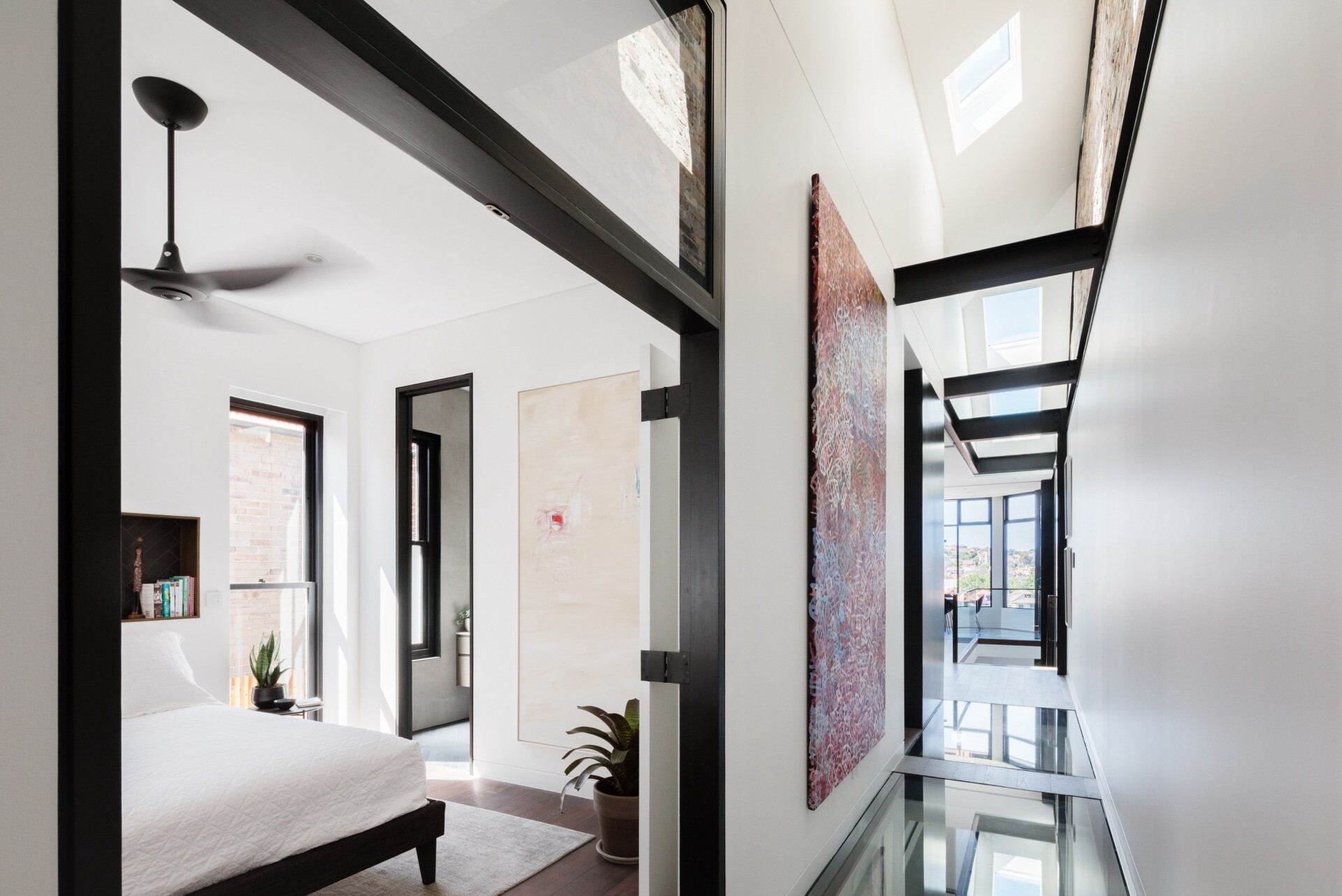
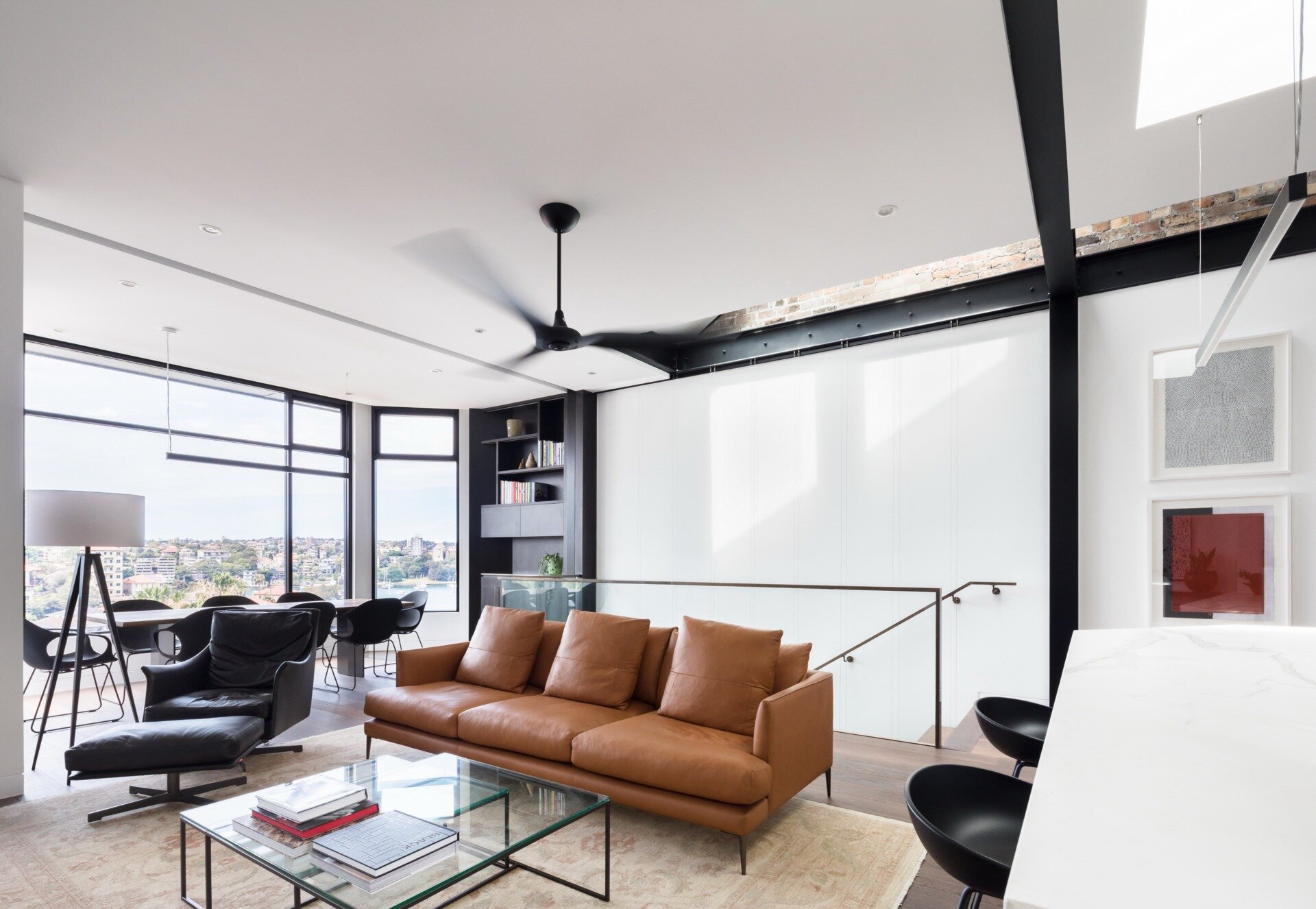
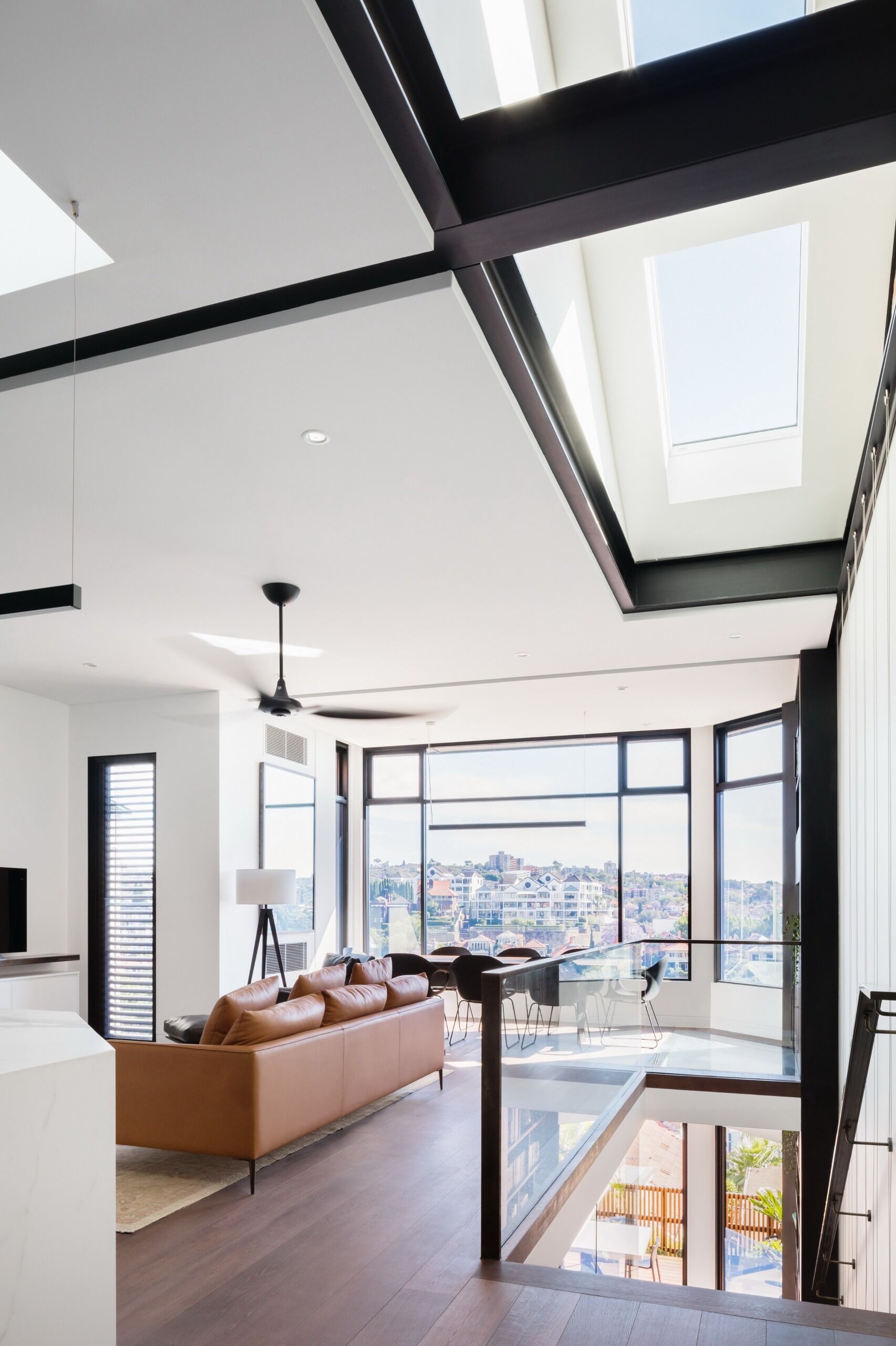
Once inside, the modern language of the renovation becomes immediately apparent. Glass plays a leading role throughout the house, appearing as skylights, glass flooring, highlight panels and balustrading. These elements work together to draw natural light deep into the interior, making the home feel bright and open despite its narrow footprint.
Steel detailing adds structure and contrast, while the restrained material palette keeps the focus on light and spatial flow rather than decoration.
A Private Primary Suite Off the Hallway
Located just off the hallway, the primary suite is positioned as a quiet retreat within the home. It includes a generous walk in closet and a private ensuite bathroom, offering separation from the main living areas without feeling disconnected.
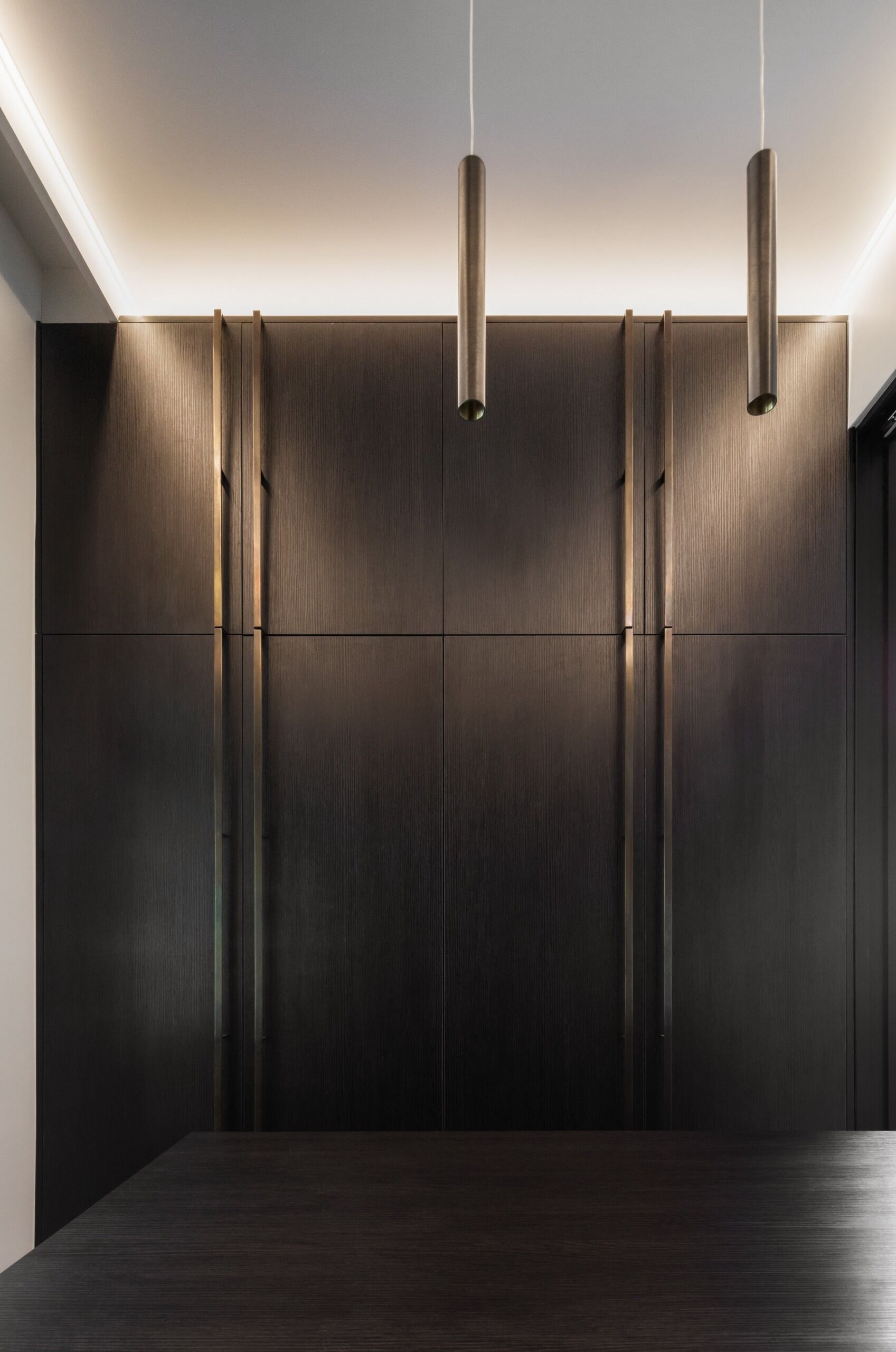
The walk in closet continues the darker palette, with deep cabinetry paired with bronze hardware. The materials add warmth and weight, creating a space that feels tailored rather than purely functional.
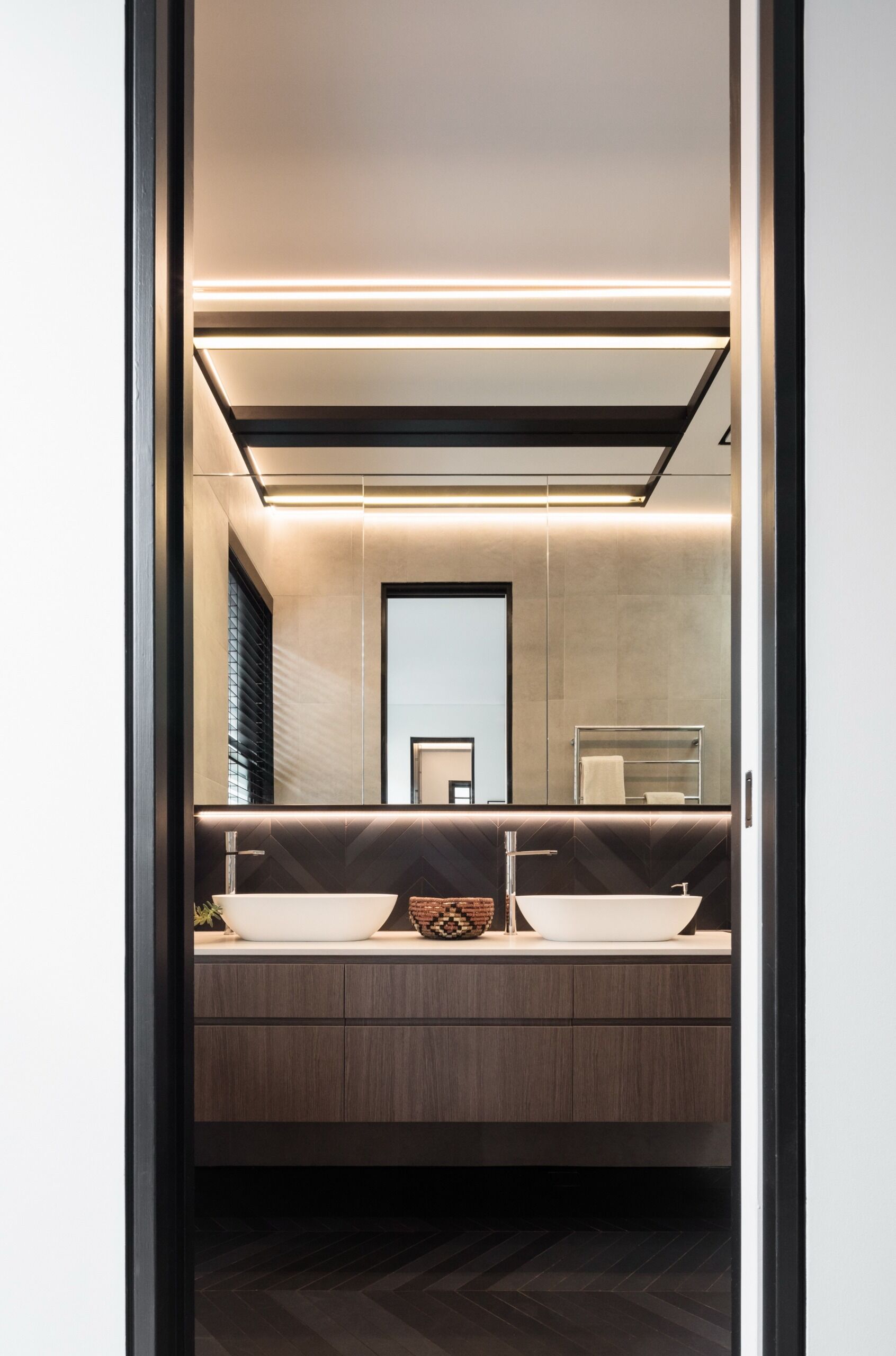
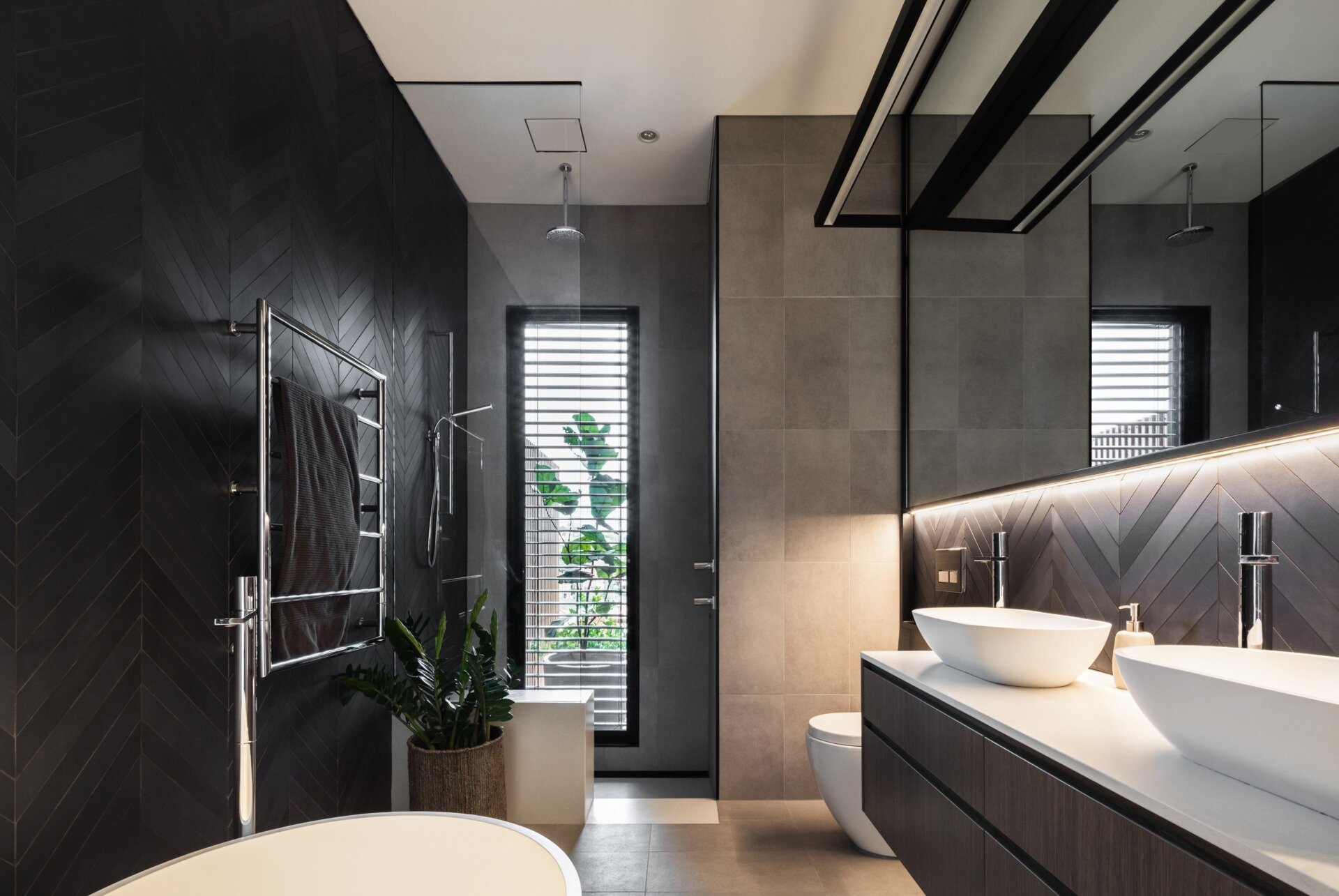
In the ensuite bathroom, darker finishes introduce contrast. A chevron patterned backsplash and matching floor bring texture and depth, while hidden lighting around the mirror adds a soft glow rather than harsh illumination.
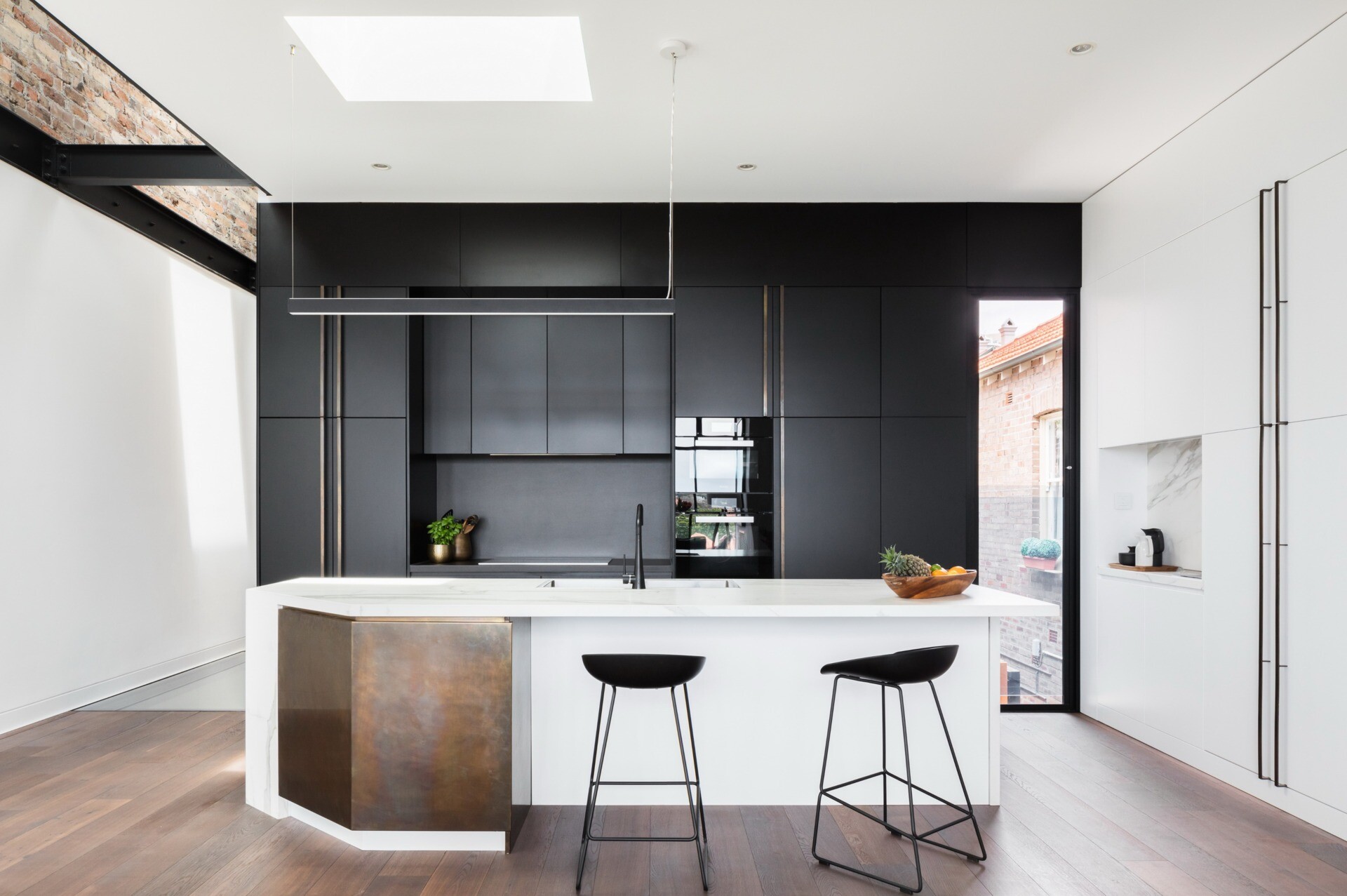
A Kitchen That Balances Light and Contrast
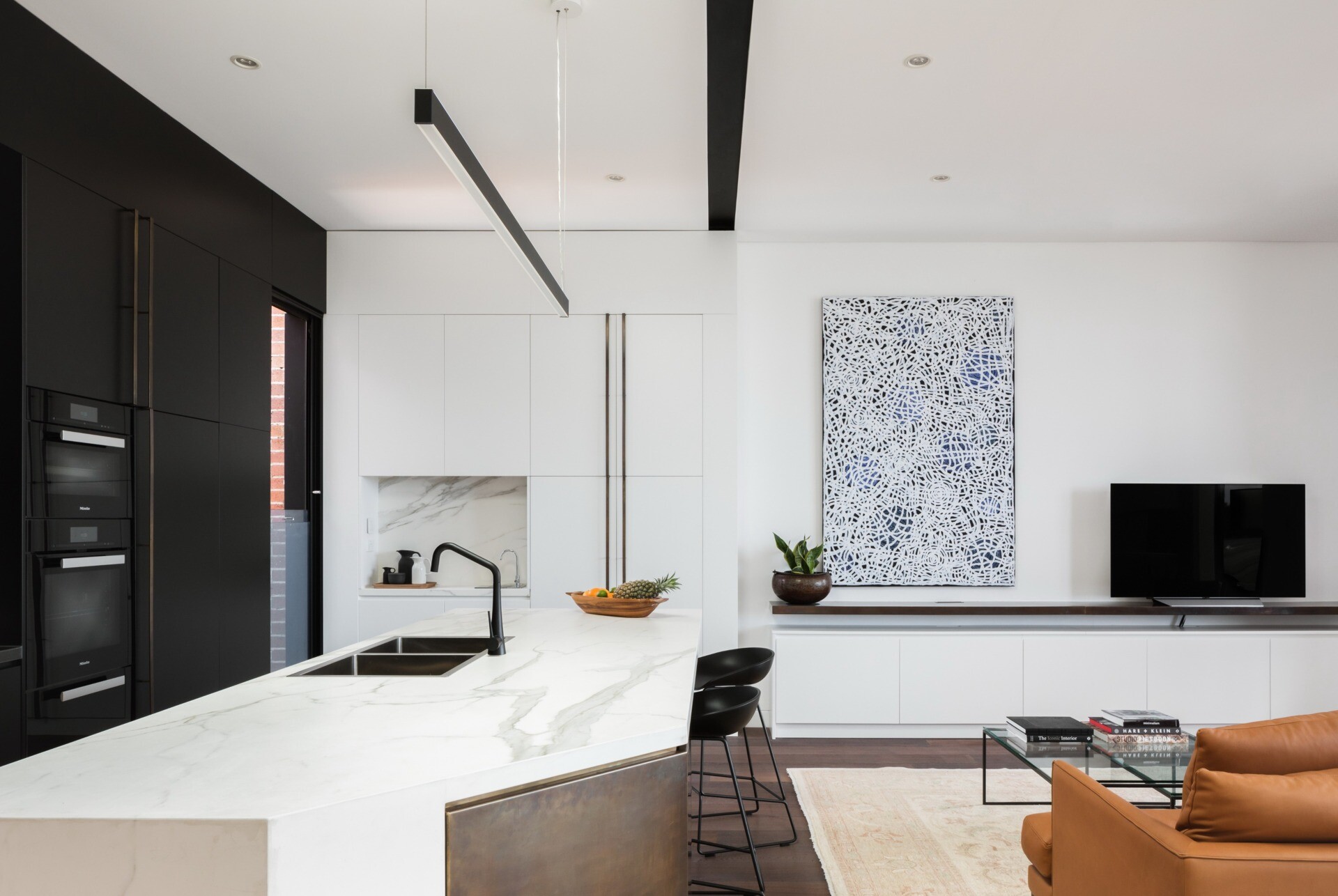
At the end of the hallway sits the kitchen. Black cabinetry lines one wall, grounding the space, while a white island and sections of white cabinetry prevent it from feeling heavy. The kitchen acts as a visual anchor, connecting circulation spaces to the main living areas beyond.
Living and Dining With a View
From the kitchen, sightlines open up toward the living and dining areas. Black steel cross beams stand out against crisp white walls, adding an industrial edge without overpowering the space.
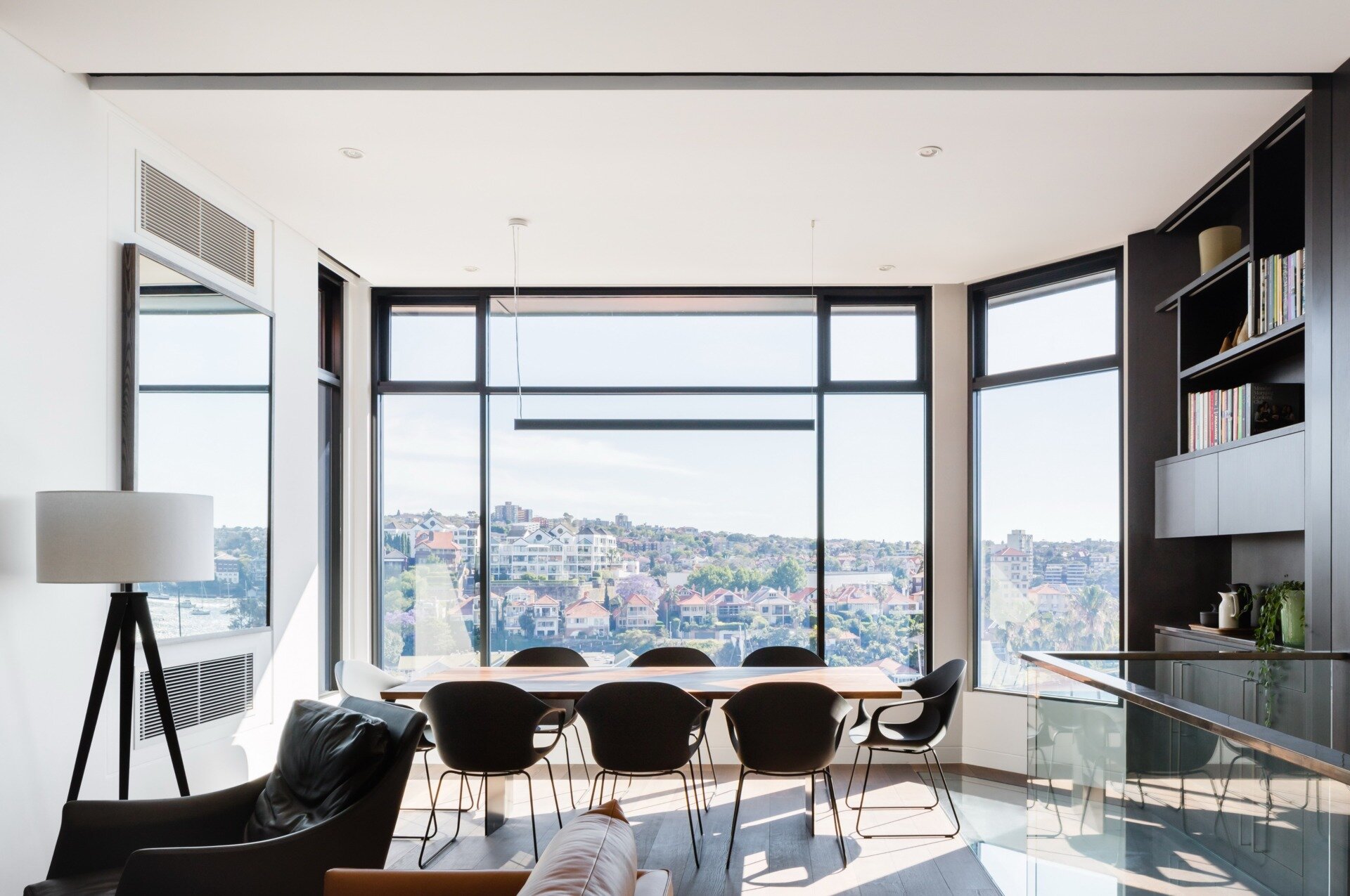
The dining area is carefully positioned to take full advantage of the sweeping harbor views, making it a natural gathering point within the home.
Custom Built In Shelving as a Feature
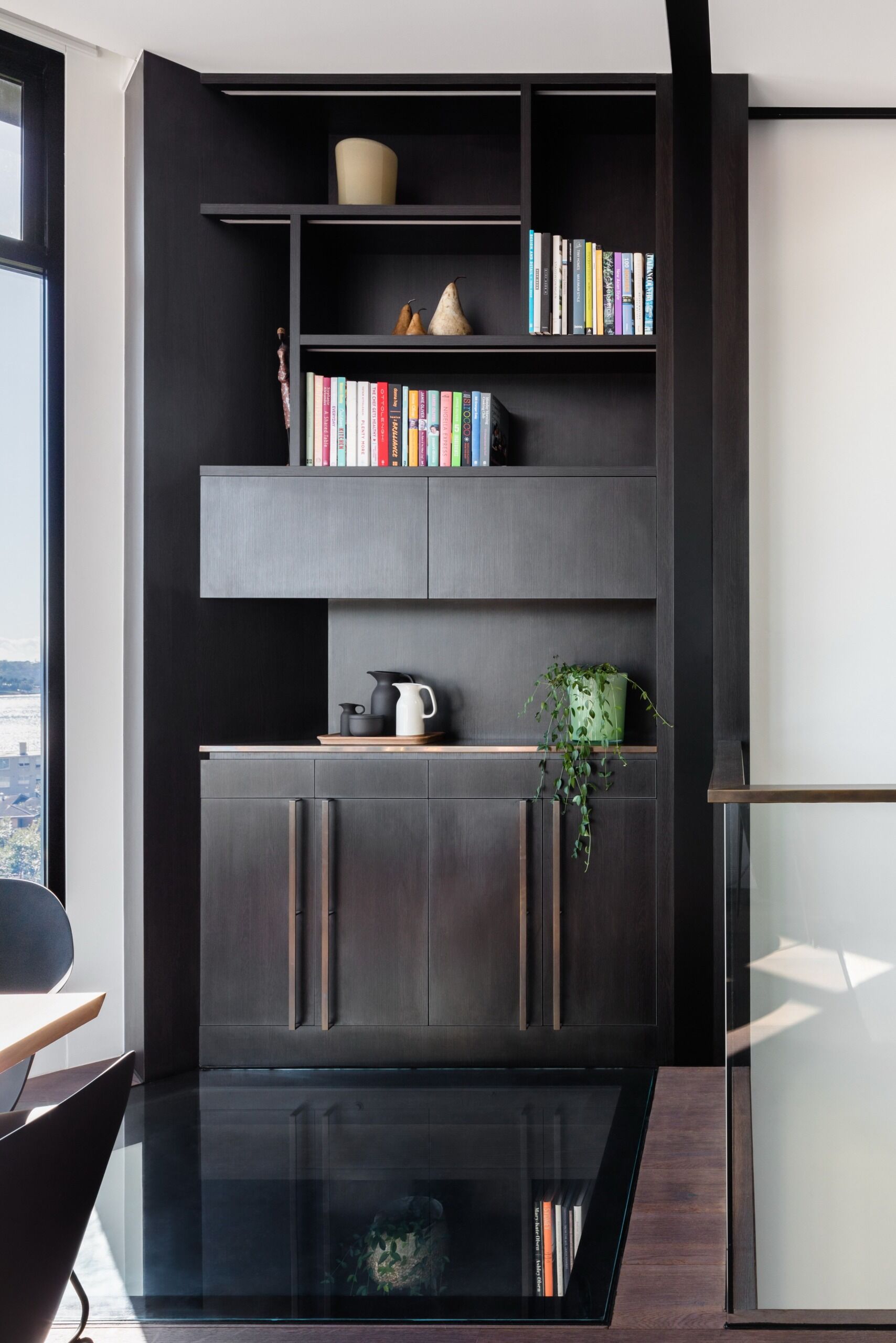
In the dining area, a custom designed built in shelving unit becomes a focal point. More than just storage, it reinforces the home’s gallery like quality, providing space to display books, objects and art collected over time.
Light Filtering Down Through the Staircase
Skylights positioned above the stairs allow natural light to filter down to the lower level. This vertical connection ensures the home feels cohesive rather than stacked, with daylight guiding movement between floors.
Cantilevered Stairs and a Shared Workspace
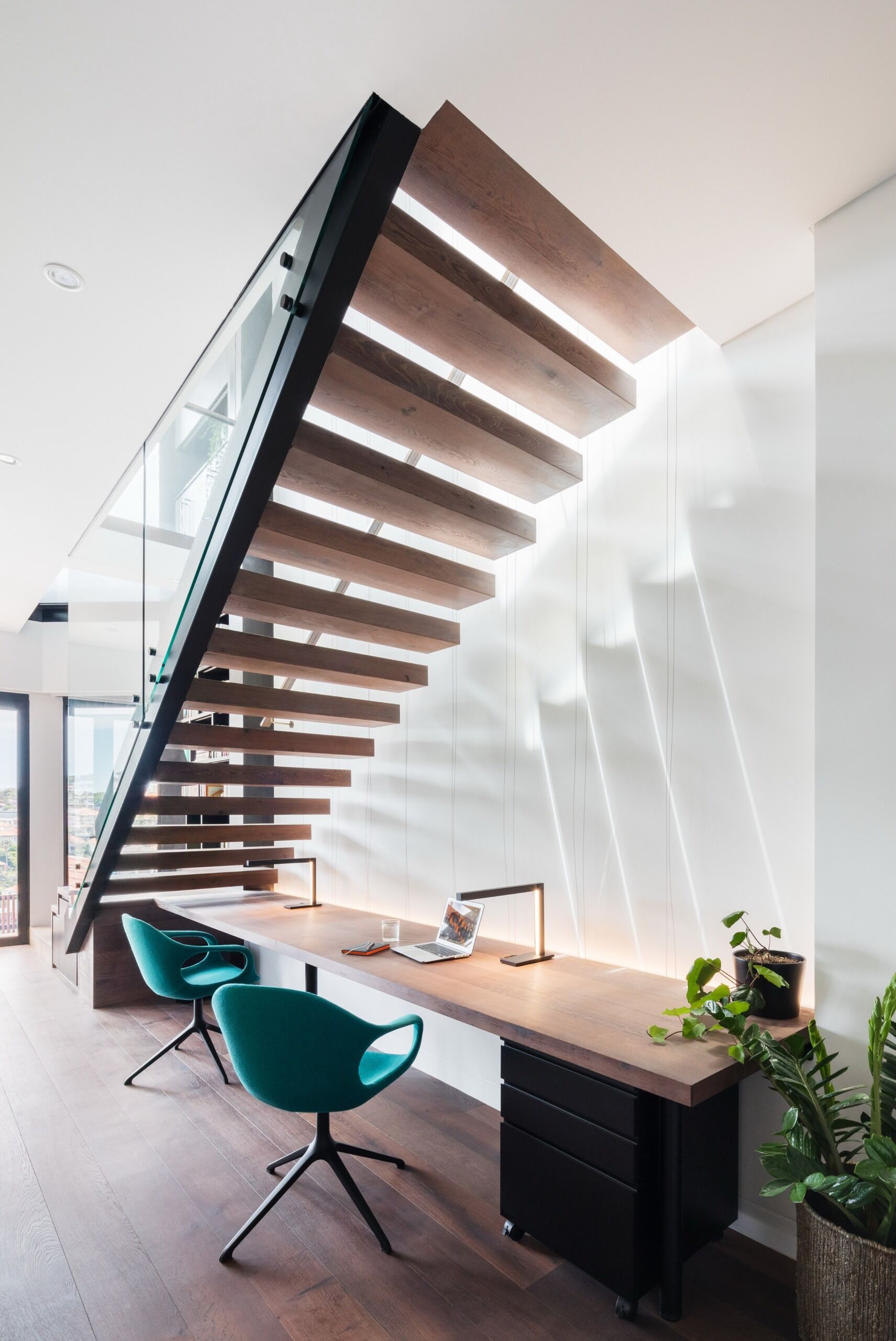
The stairs themselves are cantilevered, with timber treads and a steel balustrade that keeps the structure visually light. Beneath them, a built-in desk with a timber work surface creates a shared workspace large enough for two people.
Outdoor Dining With Harbor Views
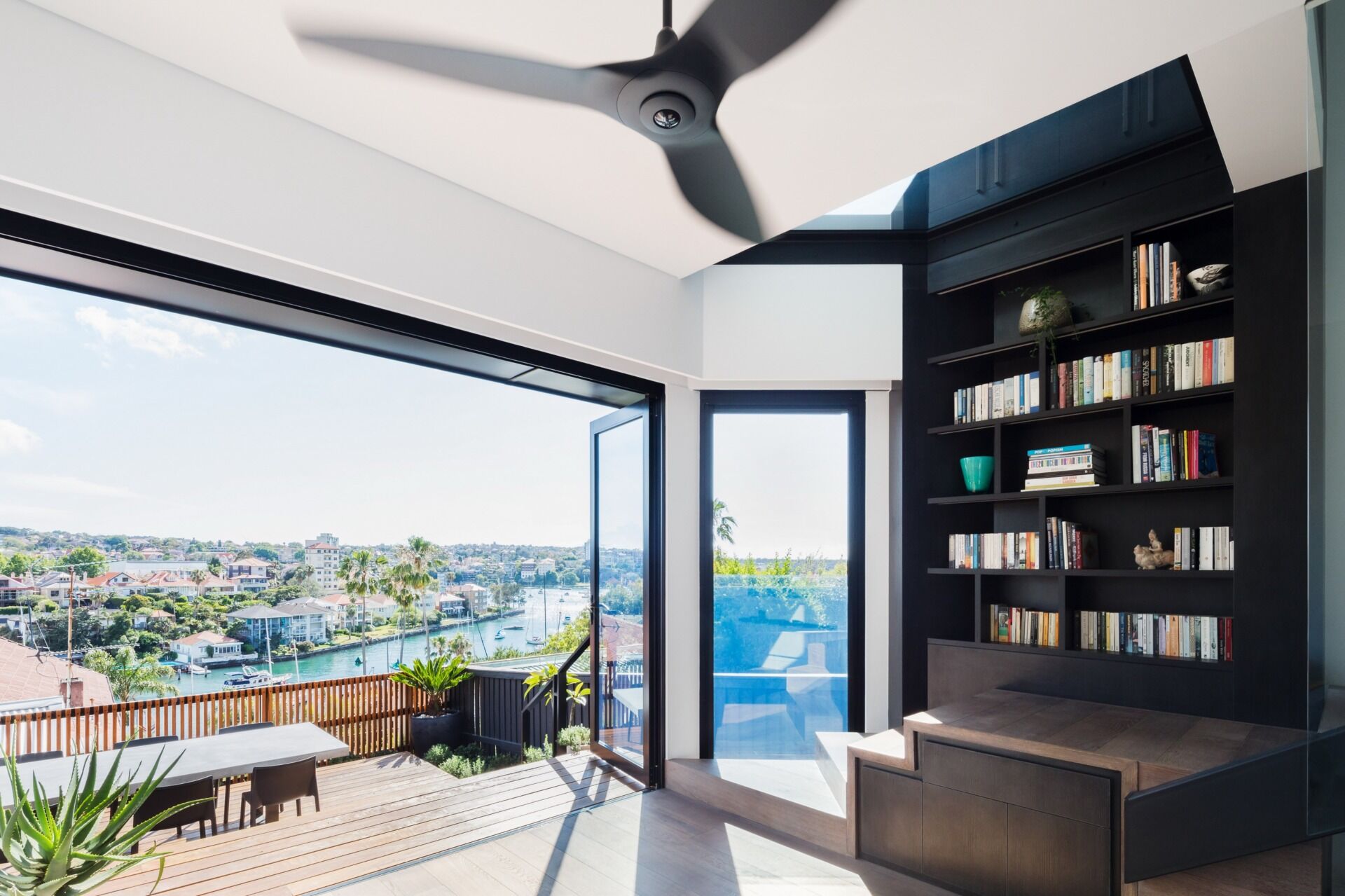
The lower level opens directly onto a spotted gum timber deck set up for outdoor dining. Positioned to take in the harbor view, the deck extends the living spaces outdoors and reinforces the connection between inside and out.
Bleacher Style Steps Create a Third Living Space
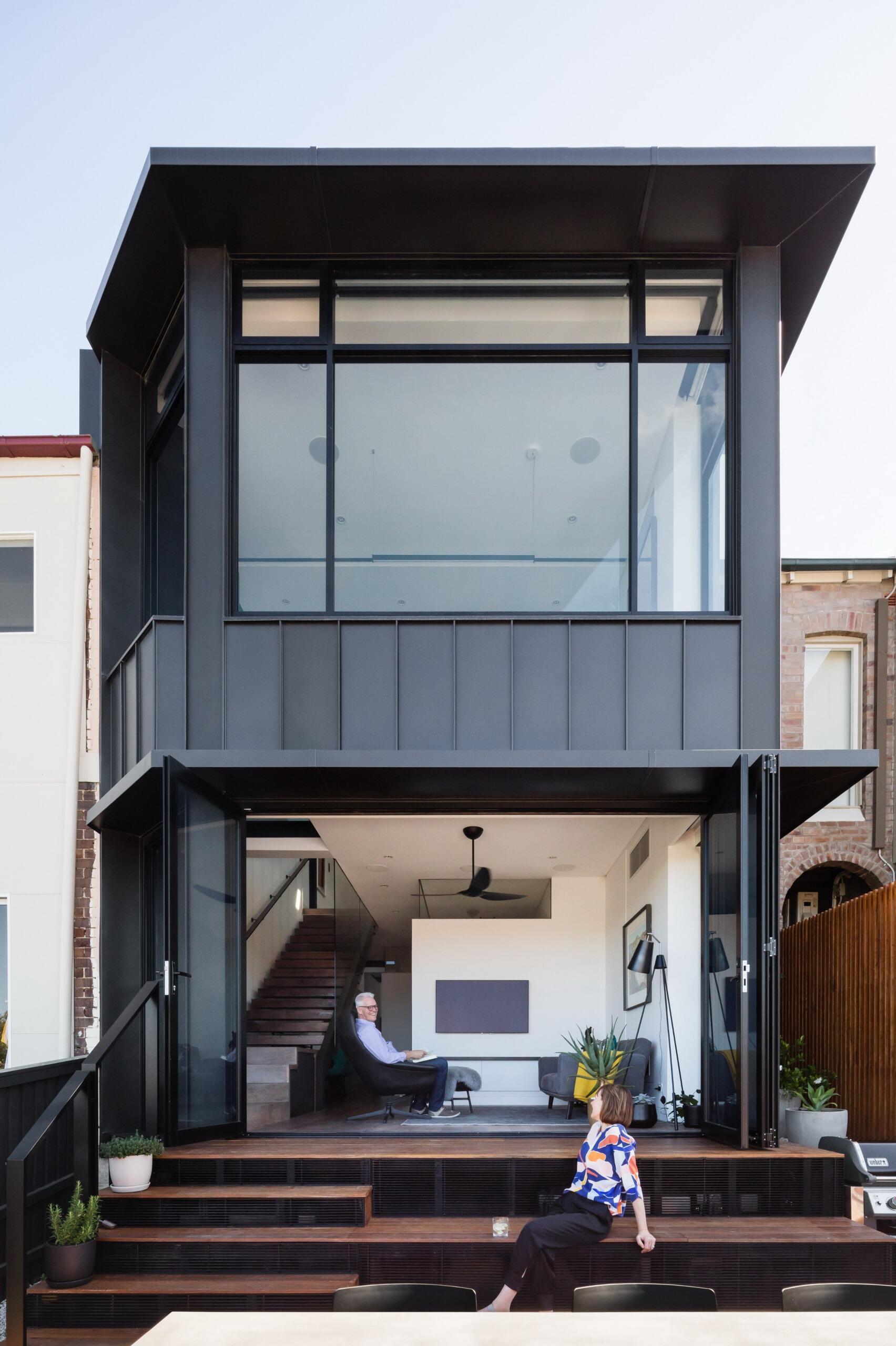
Looking back toward the extension, bleacher style steps bridge the level change between inside and outside. They extend the study and sitting room, forming a third living space that can be used casually throughout the day. This gesture reflects the architects’ interest in layered living rather than clearly defined rooms.
A Light Filled Lower Level Hallway
The hallway on the lower level benefits from the skylights above, drawing in daylight while offering views of the ridgeline 12 metres overhead. Even circulation spaces feel considered, connected to both light and landscape.
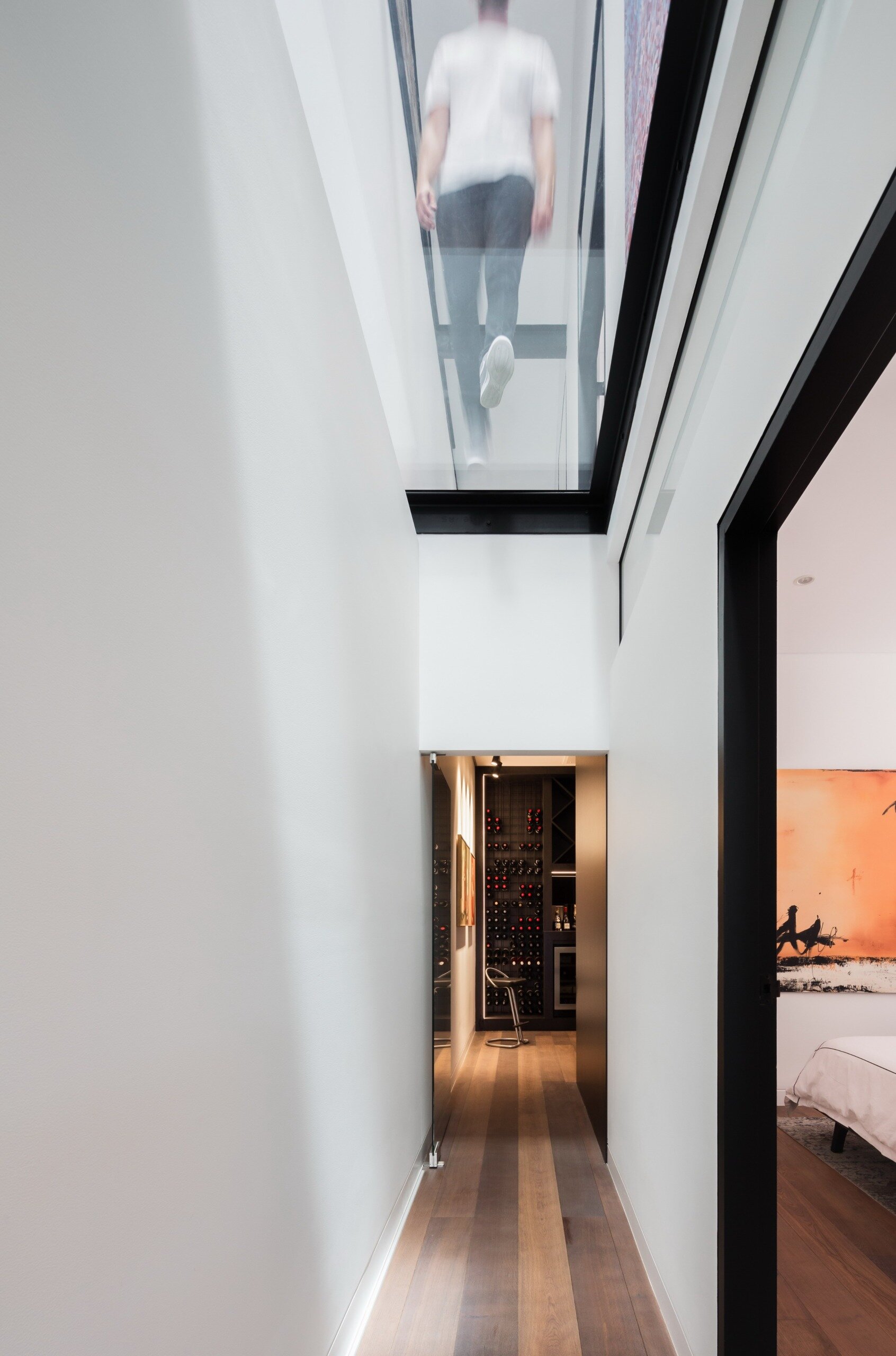
A Wine Cellar at the End of the Hall
At the end of the hallway sits the wine cellar. Dark custom joinery provides generous storage for wine, books and glassware, creating a space that feels both practical and indulgent.
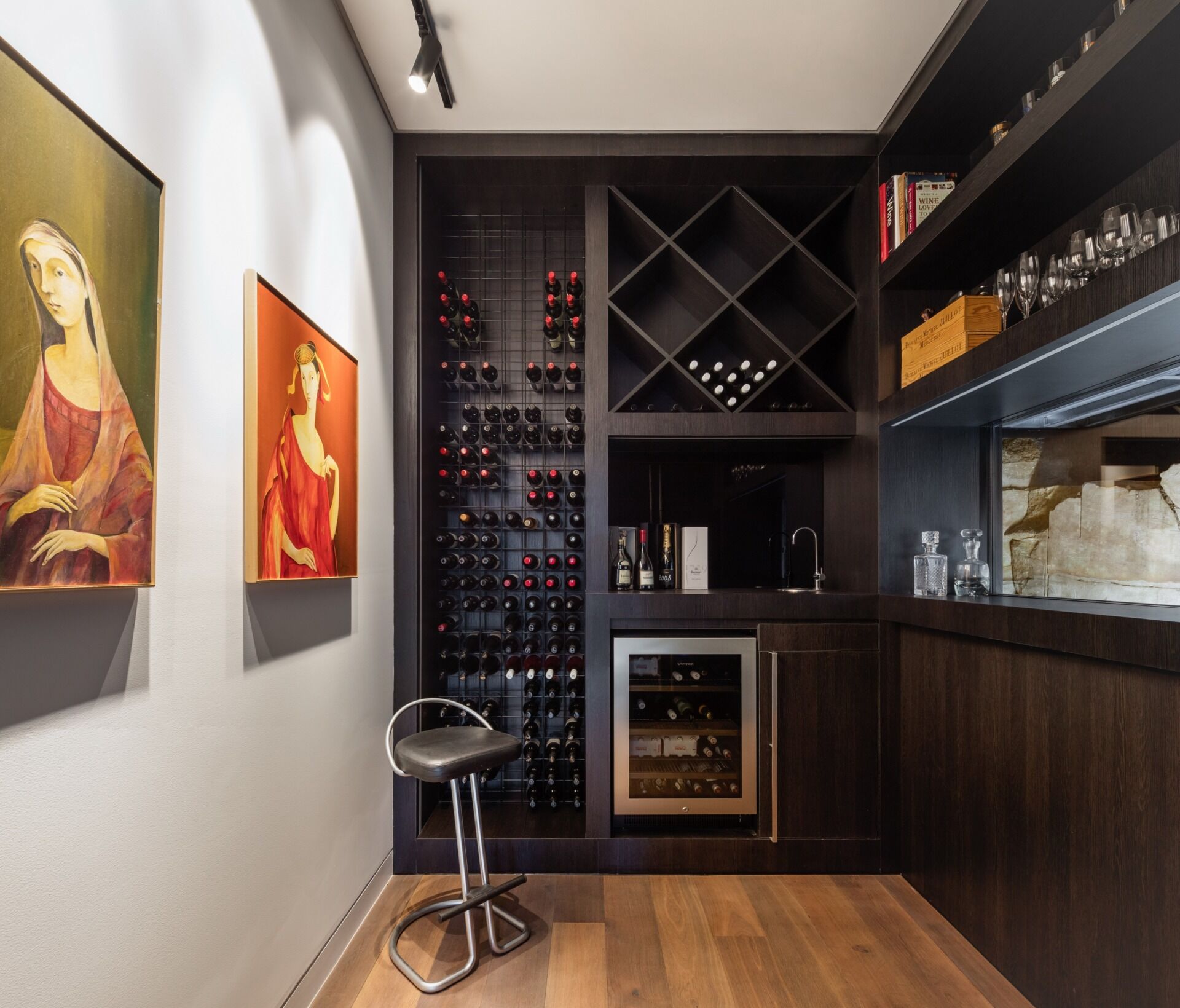
Bedrooms and a Bathroom With Garden Views
Also on the lower level are two bedrooms and a shared bathroom. The bathroom repeats the chevron pattern used in the primary ensuite, creating continuity throughout the home. A vertical window in the shower looks out to surrounding plants, while a freestanding bathtub sits beside a frosted window that maintains privacy from the nearby garden path.
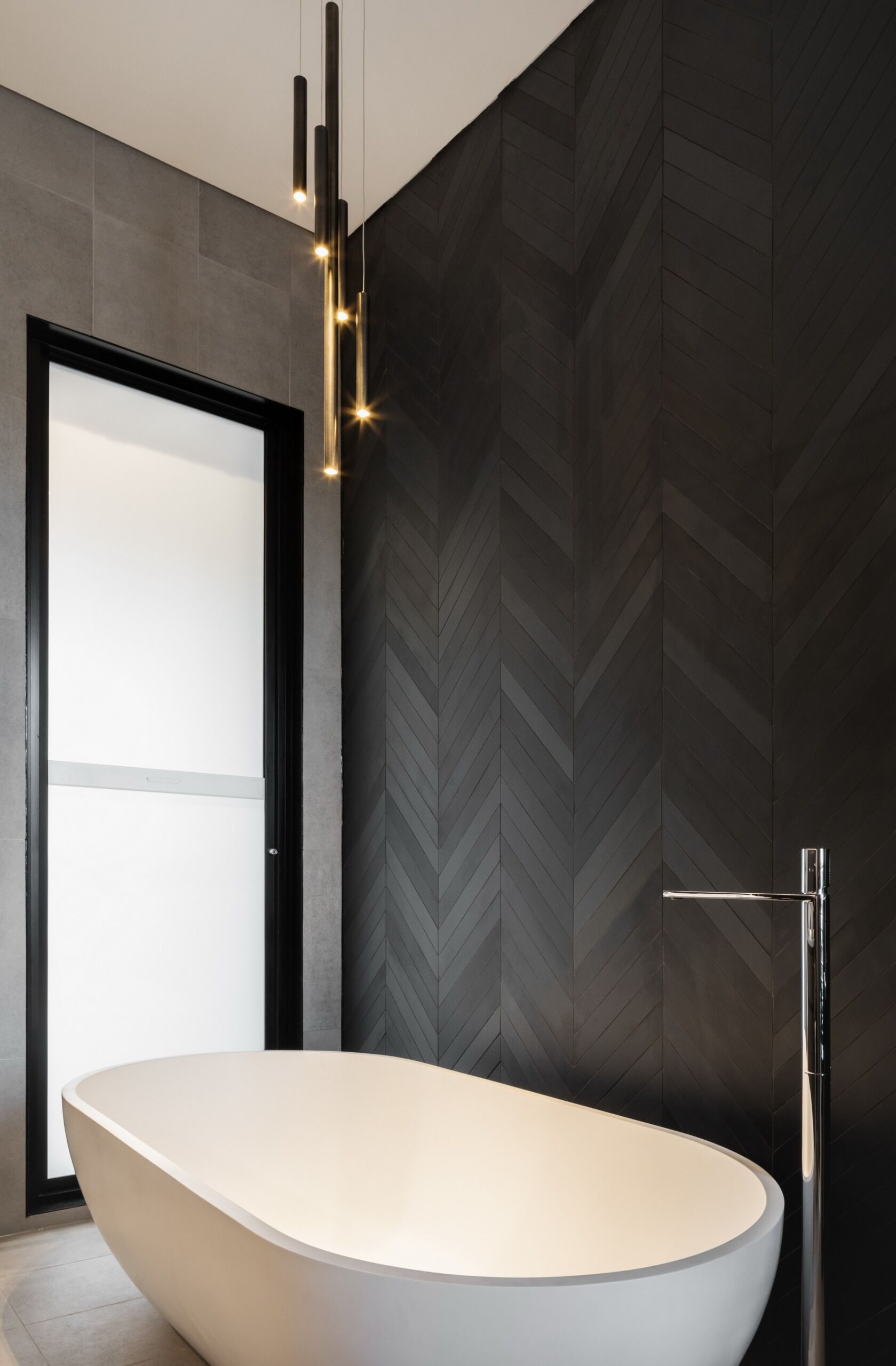
This renovation shows how light, structure and material can completely reshape the experience of a home. By using glass floors, skylights and layered views, Bijl Architecture have created a house that feels open yet grounded.
Photography by Katherine Lu | Architect: Bijl Architecture | Stormwater Engineering: Partridge | Structural Engineering: Cantilever Consulting Engineers | Landscape Architects: Ground Ink | Builders: SKOPE Constructions
Source: Contemporist