Design Skill Awards / 2025
Architecture
AWARDED NOMINATIONBest Small Scale Architecture
Valelaca Rokataki (Prismatic Parasol)
Discover the projectBehind the distinction.
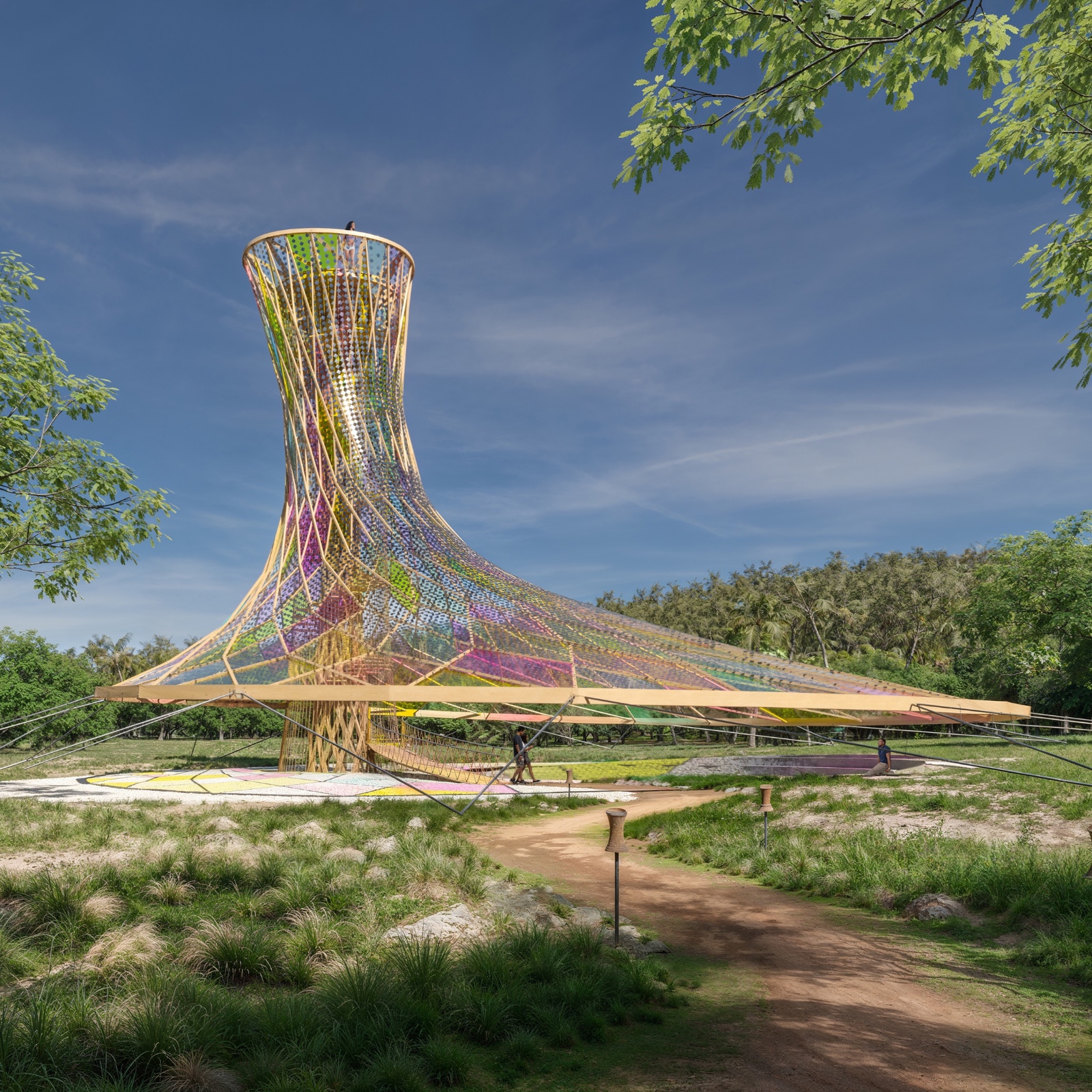
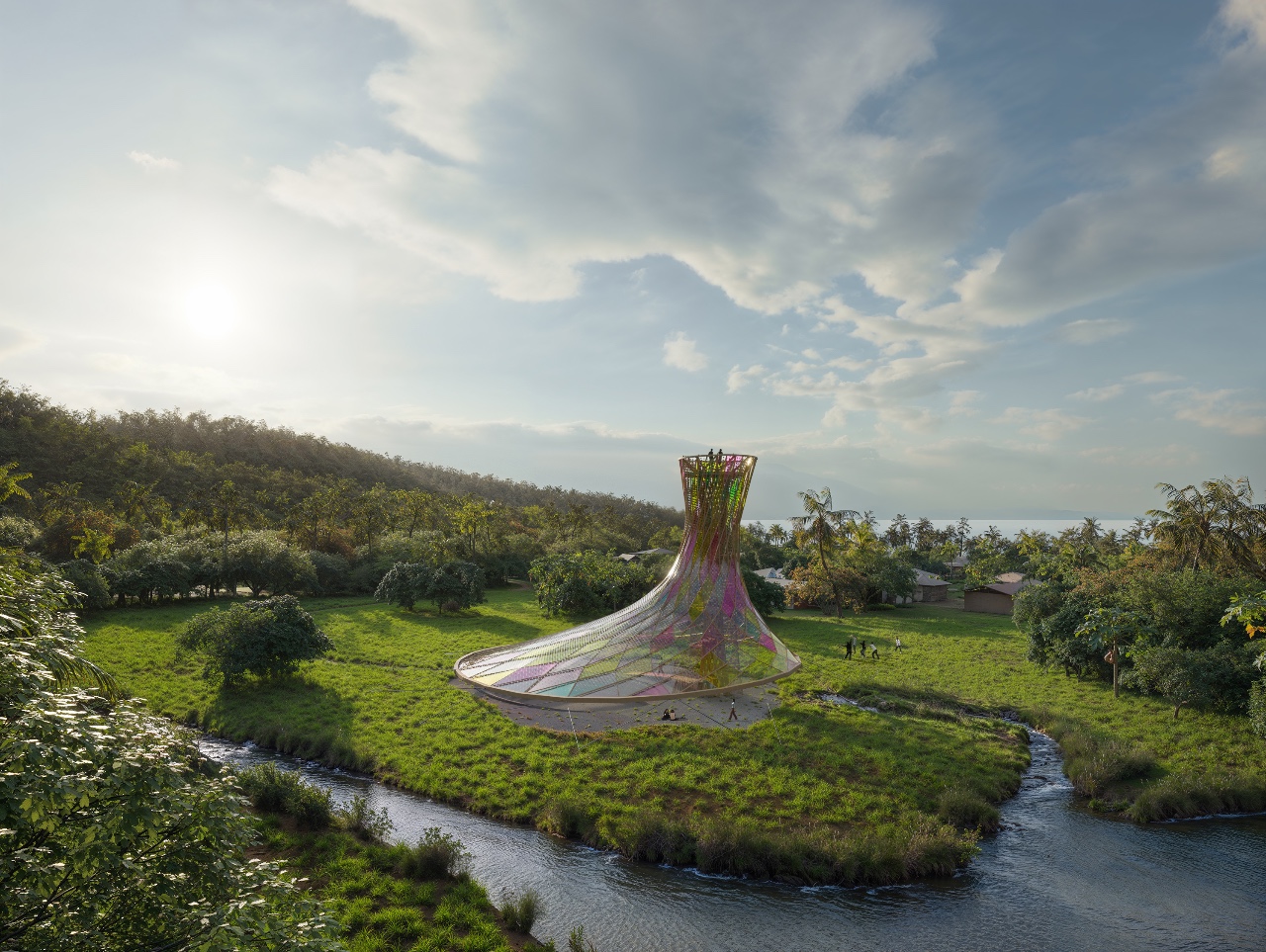
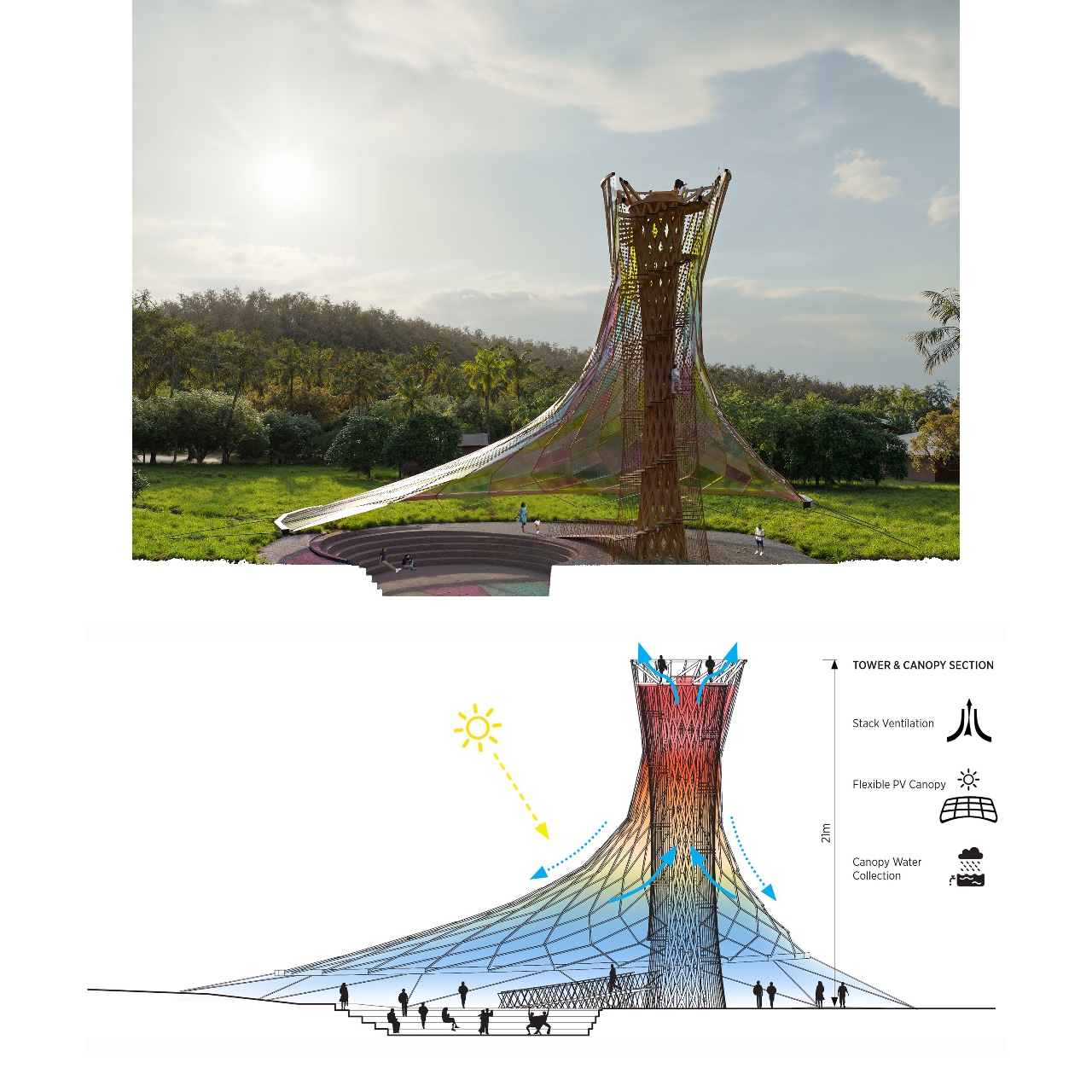
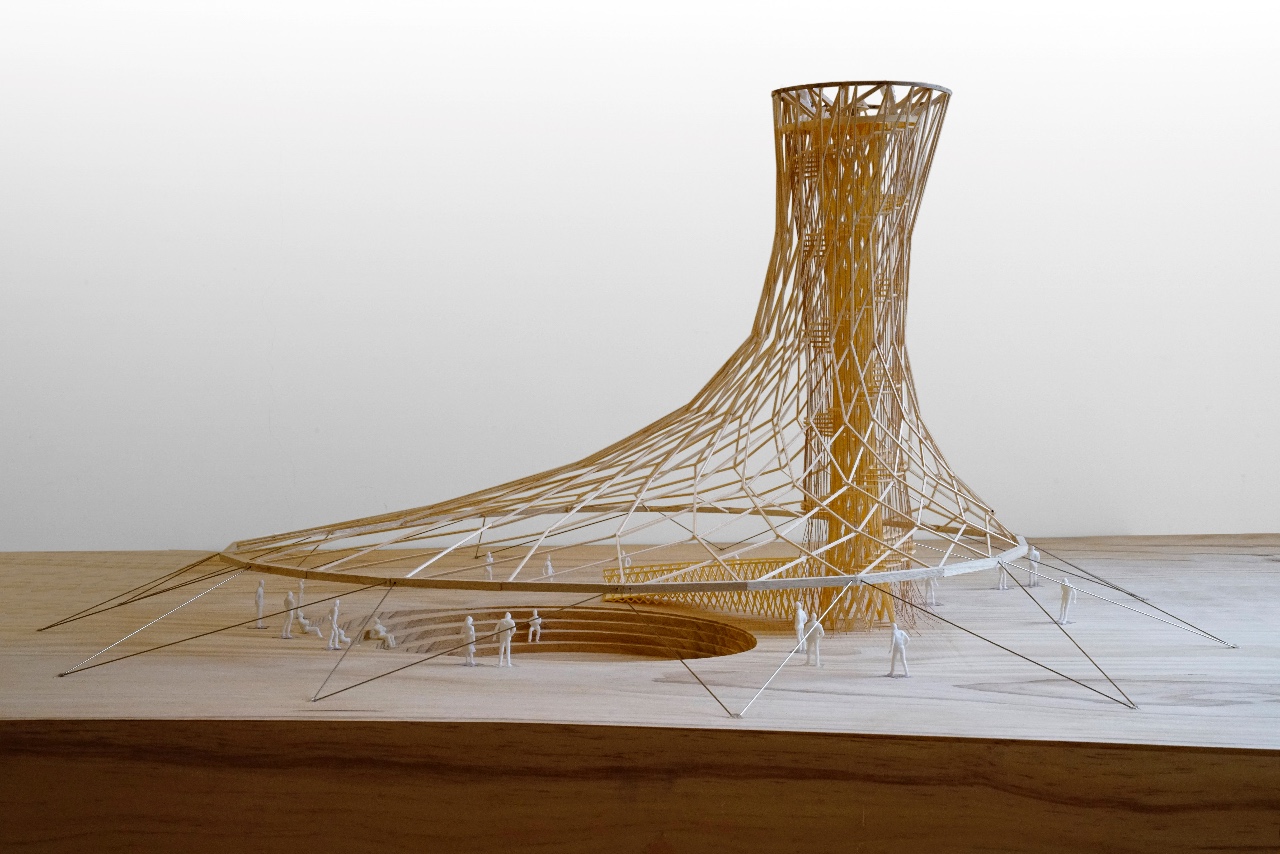
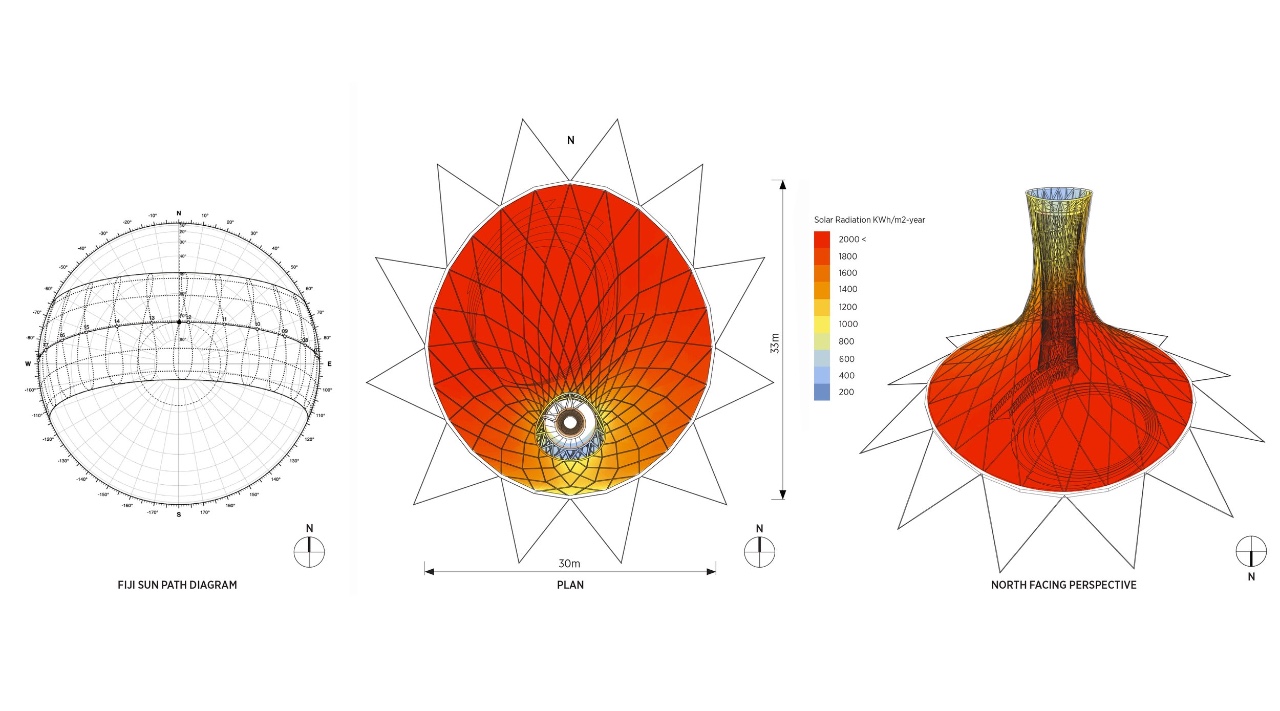
As a solar installation, we designed a form that is a space of prospect and refuge – a tower overlook and a canopy parasol. The form of our installation is designed to exactly mirror the ecliptic path of the sun with an ideal geometry. A North-facing convex canopy is formed with a precise curvature for maximum solar irradiance and is “shingled” with transparent flexible photovoltaic (PV) sheets.
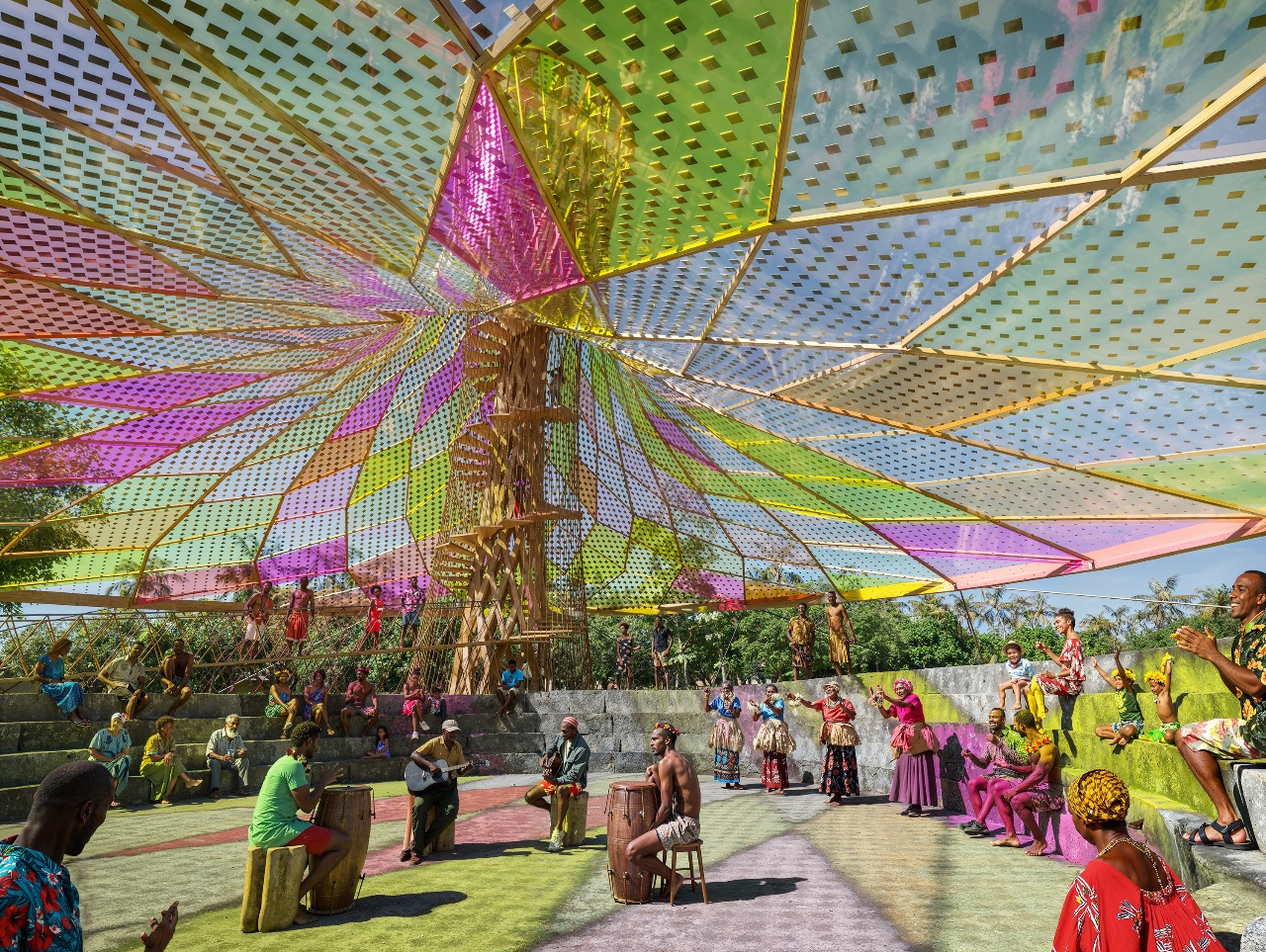
The colorful prismatic parasol creates a community center for celebrating festivals and events, holding village meetings, relaxing in the shade or sheltering from the rain. The canopy shelters an amphitheater dedicated to community events and uses. As an open-air venue the amphitheater is flexible for a range of activities, from casual concerts and festivals to school lectures and events. The ramp leading to the spiral stair for the tower overlooks the amphitheater, providing additional viewing area for a “theater-in-the-round” experience.
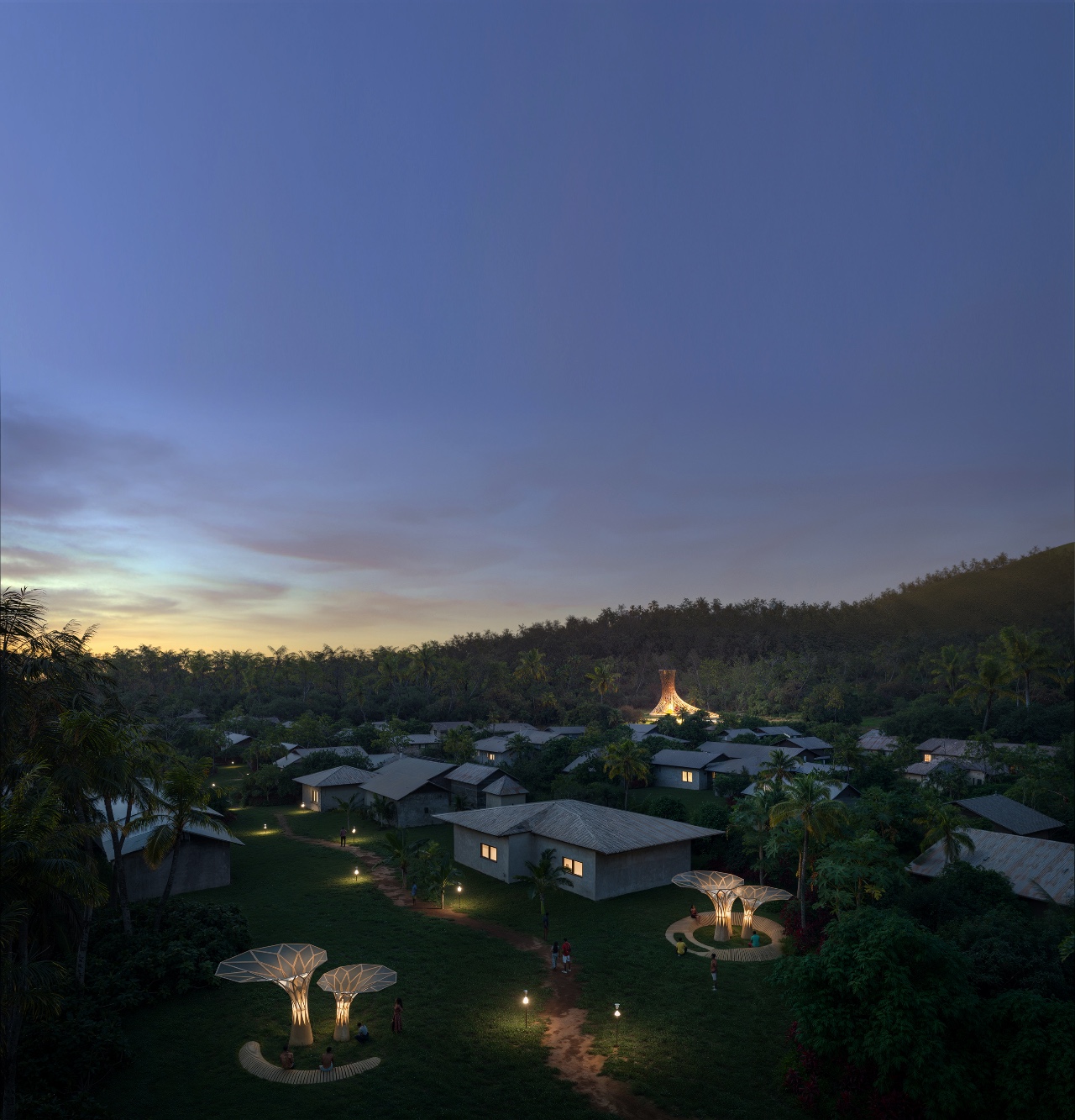
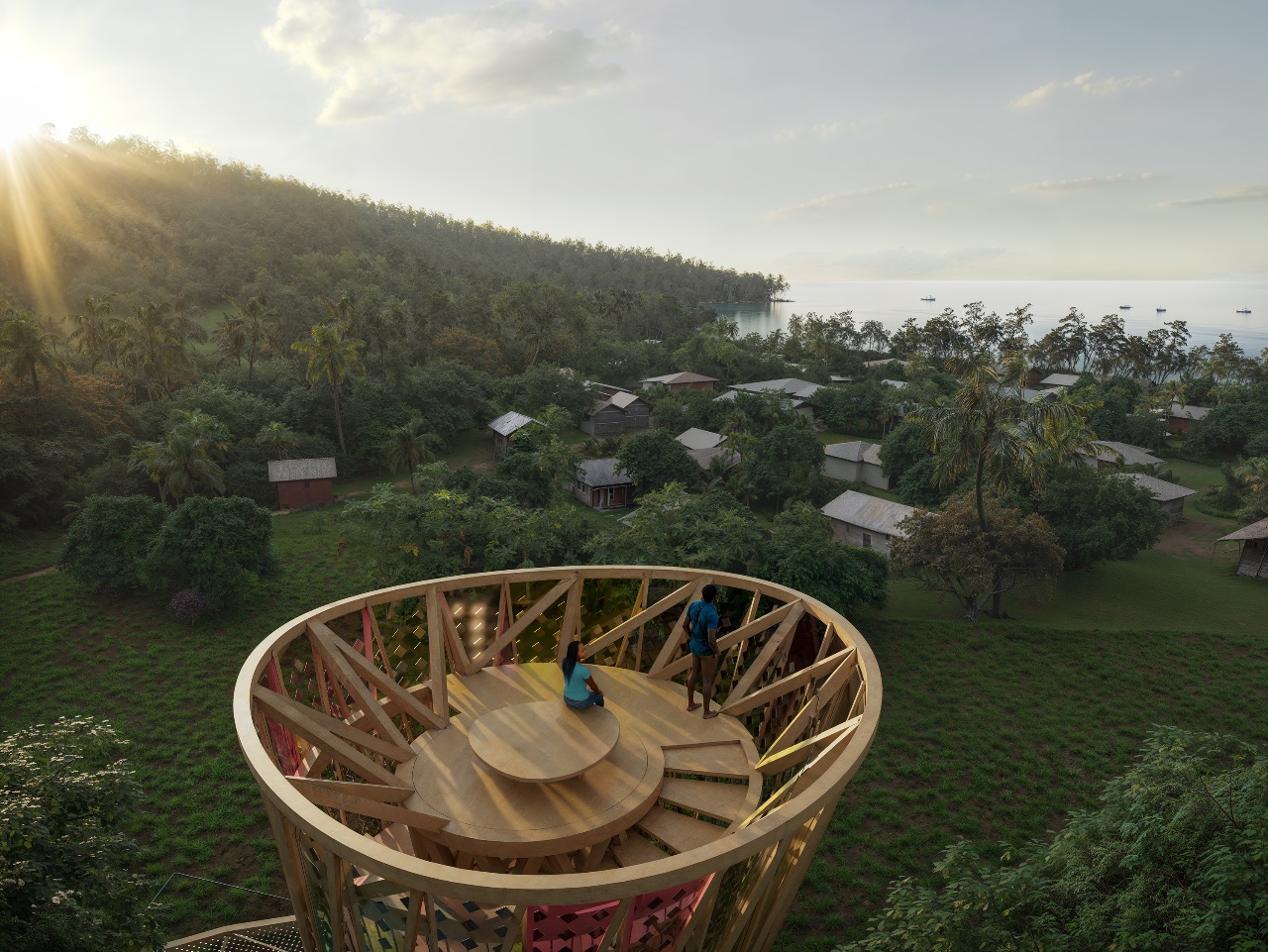
Rising 21 meters above the ground, the tower is an overlook, a place to contemplate the landscape or survey the sea for weather changes or returning fishing boats. At night it is illuminated, providing a return beacon for night fishing. In addition to providing an elevated vantage point, the tower utilizes stack ventilation to passively ventilate the communal space below the canopy. We envision this as a new cultural landmark for Marou village and a destination for eco-tourists visiting Naviti Island.
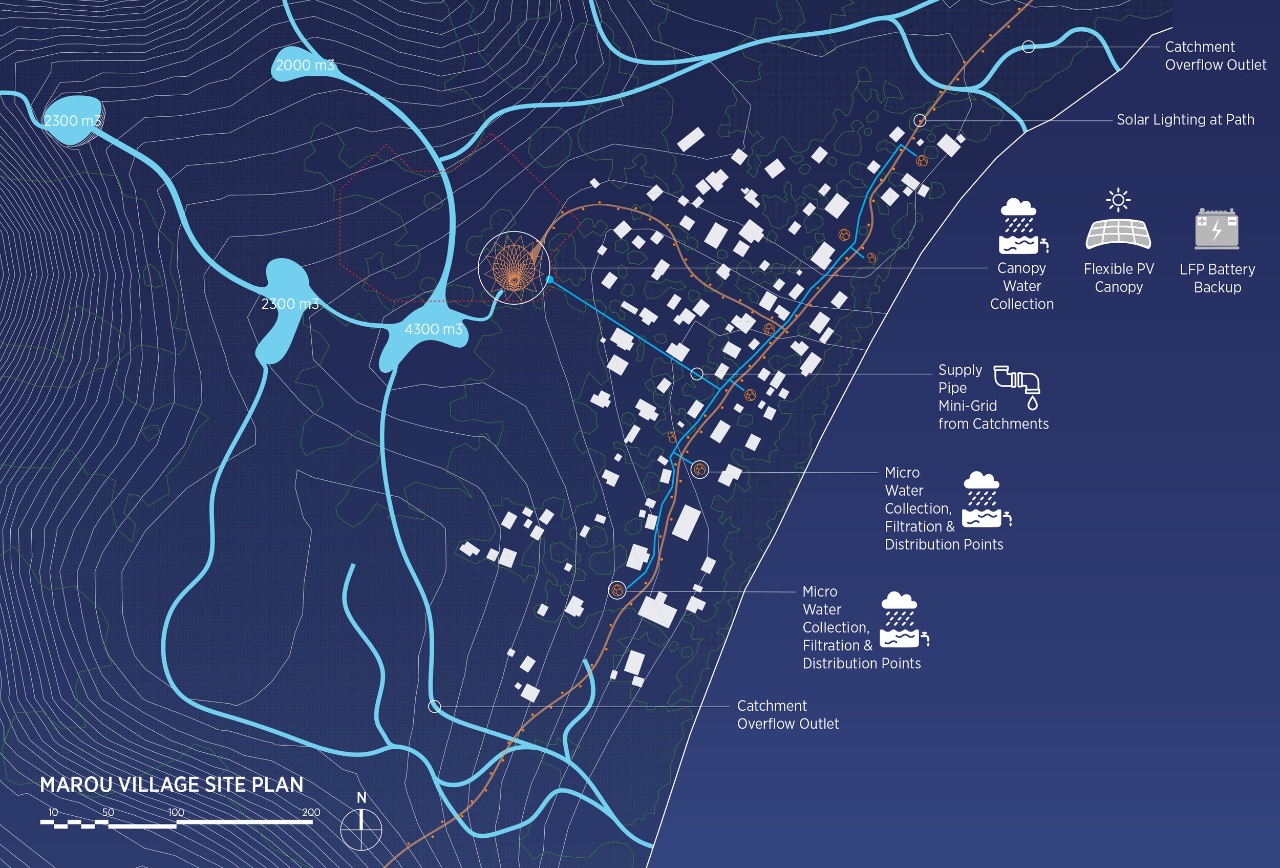
Marou Village has a projected demand of 244 kWh. In our experience, once this demand is met it often increases quickly as residents explore new forms of livelihood. Therefore, we propose a solar canopy and tower capable of generating more than this – an average of 364 kWh per day with an 82 kW system.
Marou Village often floods in the rainy season. The flooding is an opportunity for freshwater collection and energy storage. We propose excavating a series of strategic depressions at specific elevations in the existing gullies above Marou village. These catchments can store the excess water as potential energy and house turbines to convert this into electricity. Located with sufficient vertical separation, excess power can be used to pump water to higher ground as passive energy storage. When power is needed, weirs open to turbines that generate power when the solar cells are not productive (at night or during very cloudy days). At the same time, the catchments collect excess run off from the mountains keeping the water from flowing through and flooding the village. This stored water will serve the village during the dry season when rainfall is scarce. Additionally, we have designed a series of small-scale water collection filter devices to be deployed throughout the village. Specifically designed solar lighting is deployed along the pathways to increase accessibility and support village activity later into the evening.
 THE PEOPLE BEHIND THE PROJECT
OBJECT TERRITORIES
OBJECT TERRITORIES is a critical design practice based in Hong Kong and New York that works at the intersection of architecture, landscape, and urbanism. We engage the built environment at scales ranging from strategic interventions to architectural projects and regional masterplans. We explore the spatial conditions between objects (buildings) and territories (landscapes) to develop intelligent forms with a commitment to public space. Through spatial, programmatic, and material innovation we design to enrich experience and cultivate social relationships. OBJECT TERRITORIES was founded by partners Marcus Carter, Miranda Lee, and Michael Kokora.
All awards for this project
- Design Skill Awards 2025 — Platinum Winner — Best Small Scale Architecture
- Design Skill Awards 2025 — Platinum Winner — Innovative Building Materials & Techniques
- Design Skill Awards 2025 — Platinum Winner — Sustainable & Eco-friendly Architecture
More winning work.
Explore all winners Platinum Winner2026
Nuromova N1 -A quiet wearable for mental sustainability in sport
Nuromova Technology Co., Limited
Best Wearable Technology & Smart Clothing
 Platinum Winner2026
Circonflex Montreal
Zébulon Perron for Circonflex
Best Workplace & Office Interior Design
 Platinum Winner2026
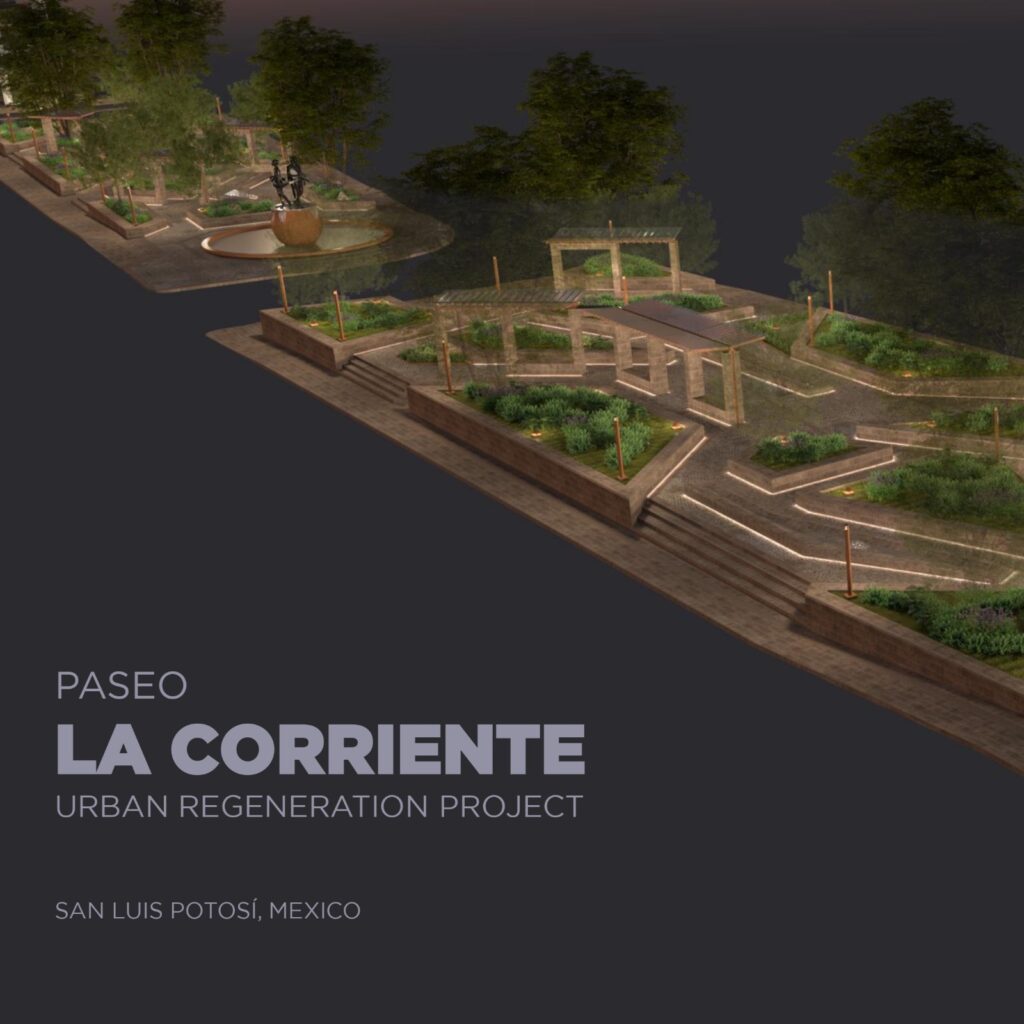
Paseo “La Corriente” – Urban Regeneration Project
INSTITUTO MUNICIPAL DE PLANEACION DE SAN LUIS POTOSI
Best Landscape Restoration & Conservation