fbpx

Inside the Carbon Positive Home With a Pool That Feels Like a Creek
inside-the-carbon-positive-home-with-a-pool-that-feels-like-a-creek
Inside the Carbon Positive Home With a Pool That Feels Like a Creek
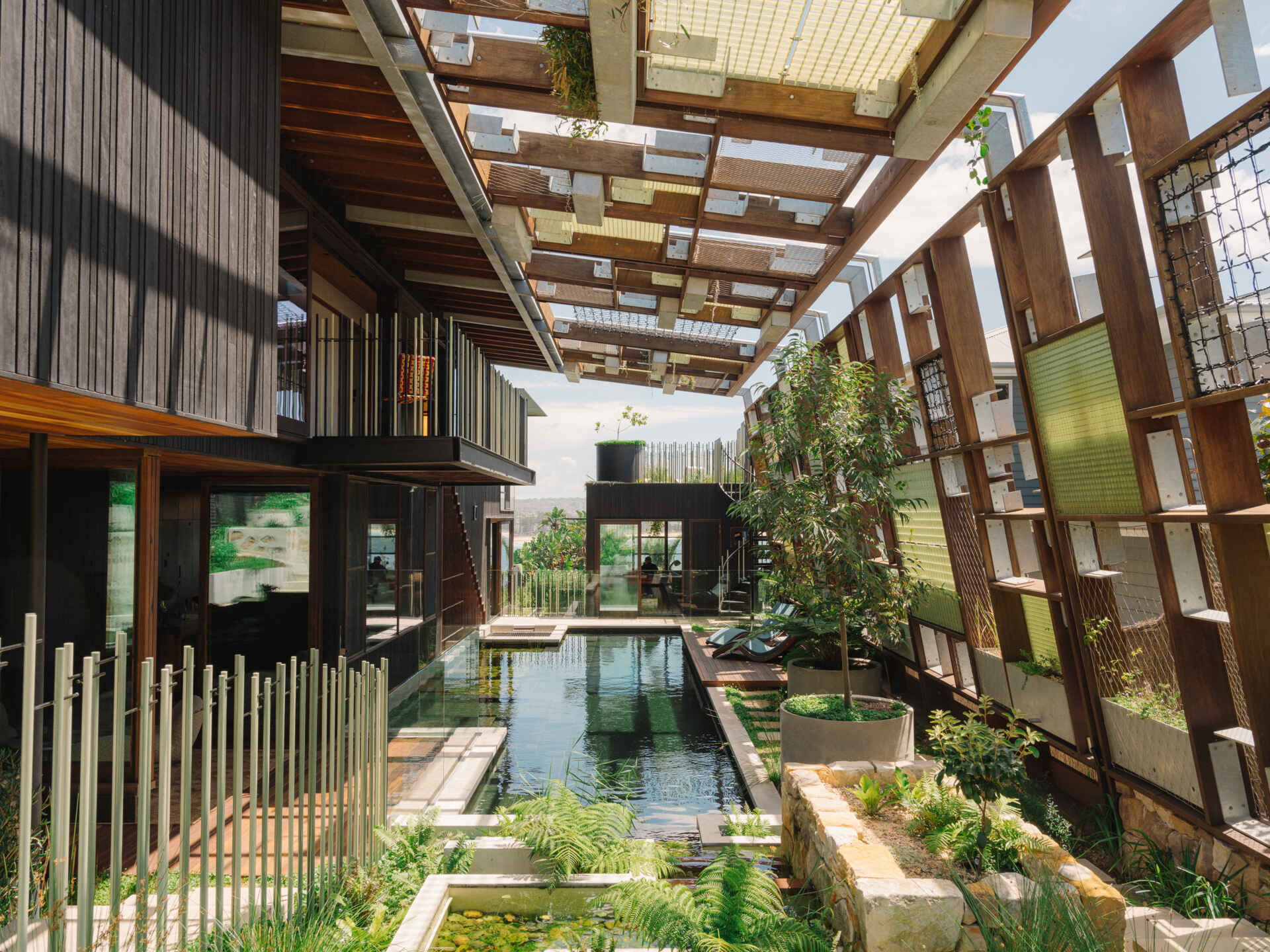
A natural swimming pool flows through the home beneath a canopy of plants and translucent FRP latticework.
Photo by Renata Dominik

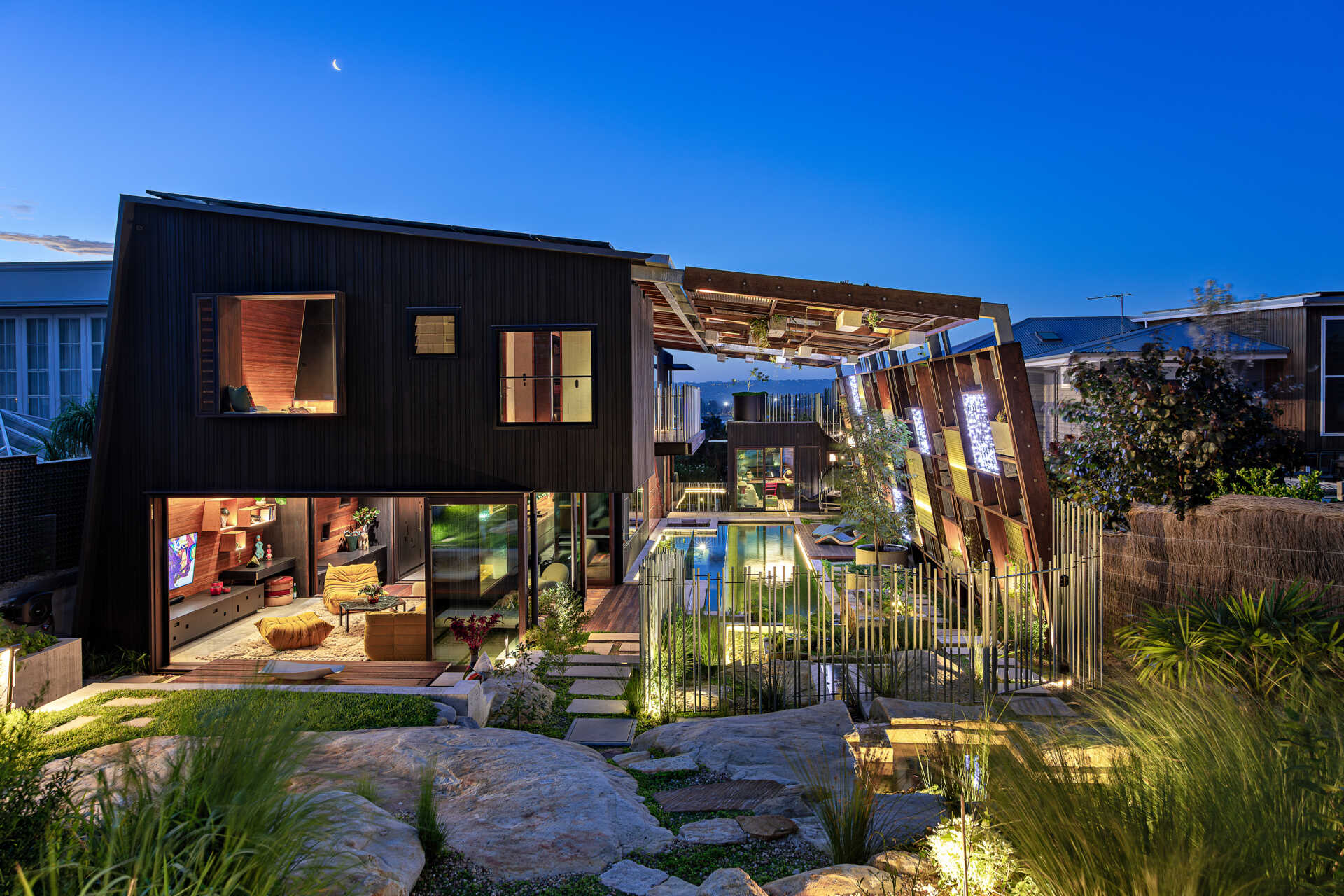
Designed by CplusC Architects + Builders, Holocene House offers a daily immersion in nature. Plants canopy the walkways, water moves through the home like a rainforest creek, and every room opens to the outdoors. As Australia’s first certified carbon positive home under the global Active House Alliance, it balances the well-being of its residents with gentle environmental performance. Step inside and the feeling is immediate: softer light, cleaner air and a pool that doesn’t sit beside the home but flows through it like part of the landscape.
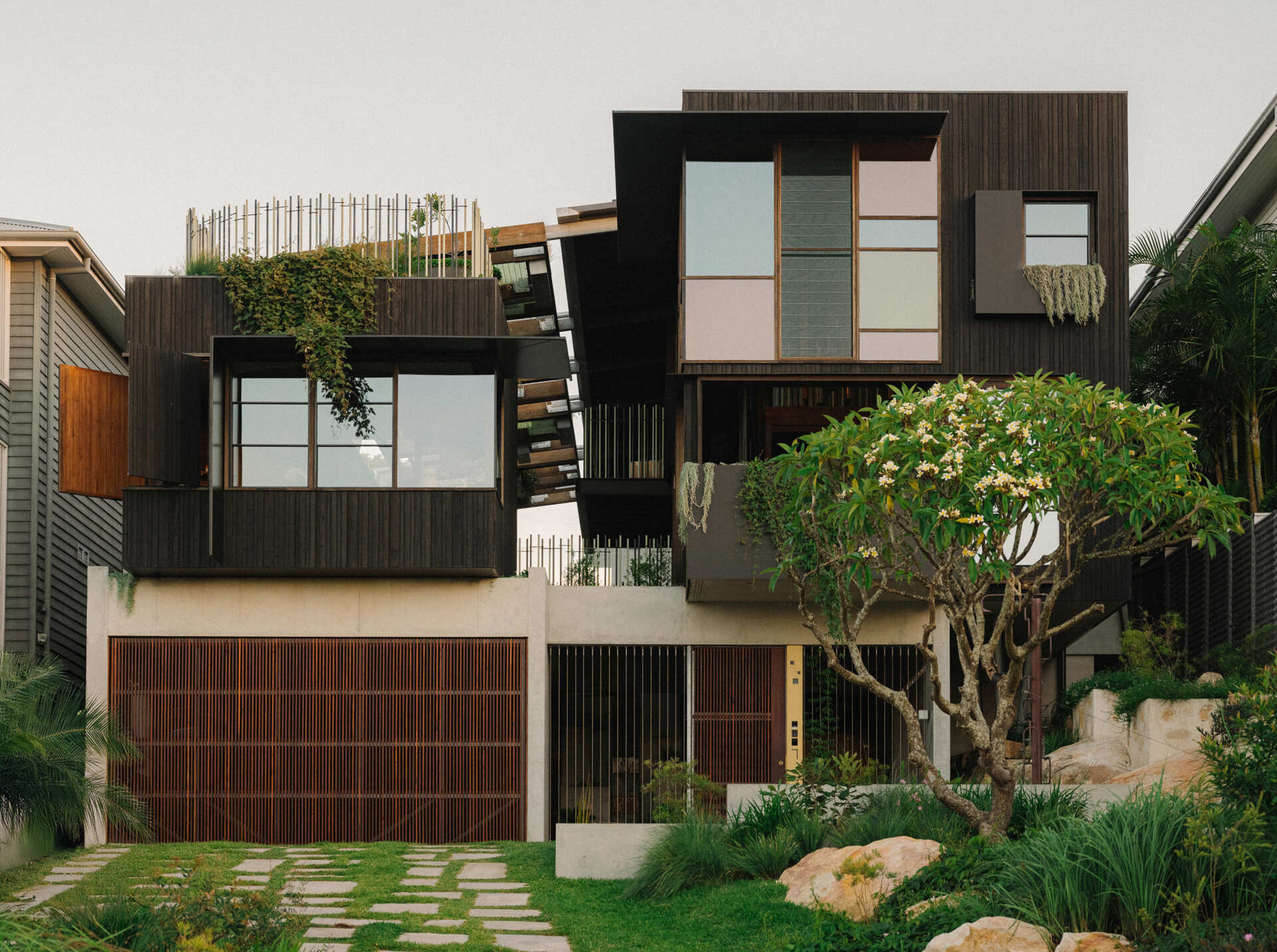
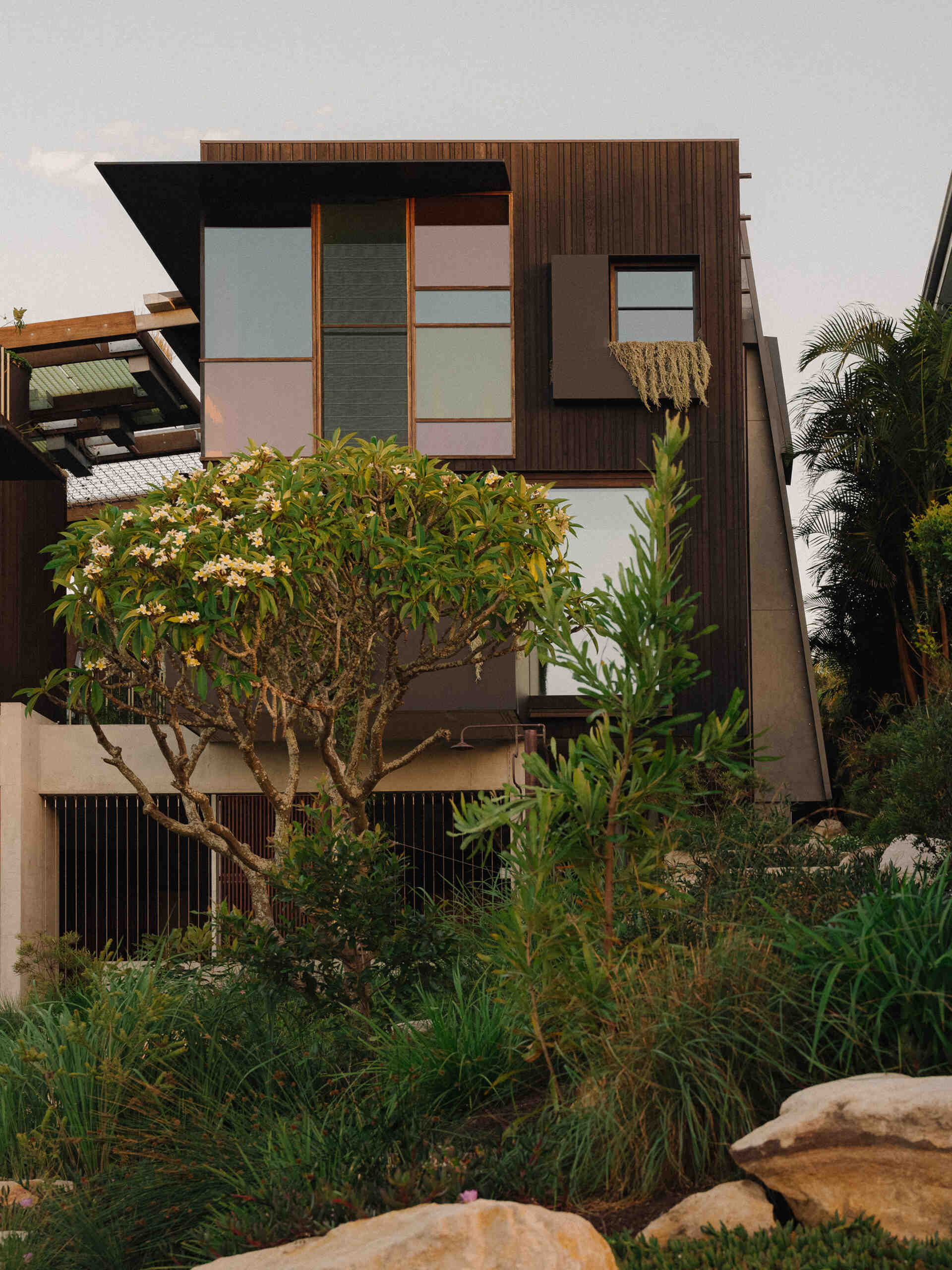
Step inside a carbon positive Sydney home designed around water, light, and plant canopies. The exterior uses durable Shou Sugi Ban timber and a garage integrated seamlessly into the facade.
Photo by Renata Dominik

Holocene House sits between a national park and million-dollar views toward Shelly Beach in Sydney, Australia. Its exterior is wrapped in low embodied energy spotted gum treated with the Shou Sugi Ban method, giving it a charcoal tone that settles naturally into the coastal bushland. The cladding is both resilient and textured, catching light through the day while nodding to the home’s regenerative mindset.

Tucked into the facade, the garage is designed as an unobtrusive extension of the home’s timber skin. The darkened spotted gum continues across its door so the entire frontage reads as one unified surface. Instead of standing out, the garage dissolves into the architecture, preserving the quiet, grounded presence the home projects from the street.
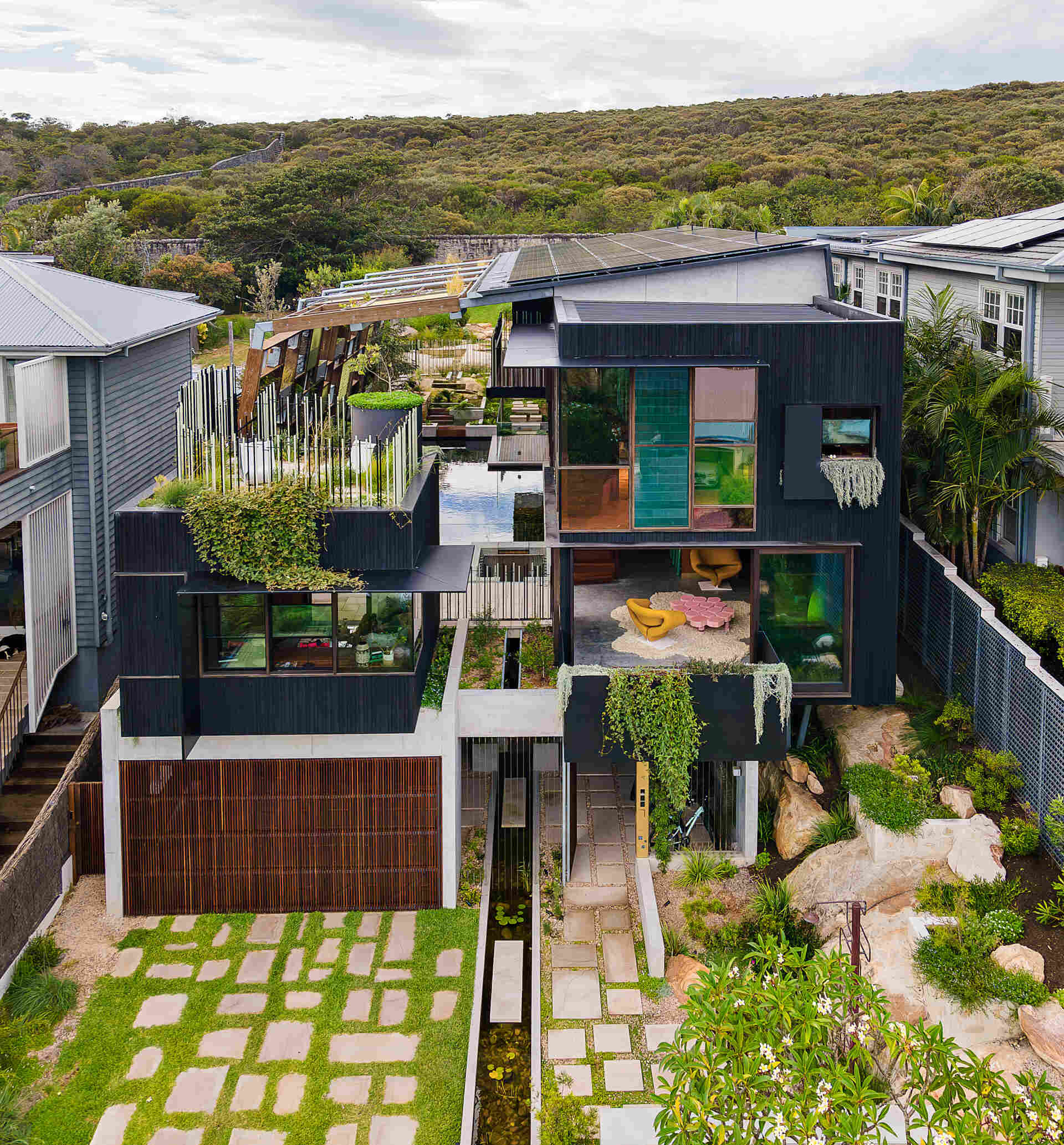
Step inside a carbon positive Sydney home designed around water, light, and plant canopies. The exterior uses durable Shou Sugi Ban timber and a garage integrated seamlessly into the facade.
Photo by Michael Lassman
Step inside a carbon positive Sydney home designed around water, light, and plant canopies. The exterior uses durable Shou Sugi Ban timber and a garage integrated seamlessly into the facade.
Photo by Renata Dominik

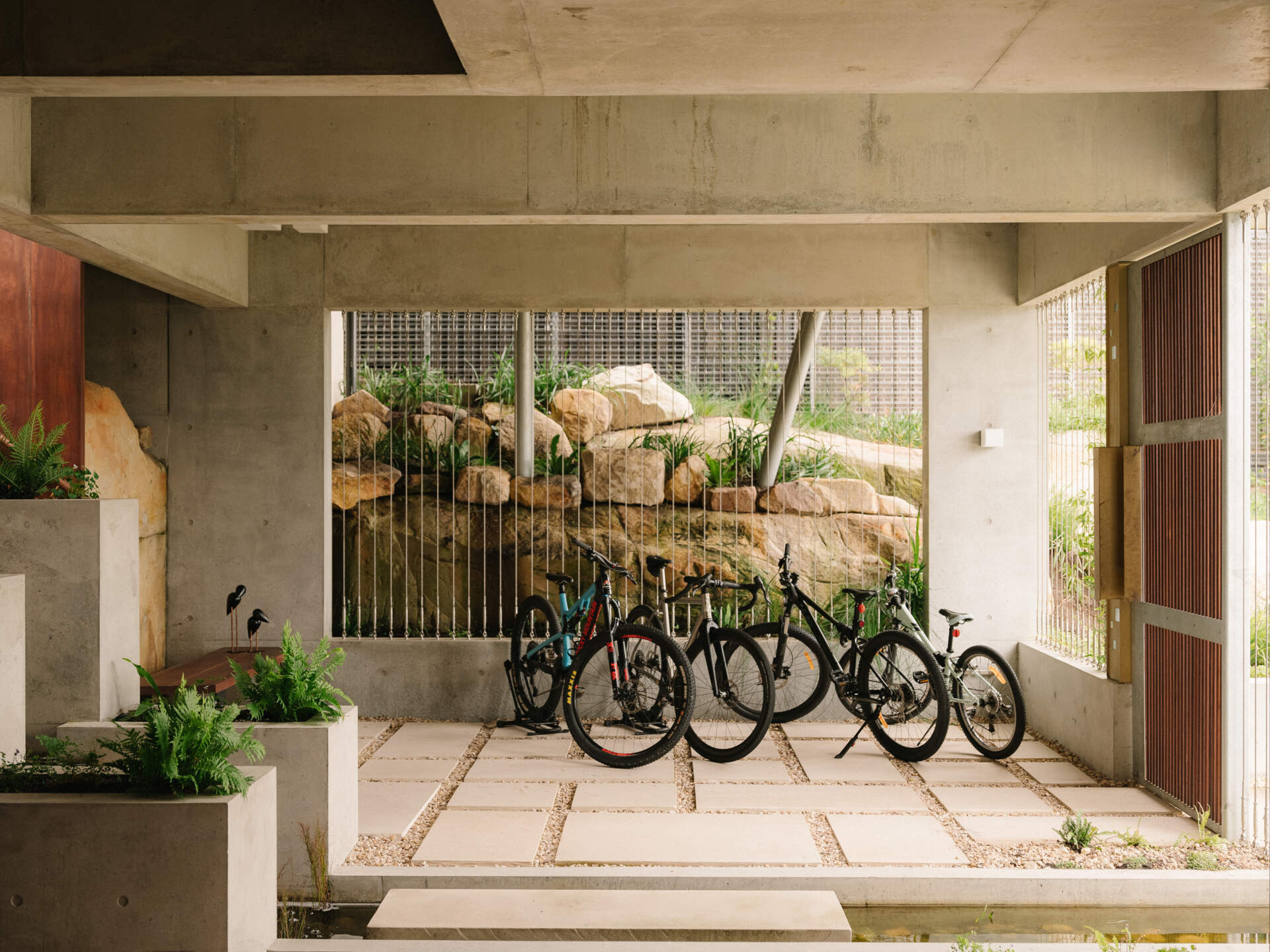
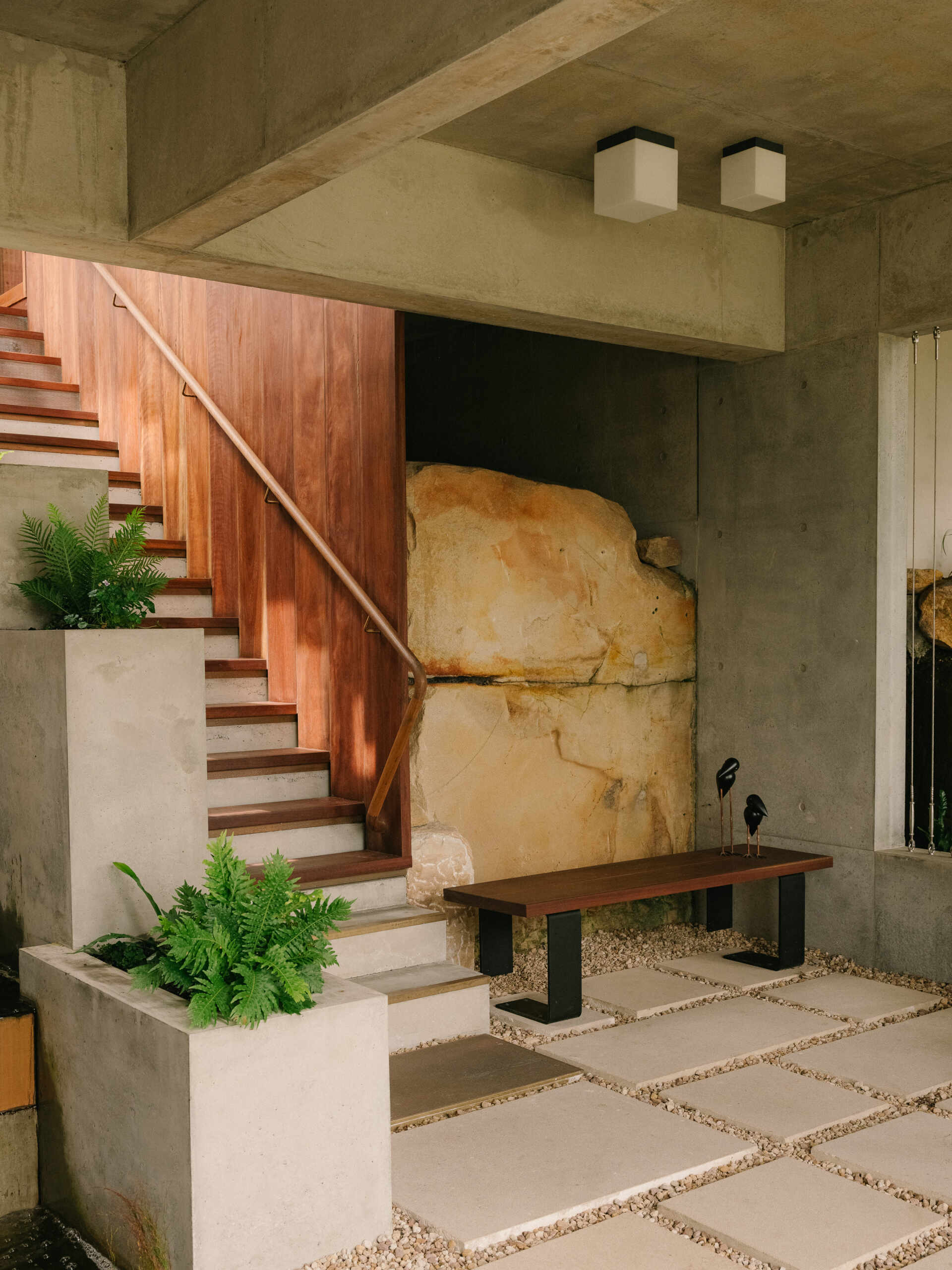
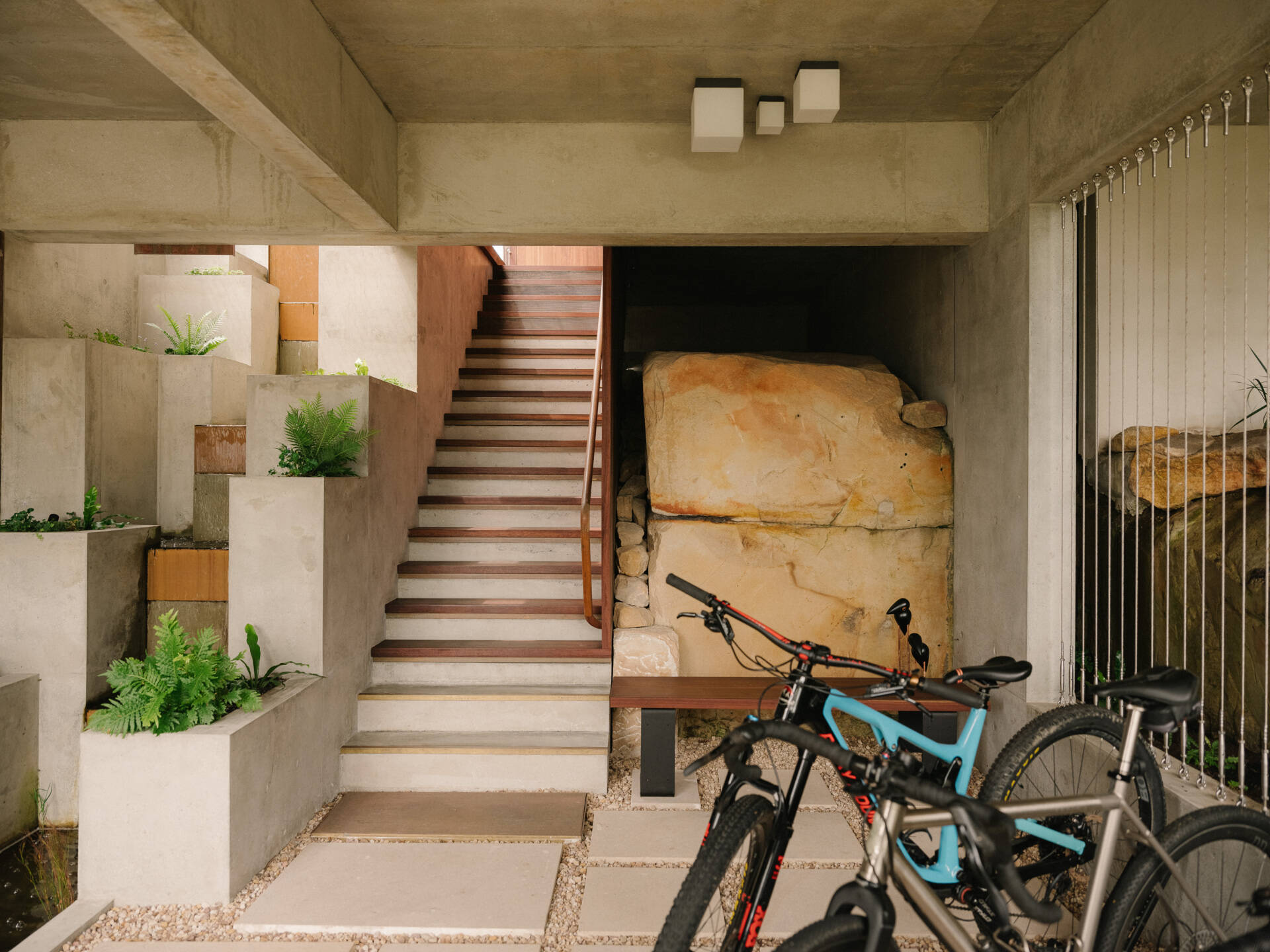
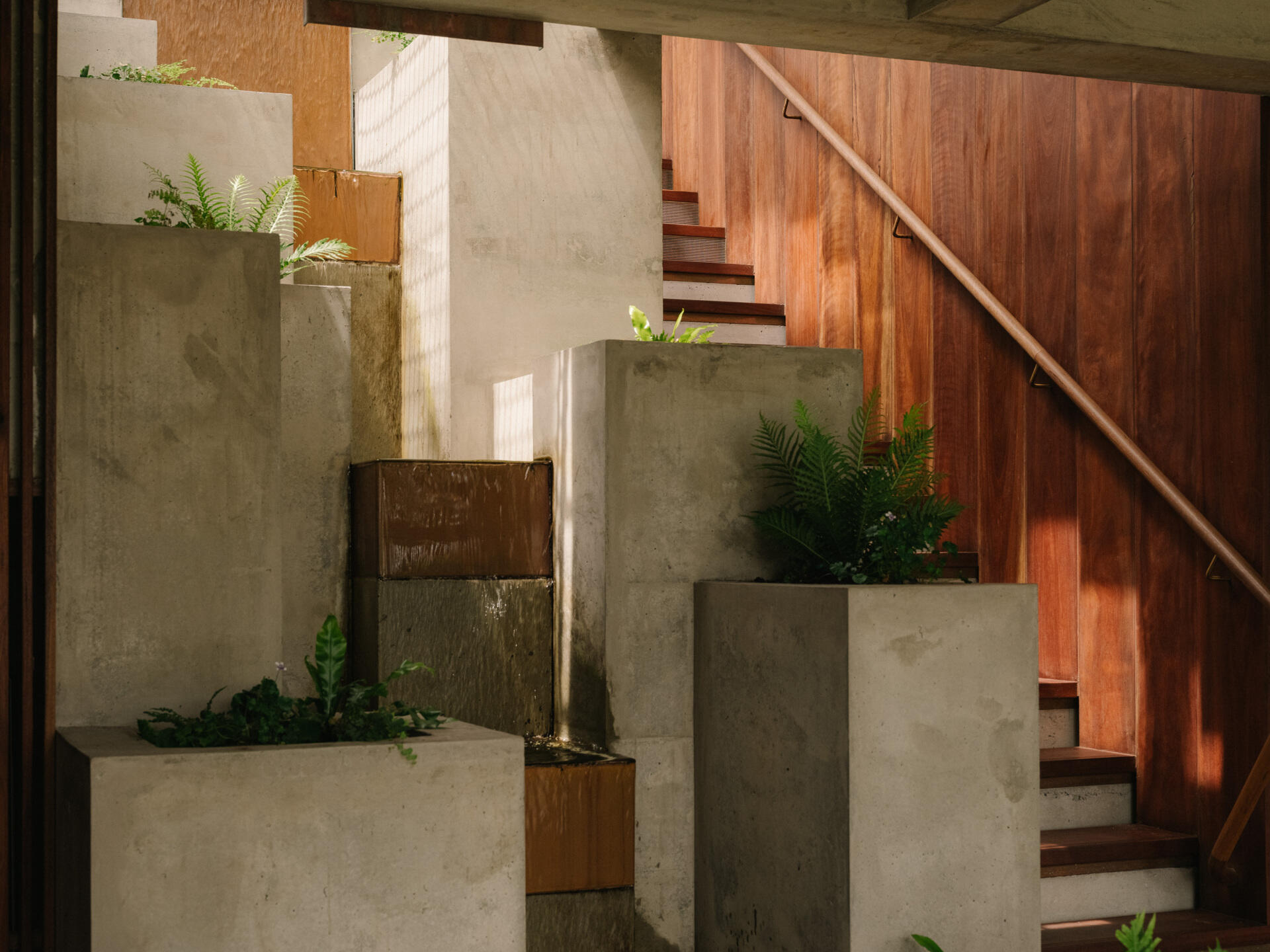
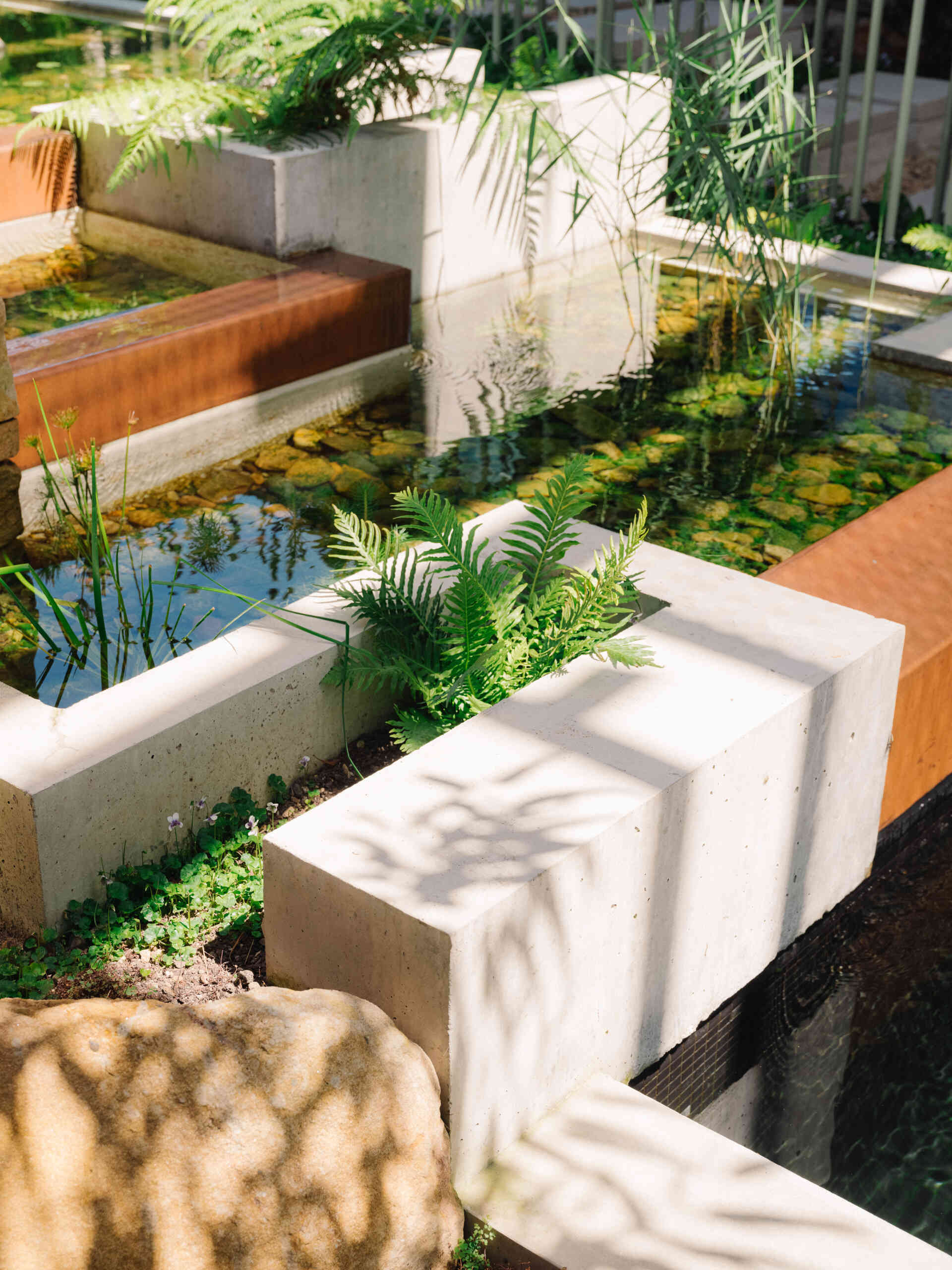
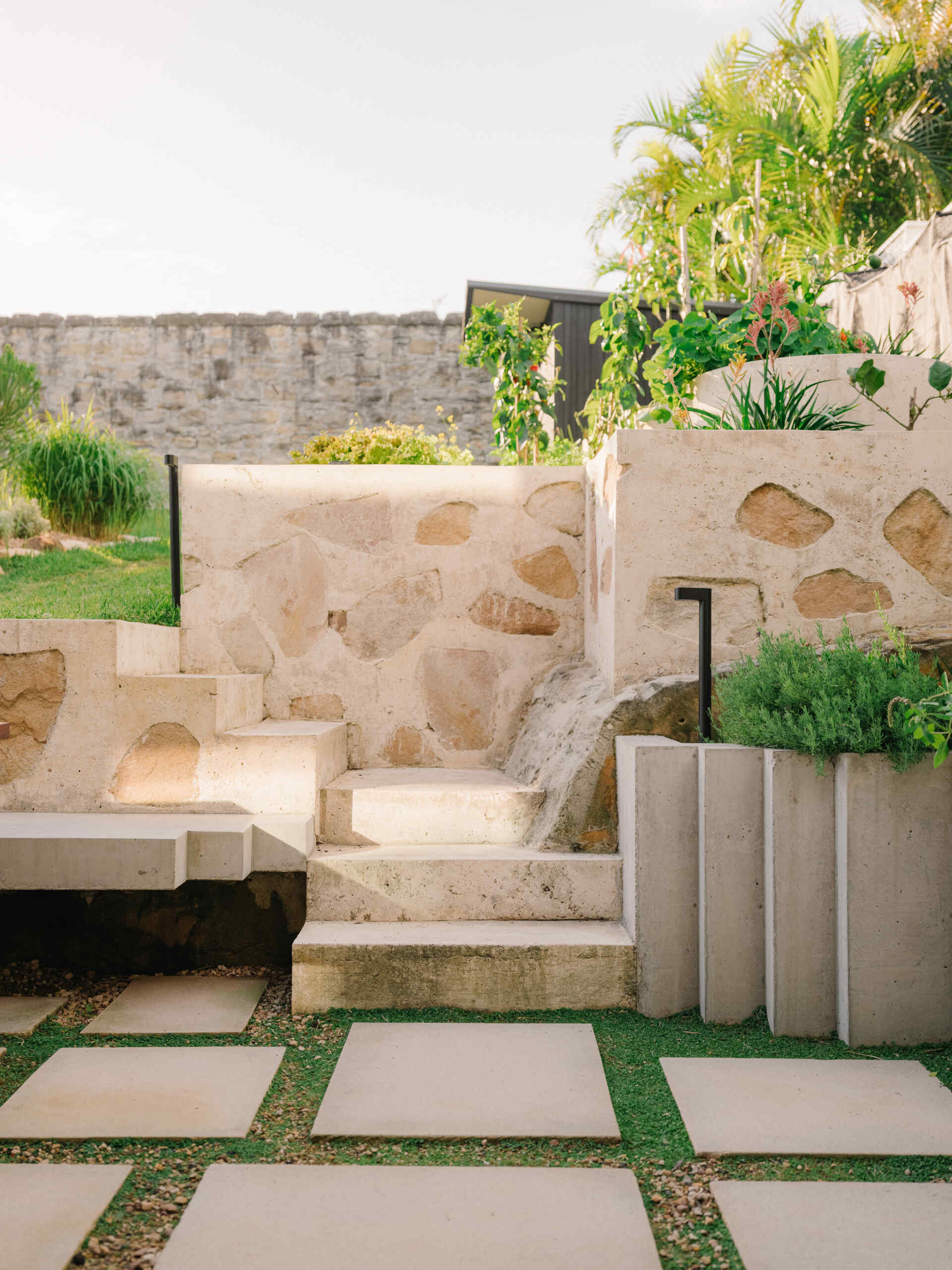
Entry feels like arriving at a rainforest creek. You step from stone to stone across an entry pond and climb stairs beside a cascading waterfall. Plants drape overhead, filtered light moves across the path and the sound of water guides you to the glass door opening into the living space.
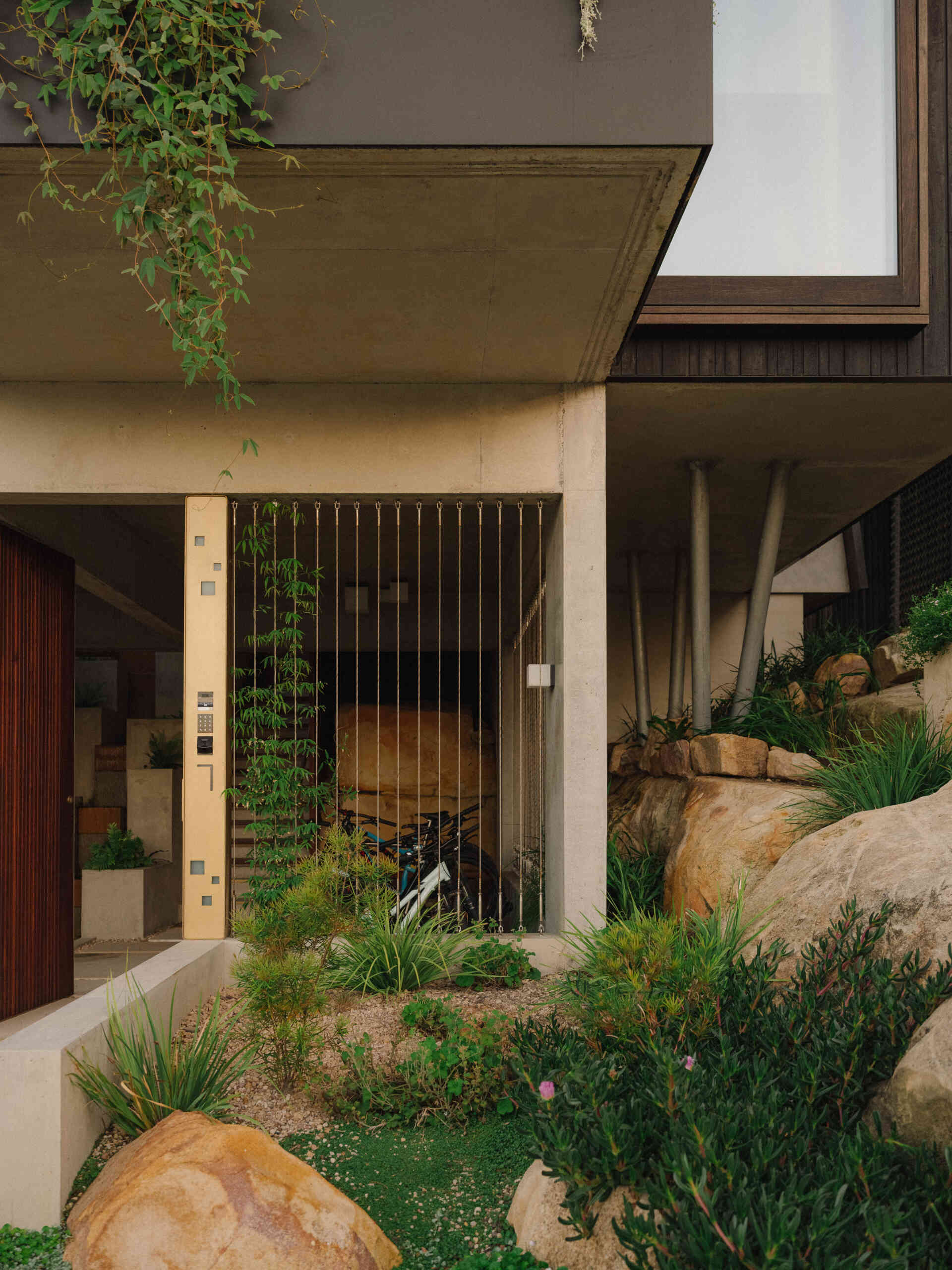
Cross a pond, step on stones, and ascend alongside a cascading waterfall to enter the living spaces.
Photo by Renata Dominik
Cross a pond, step on stones, and ascend alongside a cascading waterfall to enter the living spaces.
Photo by Renata Dominik
Cross a pond, step on stones, and ascend alongside a cascading waterfall to enter the living spaces.
Photo by Renata Dominik
Cross a pond, step on stones, and ascend alongside a cascading waterfall to enter the living spaces.
Photo by Renata Dominik
Cross a pond, step on stones, and ascend alongside a cascading waterfall to enter the living spaces.
Photo by Renata Dominik

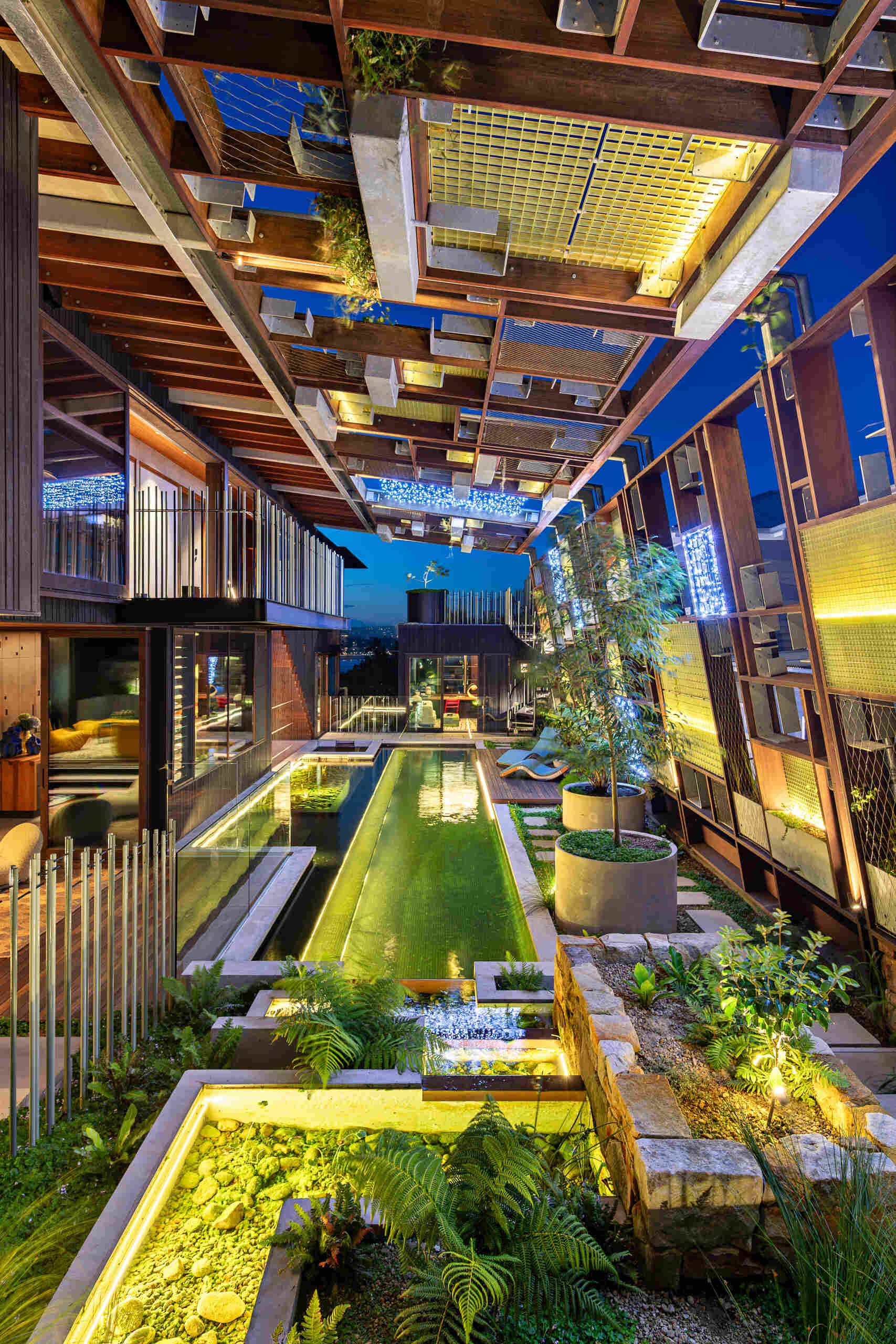
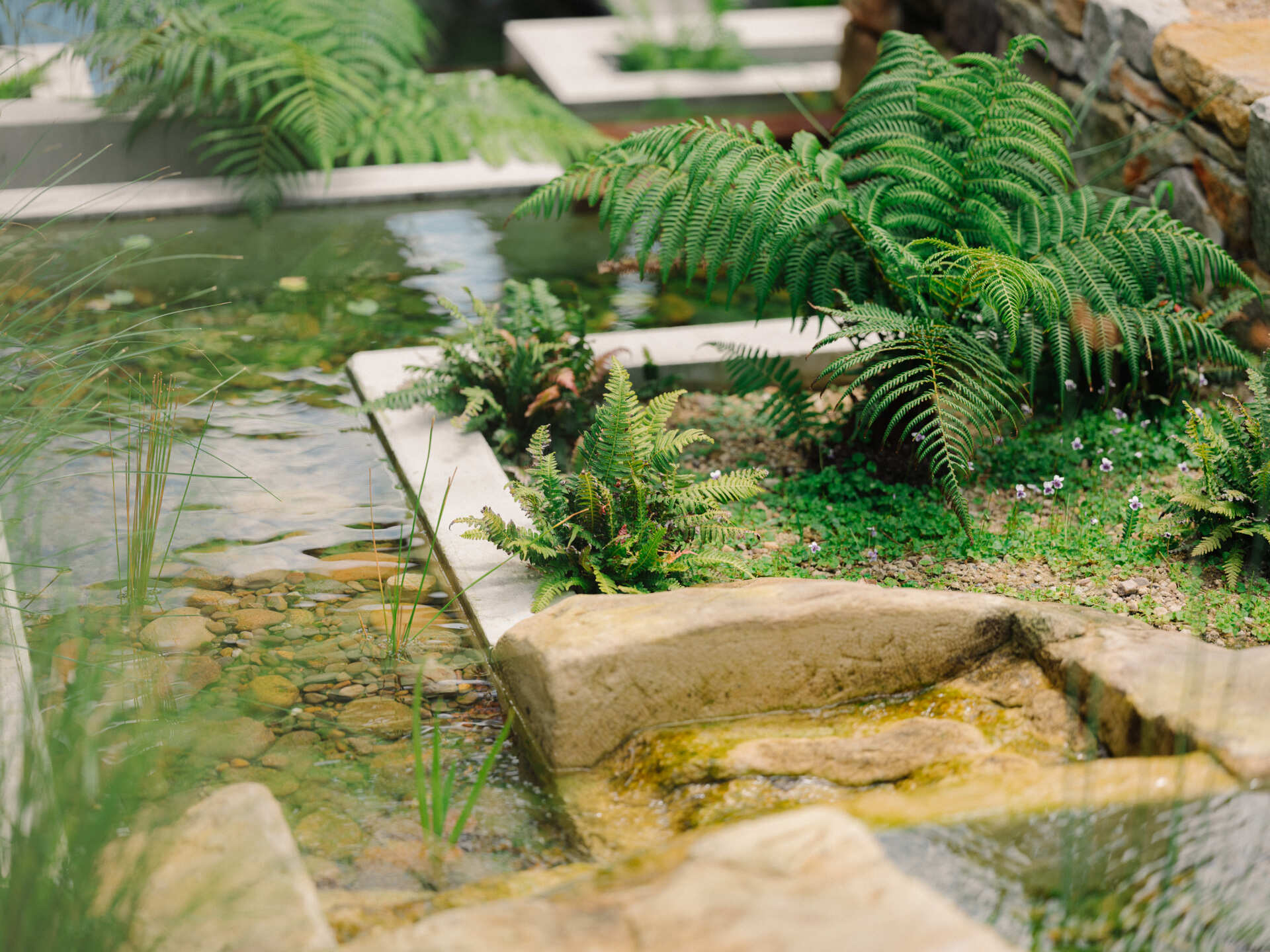
The natural swimming pool is the centre of daily life. Fed by ponds carved into rocky outcrops at the rear, water passes through reed beds, polishing ponds, charcoal and pebbles before running along the living space. It then drops into a waterfall at the entrance. Dark tiles give it the look of a natural stream.
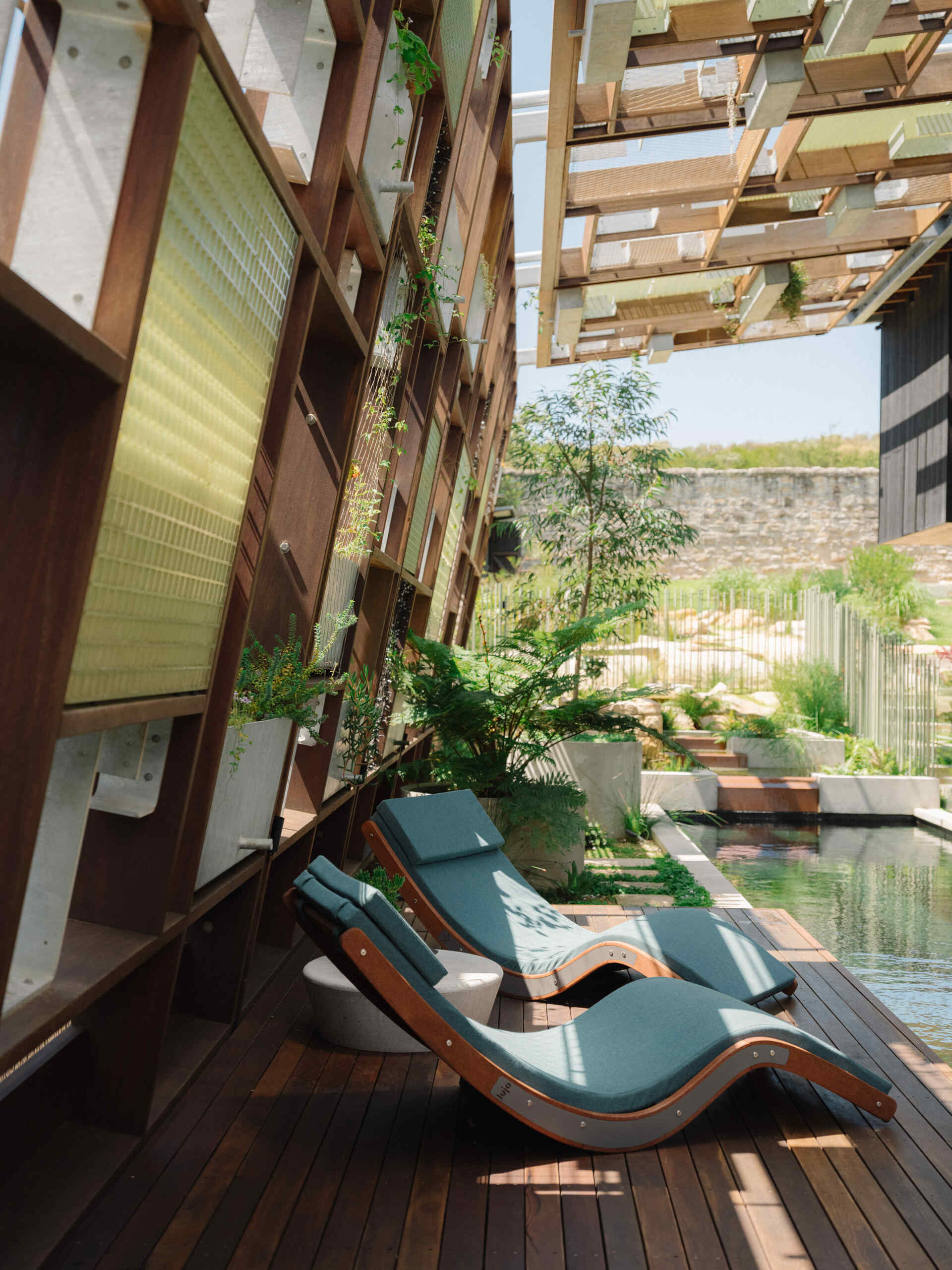
A canopy of more than twenty floating planters shades the space. The structure blends timber, structural steel and translucent jade coloured FRP latticework, casting dappled light that moves across the pool and deck throughout the day.
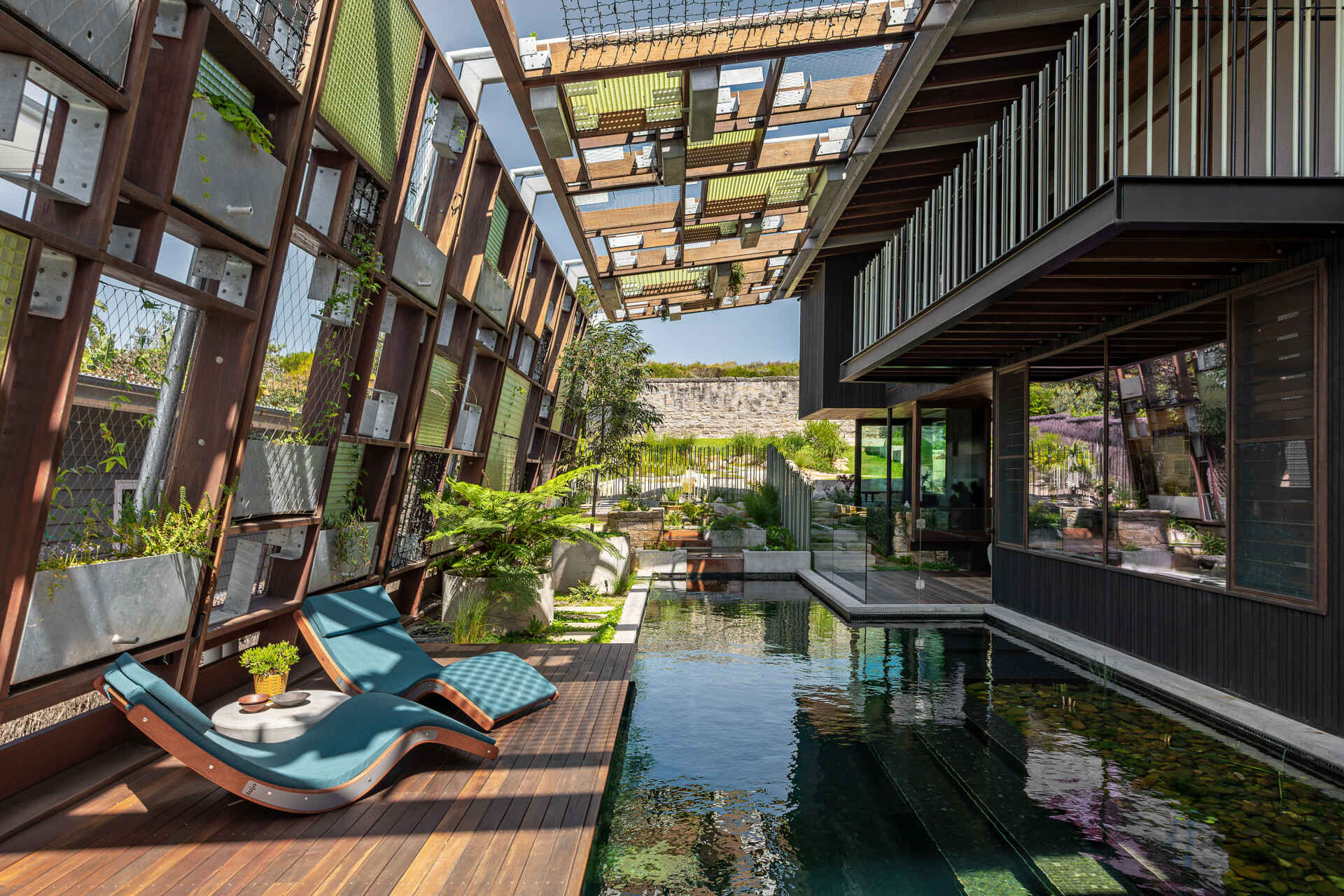
A natural swimming pool flows through the home beneath a canopy of plants and translucent FRP latticework.
Photo by Michael Lassman
A natural swimming pool flows through the home beneath a canopy of plants and translucent FRP latticework.
Photo by Renata Dominik
A natural swimming pool flows through the home beneath a canopy of plants and translucent FRP latticework.
Photo by Michael Lassman
Cross a pond, step on stones, and ascend alongside a cascading waterfall to enter the living spaces.
Photo by Renata Dominik
Cross a pond, step on stones, and ascend alongside a cascading waterfall to enter the living spaces.
Photo by Renata Dominik
A natural swimming pool flows through the home beneath a canopy of plants and translucent FRP latticework.
Photo by Michael Lassman

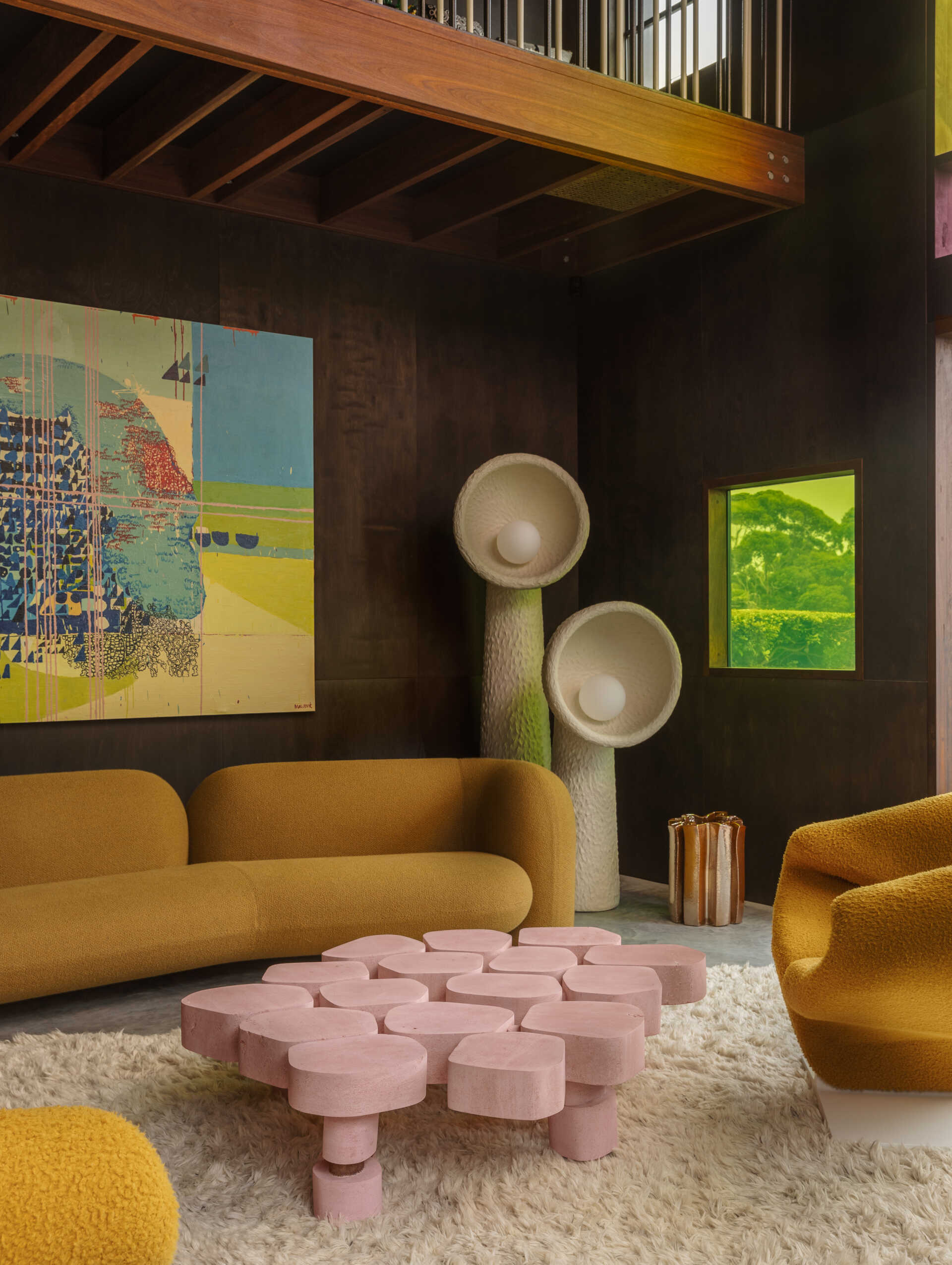
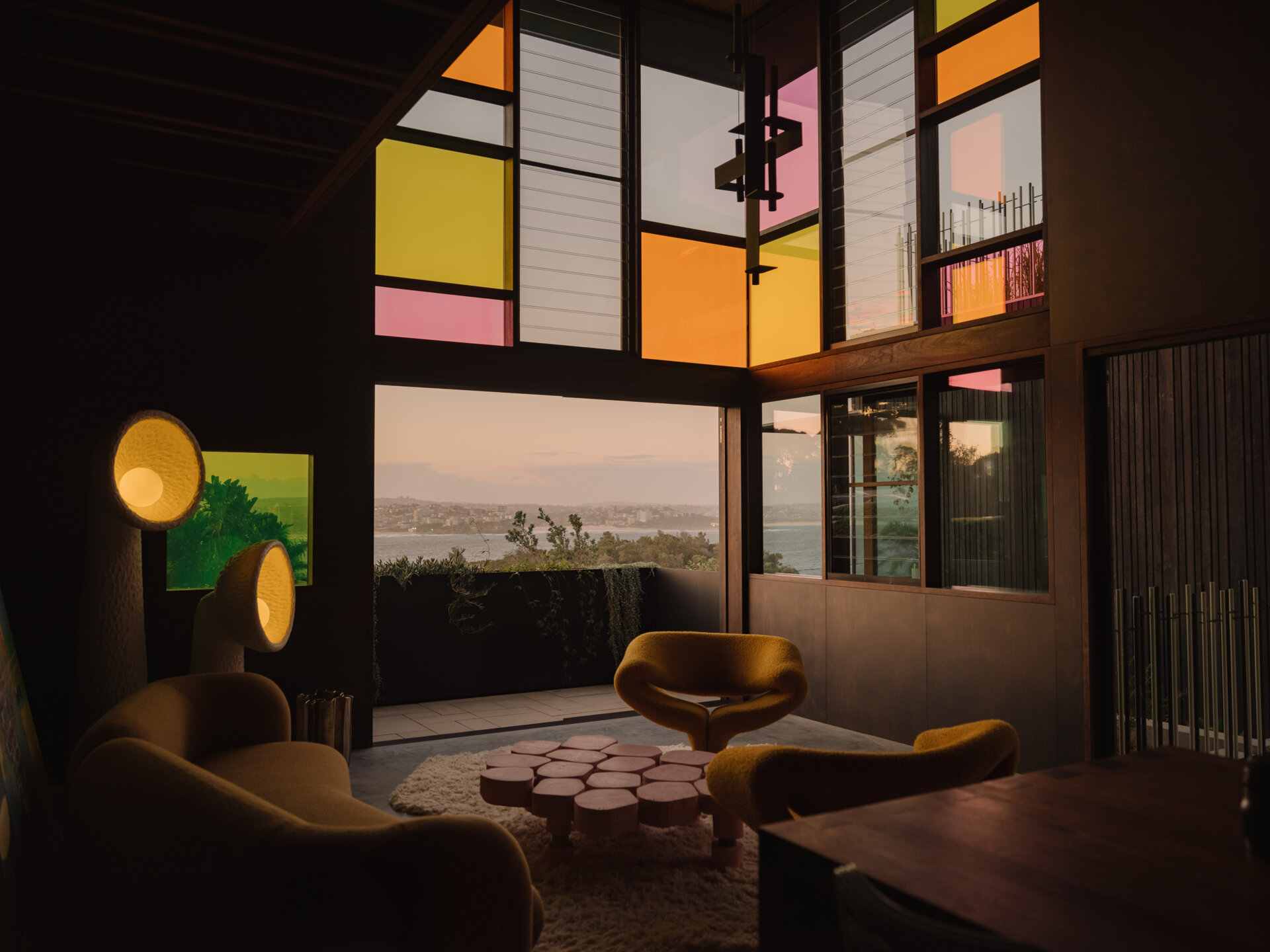
Inside, the double height front living space is framed by colorful stained glass panels. These windows deconstruct the view toward Shelly Beach, encouraging a different relationship with the idea of a coastal panorama. As the sun shifts, color washes through the room, creating unexpected patterns and a feeling of constant change.
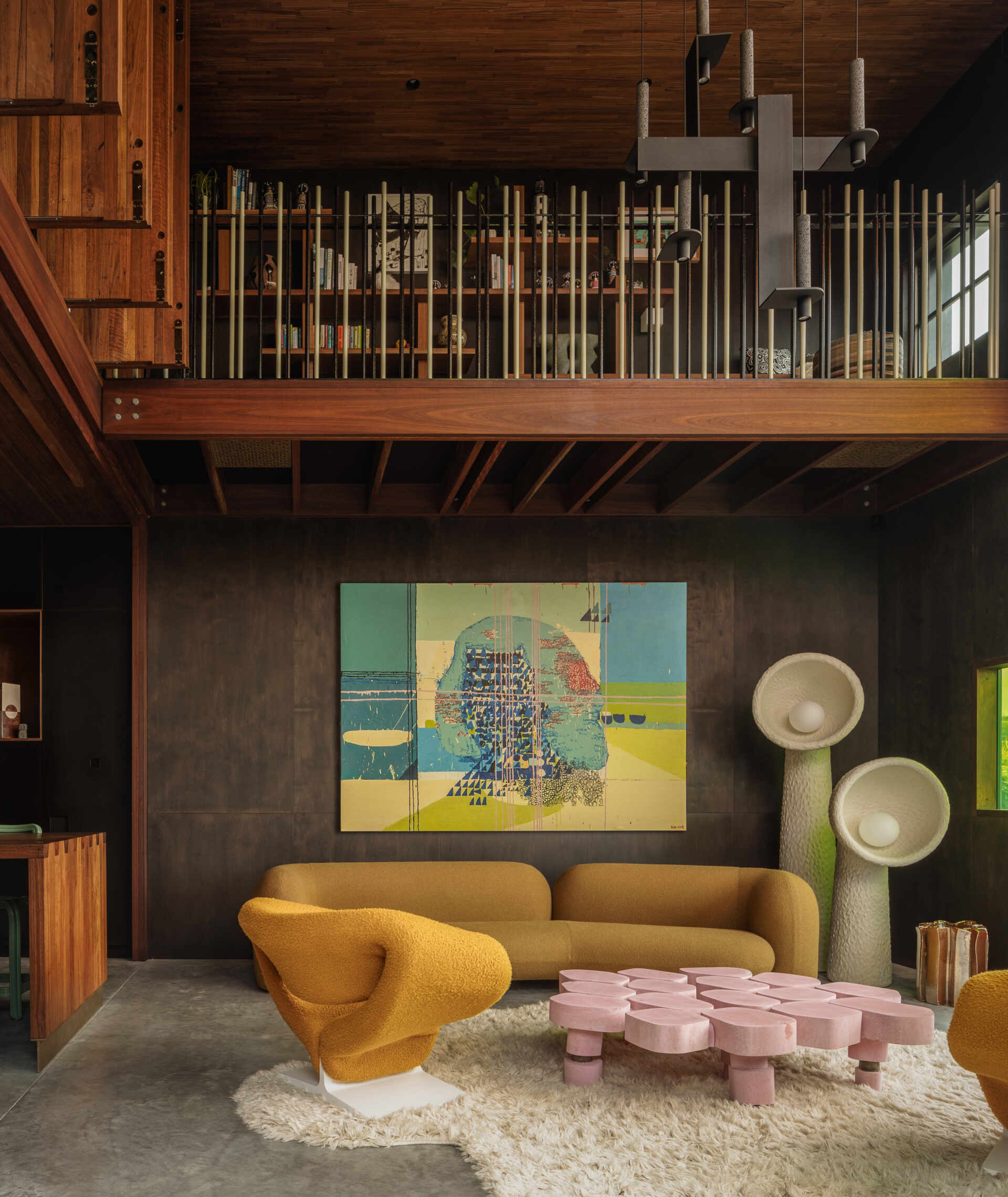
Stained glass panels in the living room fragment coastal views and create moving patterns of light.
Photo by Felix Mooneeram
Stained glass panels in the living room fragment coastal views and create moving patterns of light.
Photo by Felix Mooneeram
Stained glass panels in the living room fragment coastal views and create moving patterns of light.
Photo by Renata Dominik

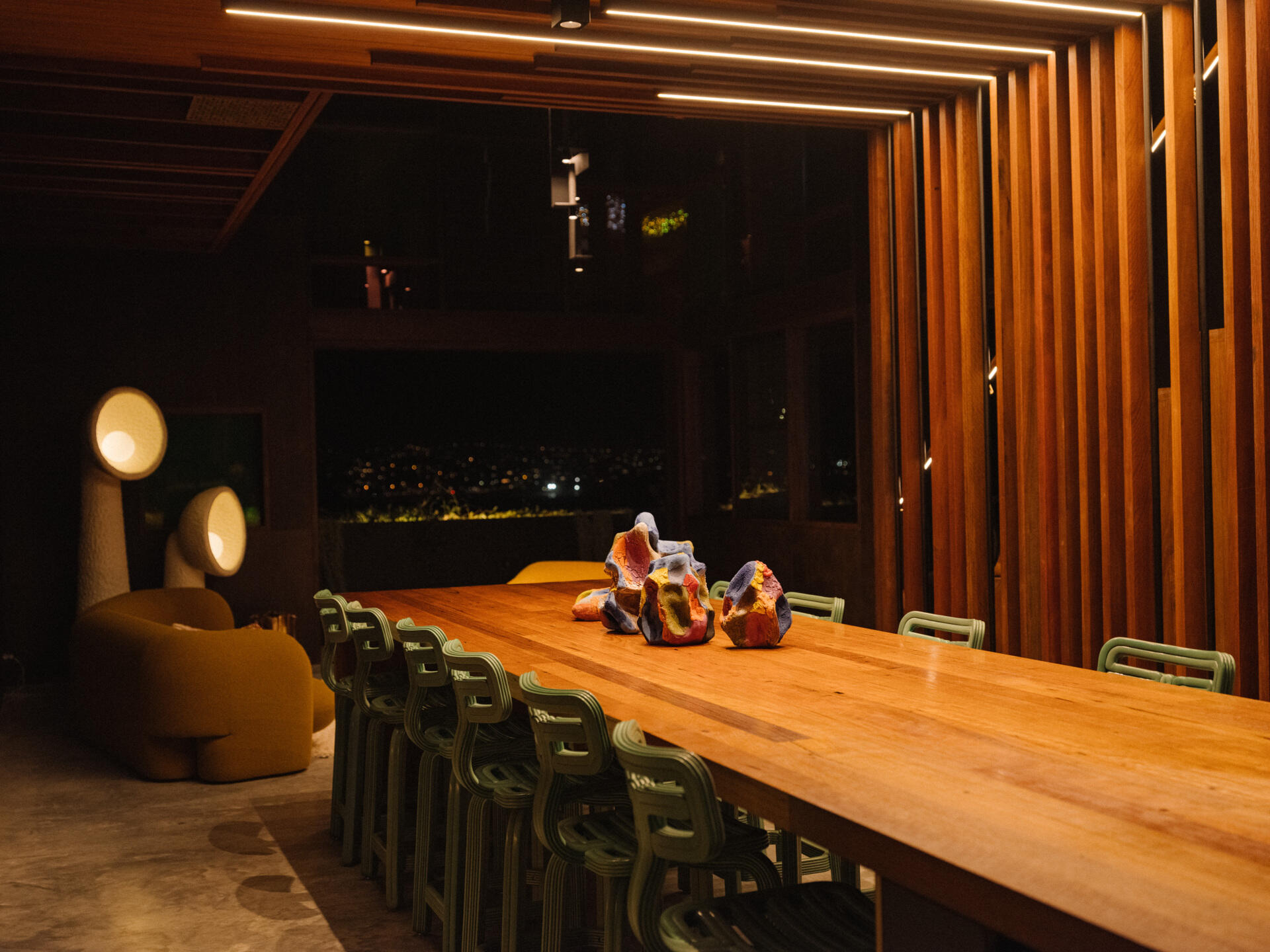
Nearby, the expansive dining space connects directly with the kitchen. Dappled light and airflow move through without barriers.
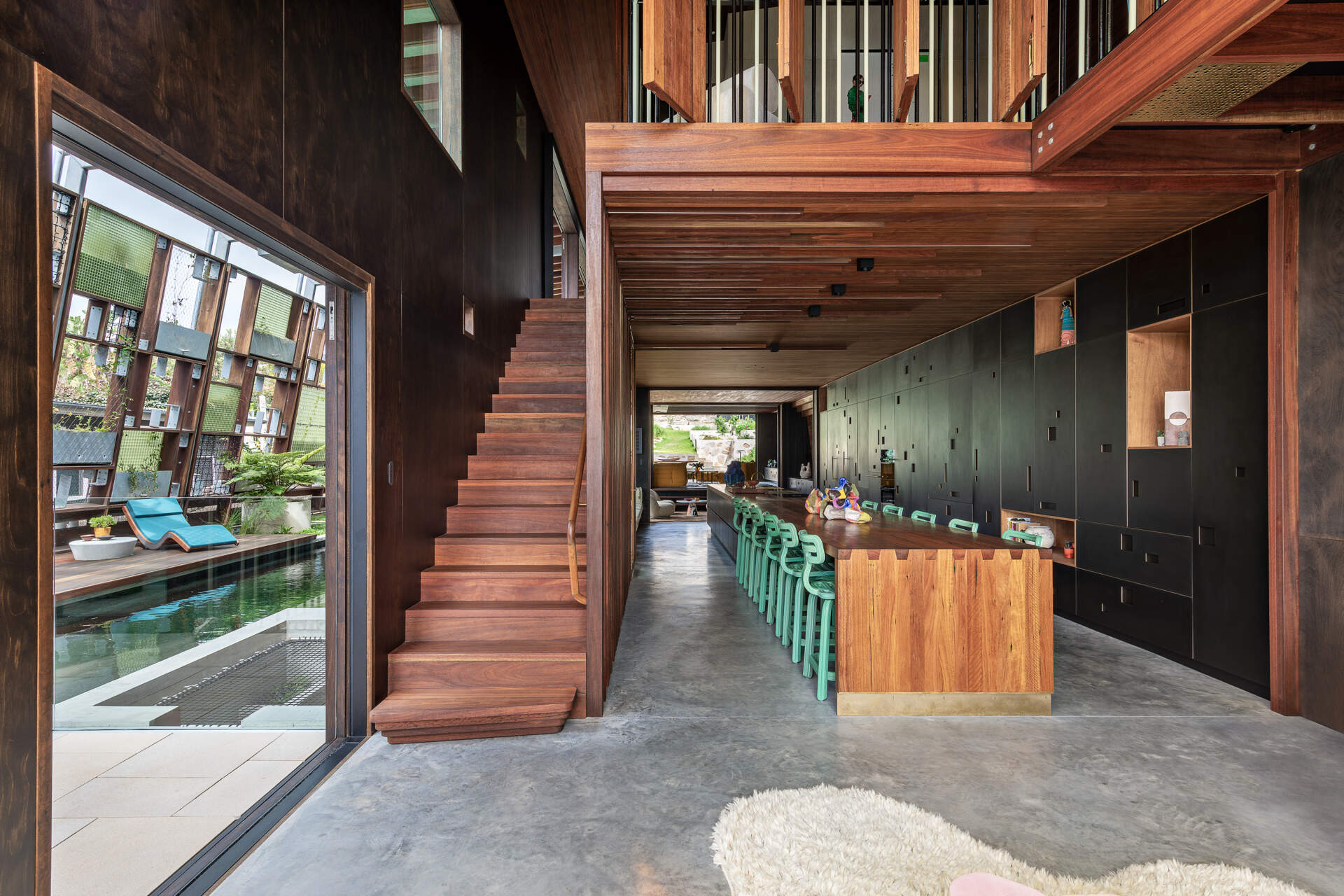
Nearby, the expansive dining space connects directly with the kitchen. Dappled light and airflow move through without barriers.
Photo by Michael Lassman
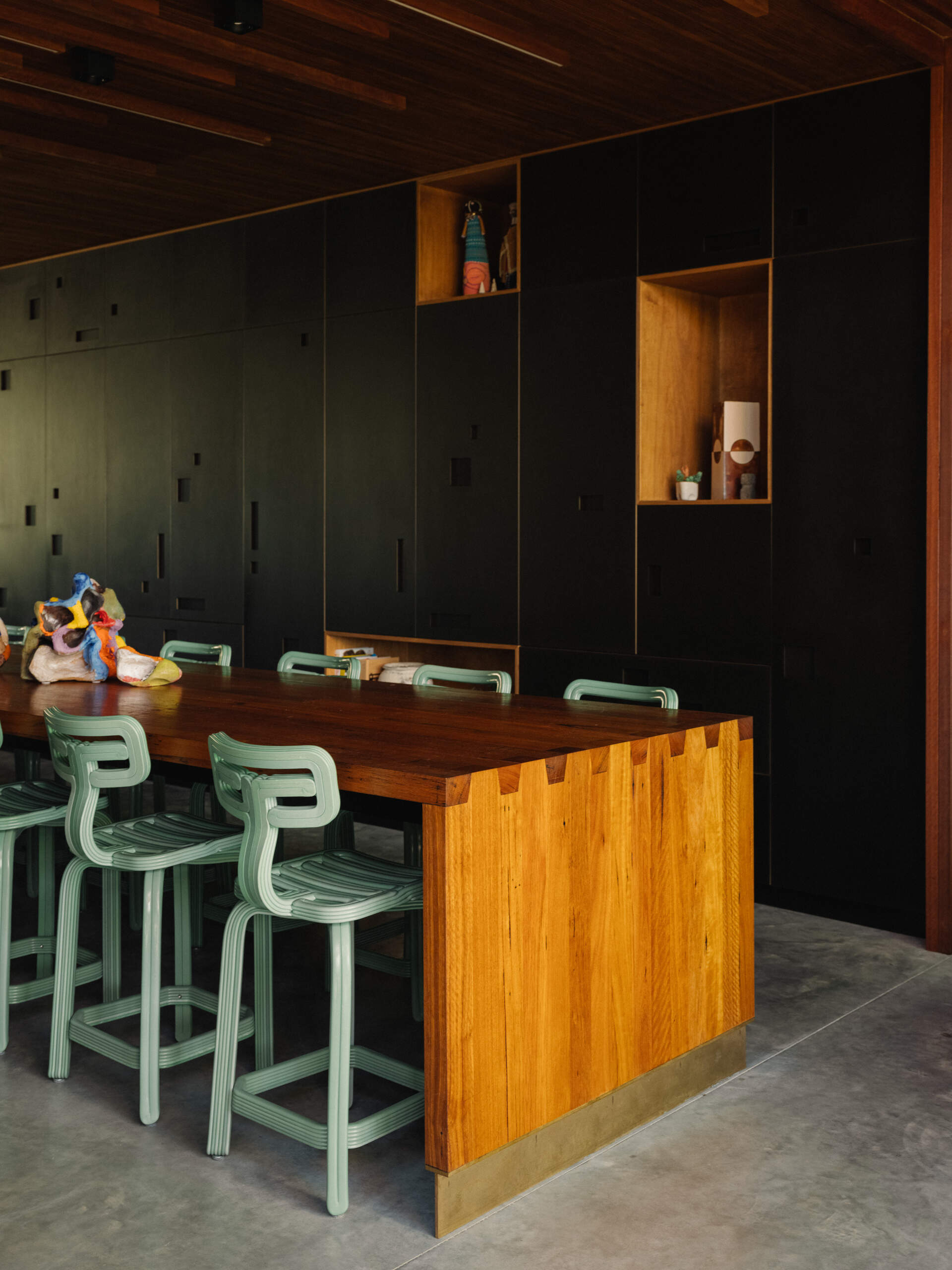
Nearby, the expansive dining space connects directly with the kitchen. Dappled light and airflow move through without barriers.
Photo by Renata Dominik
Nearby, the expansive dining space connects directly with the kitchen. Dappled light and airflow move through without barriers.
Photo by Renata Dominik

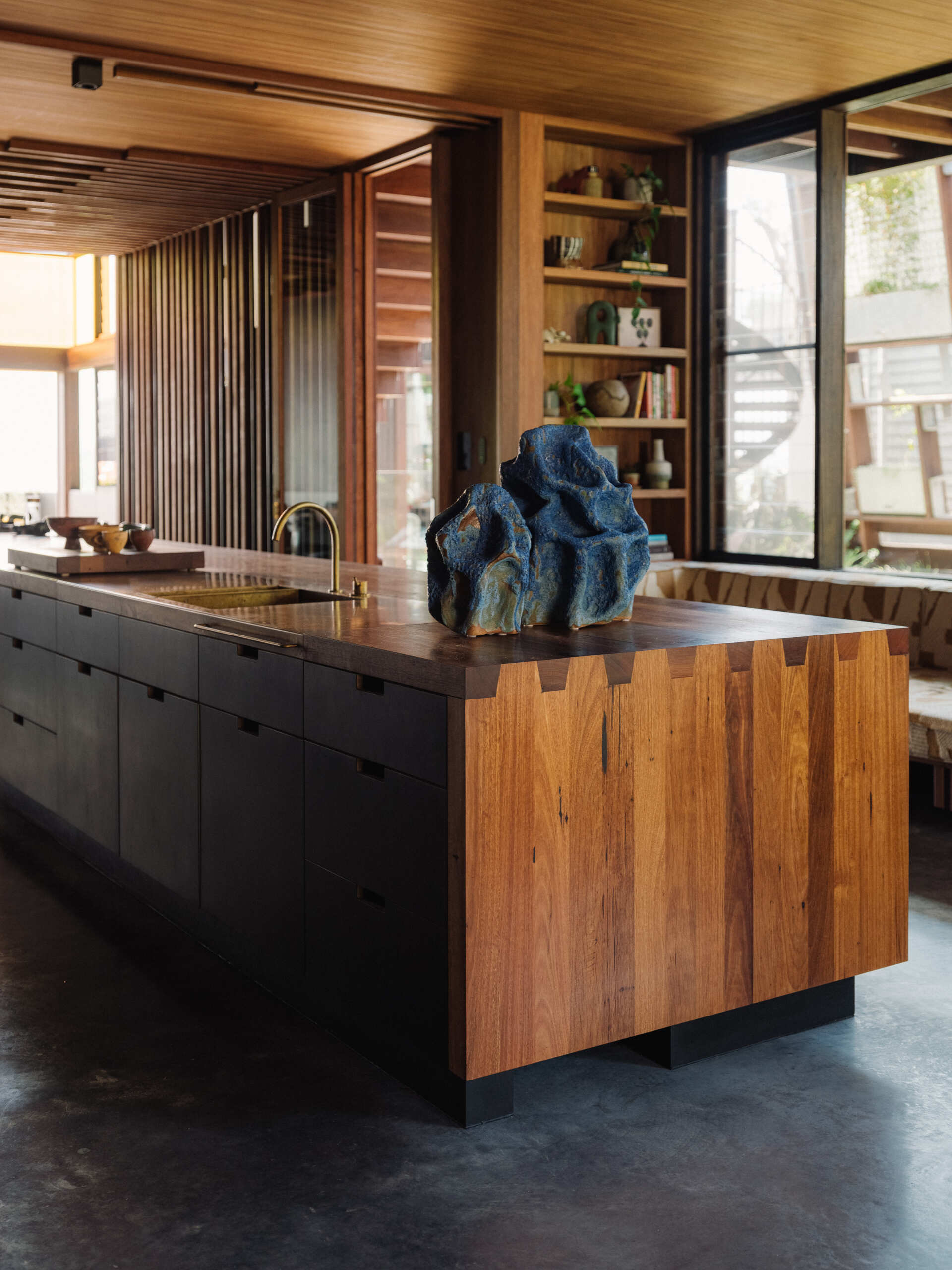
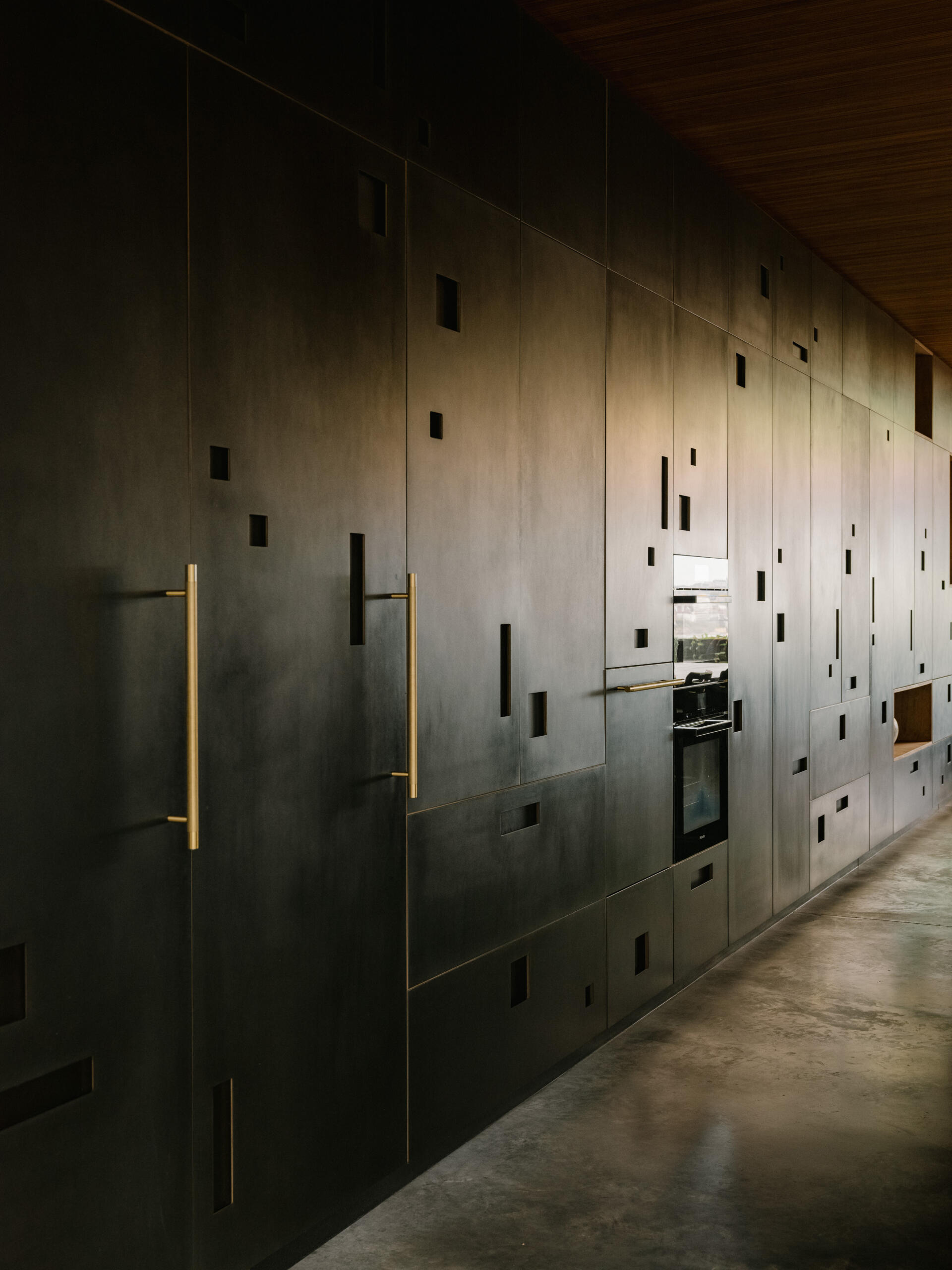
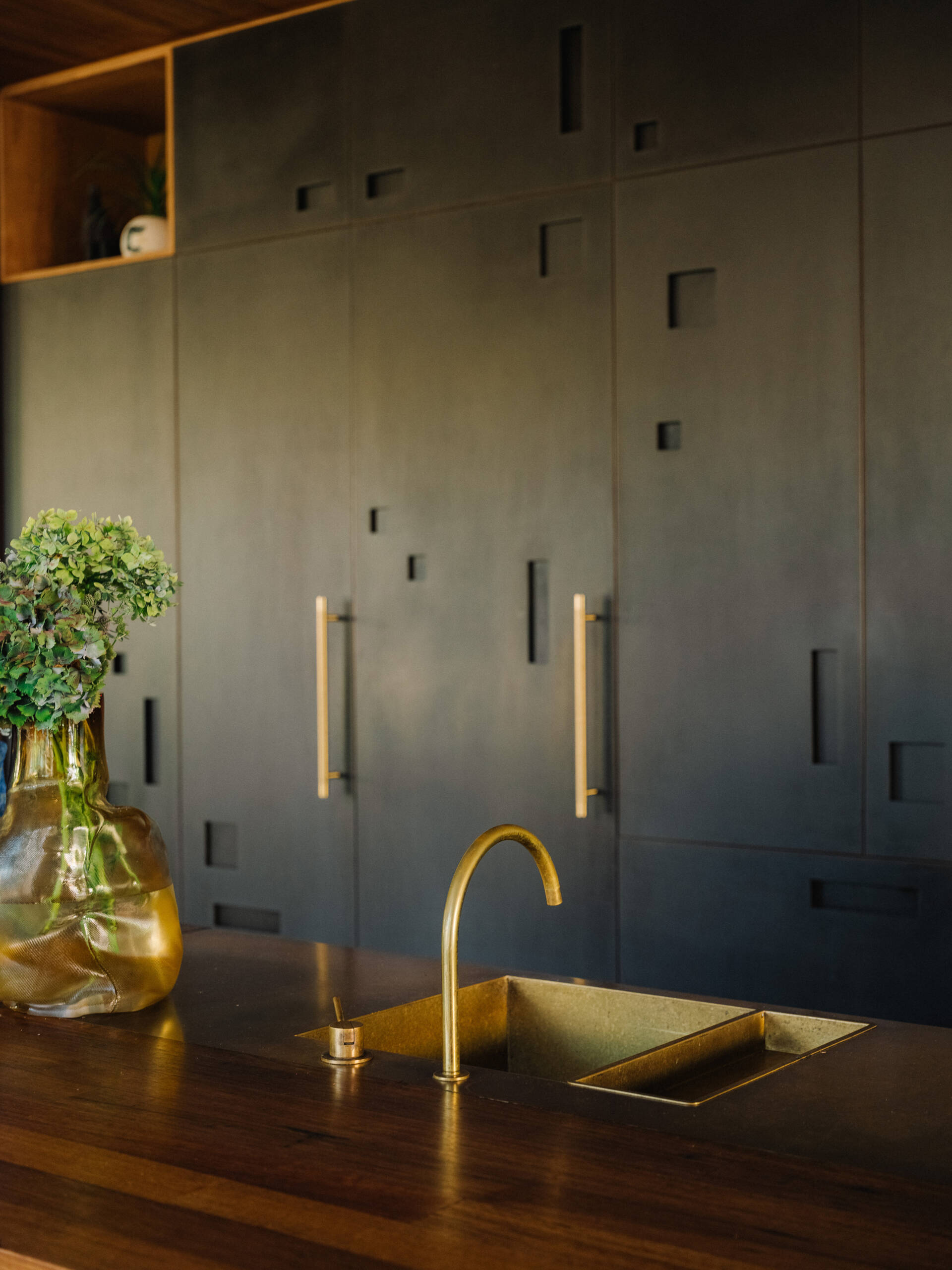
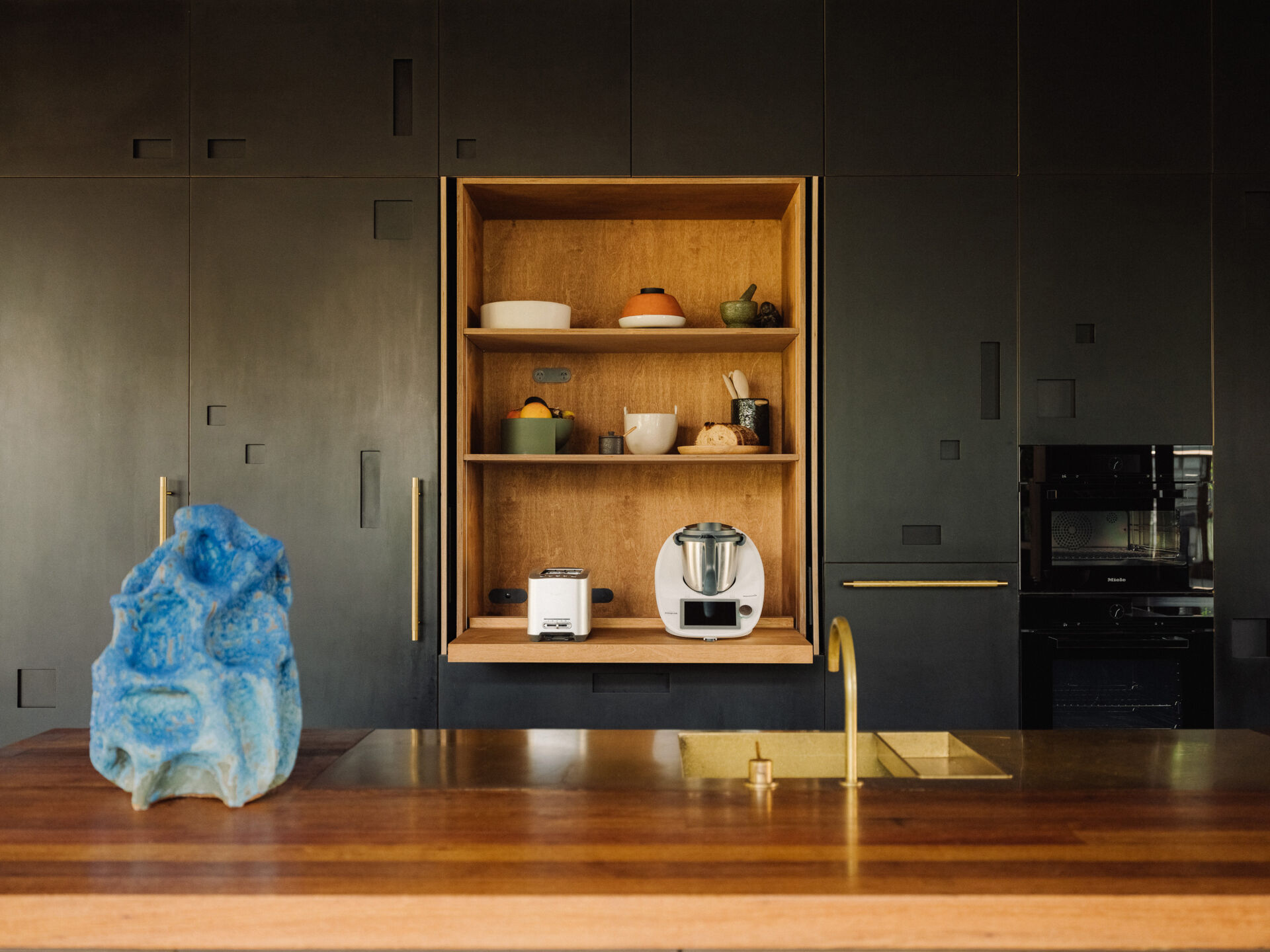
A 9.2 metre recycled hardwood island, which doubles as the dining table, stretches through to the kitchen. A full wall of cabinetry made from Paperock creates small niches that mimic dappled forest light, and offers generous storage without visual clutter. The cabinets act like a quiet backdrop that hides appliances and their floor-to-ceiling height draws the eye upward.
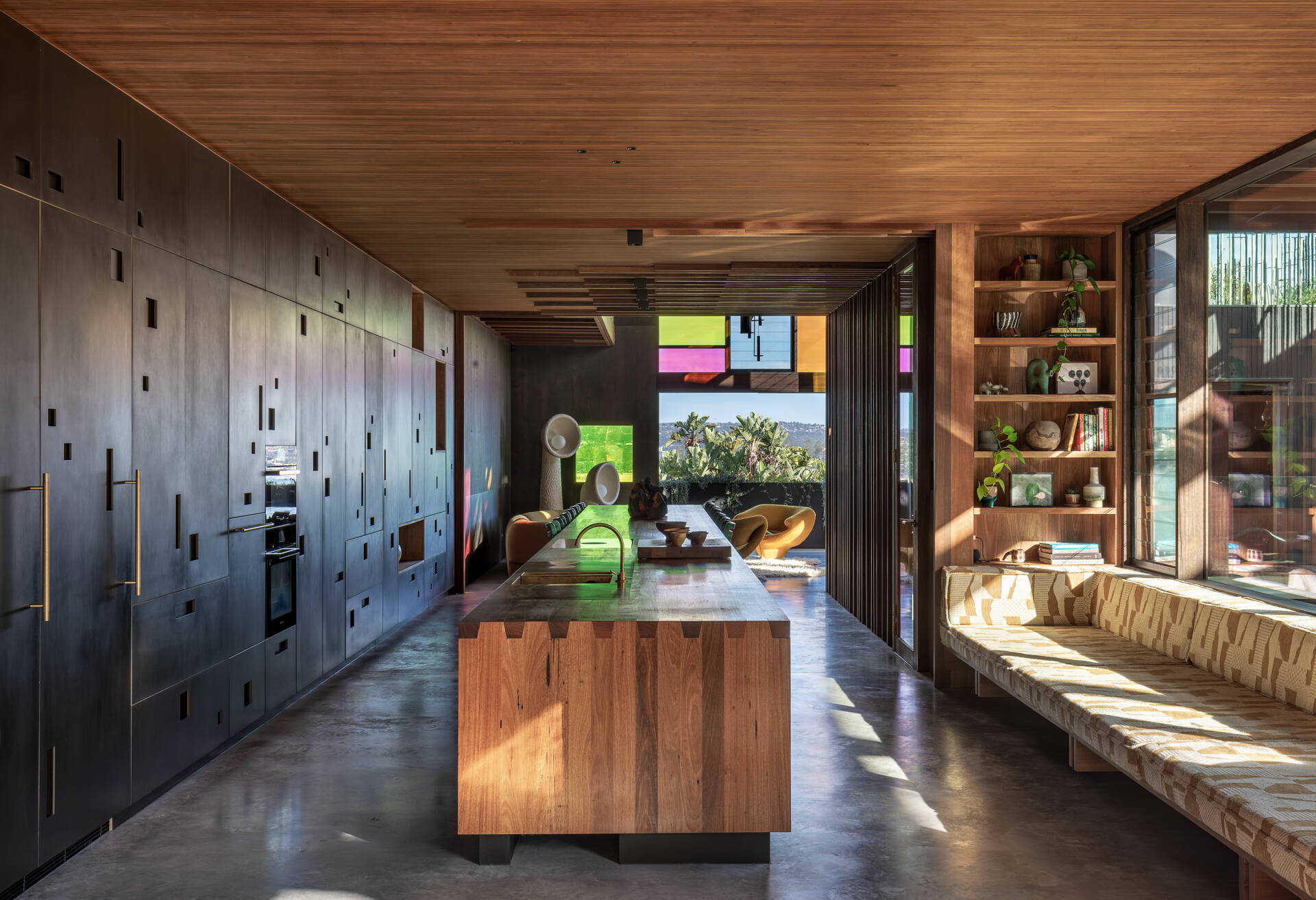
A 9.2 metre recycled hardwood island, which doubles as the dining table, stretches through to the kitchen. A full wall of cabinetry made from Paperock creates small niches that mimic dappled forest light, and offers generous storage without visual clutter.
Photo by Michael Lassman
A 9.2 metre recycled hardwood island, which doubles as the dining table, stretches through to the kitchen. A full wall of cabinetry made from Paperock creates small niches that mimic dappled forest light, and offers generous storage without visual clutter.
Photo by Renata Dominik
A 9.2 metre recycled hardwood island, which doubles as the dining table, stretches through to the kitchen. A full wall of cabinetry made from Paperock creates small niches that mimic dappled forest light, and offers generous storage without visual clutter.
Photo by Renata Dominik
A 9.2 metre recycled hardwood island, which doubles as the dining table, stretches through to the kitchen. A full wall of cabinetry made from Paperock creates small niches that mimic dappled forest light, and offers generous storage without visual clutter.
Photo by Renata Dominik
A 9.2 metre recycled hardwood island, which doubles as the dining table, stretches through to the kitchen. A full wall of cabinetry made from Paperock creates small niches that mimic dappled forest light, and offers generous storage without visual clutter.
Photo by Renata Dominik

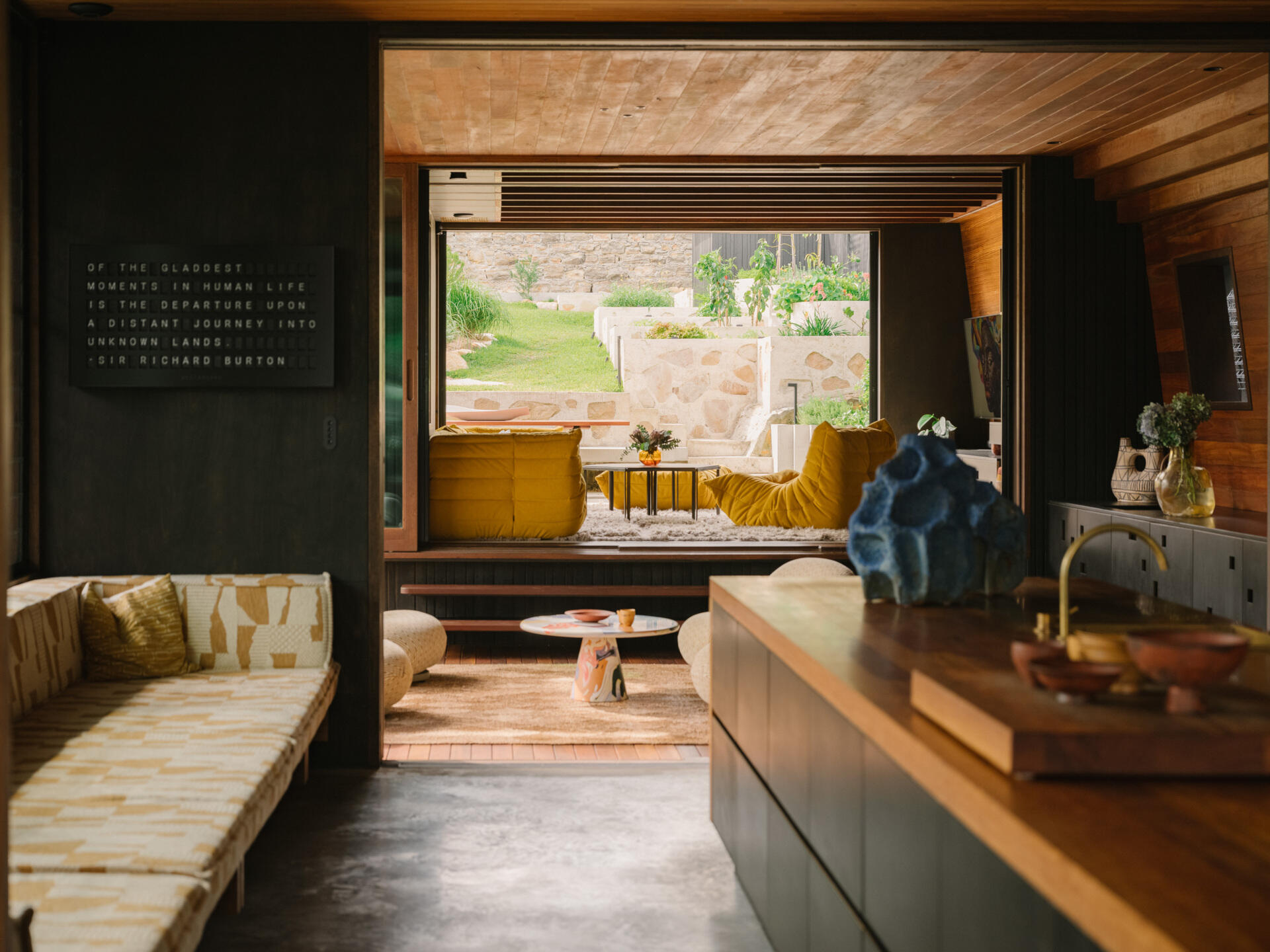
A long daybed sits within the kitchen area, offering a quiet spot to pause. It frames views of the pool and back yard, letting anyone resting there feel connected to the flow of the home. Soft light filtered through the plant canopy and stained glass creates a calm, sun-dappled space perfect for reading, lounging, or simply watching life move around the pool.
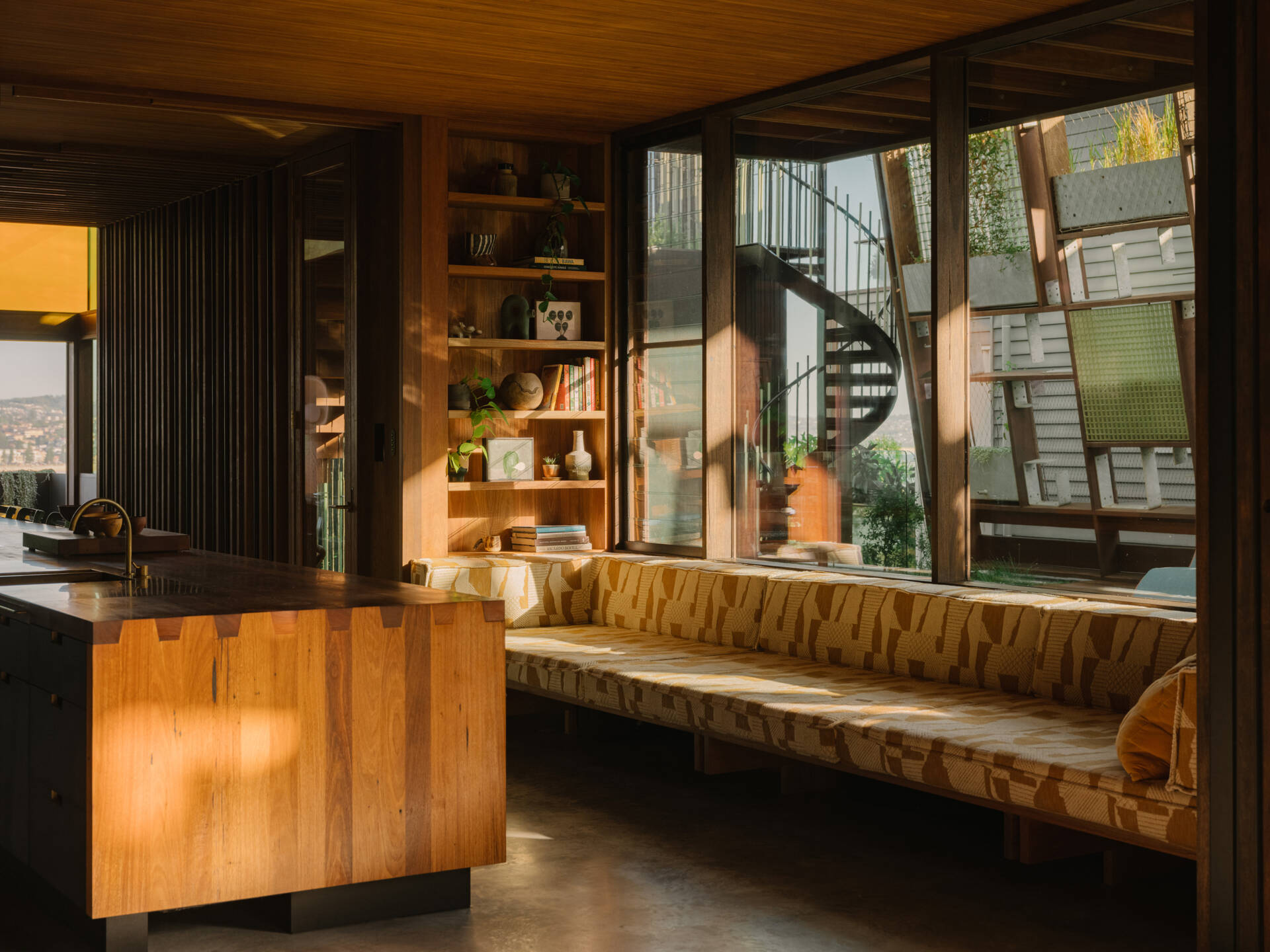
A long daybed sits within the kitchen area, offering a quiet spot to pause. It frames views of the pool and back yard, letting anyone resting there feel connected to the flow of the home. Soft light filtered through the plant canopy and stained glass creates a calm, sun-dappled space perfect for reading, lounging, or simply watching life move around the pool.
Photo by Renata Dominik
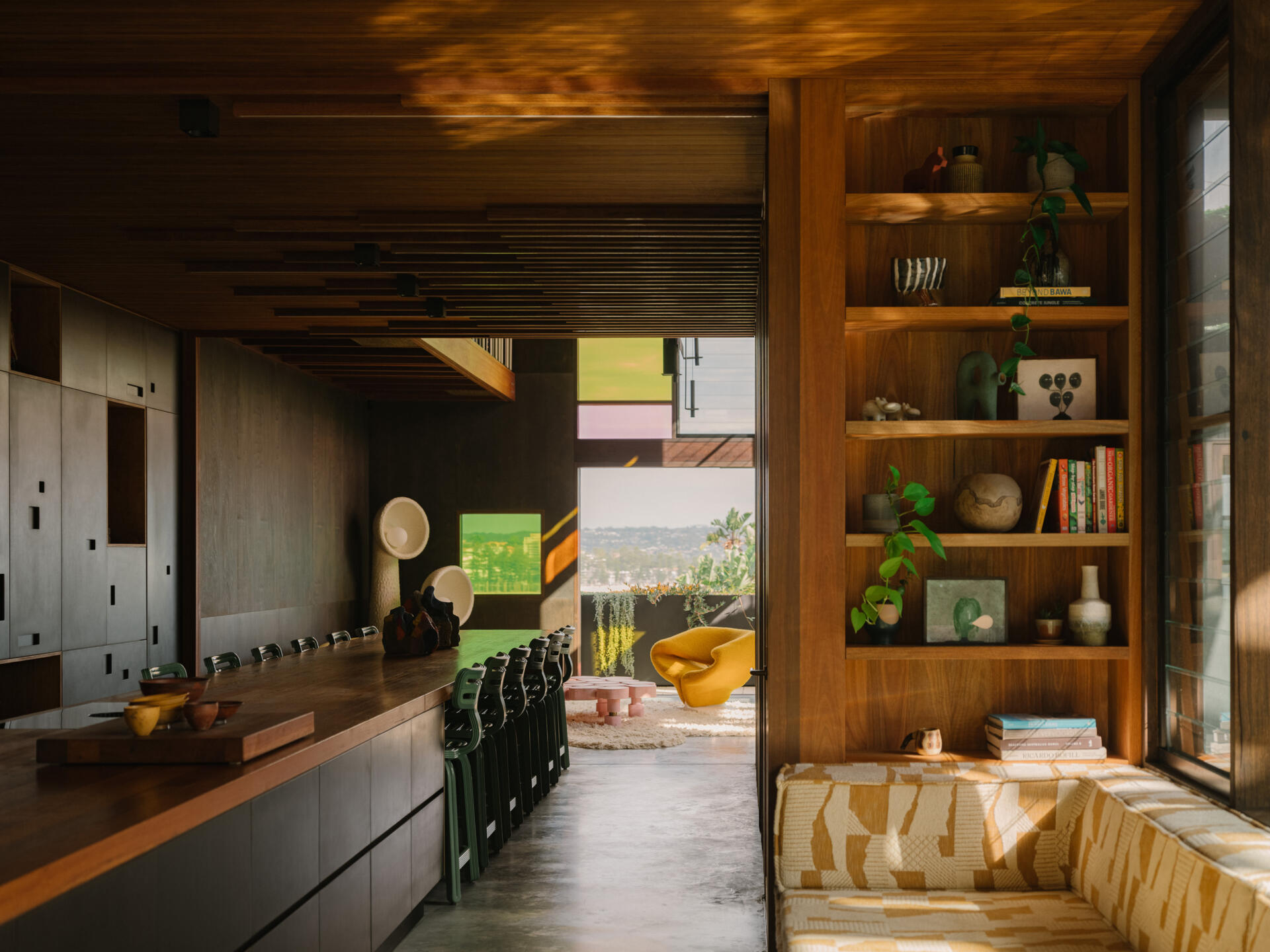
A long daybed sits within the kitchen area, offering a quiet spot to pause. It frames views of the pool and back yard, letting anyone resting there feel connected to the flow of the home. Soft light filtered through the plant canopy and stained glass creates a calm, sun-dappled space perfect for reading, lounging, or simply watching life move around the pool.
Photo by Renata Dominik
A long daybed sits within the kitchen area, offering a quiet spot to pause. It frames views of the pool and back yard, letting anyone resting there feel connected to the flow of the home. Soft light filtered through the plant canopy and stained glass creates a calm, sun-dappled space perfect for reading, lounging, or simply watching life move around the pool.
Photo by Renata Dominik

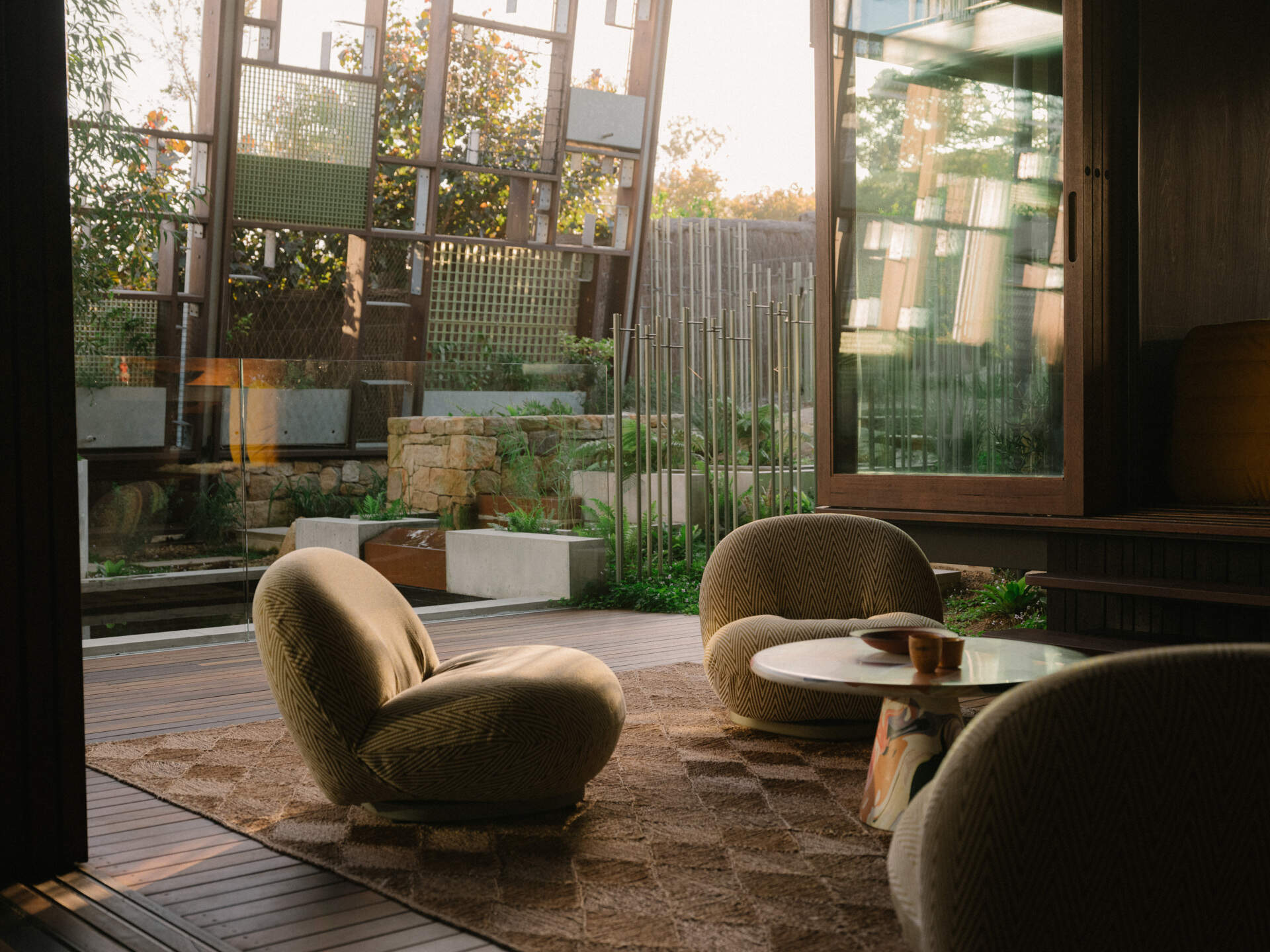
The deck runs beside the pool, forming a flowing outdoor living area. Protected by the plant canopy and open to air, wind and rain, it shifts with the weather.
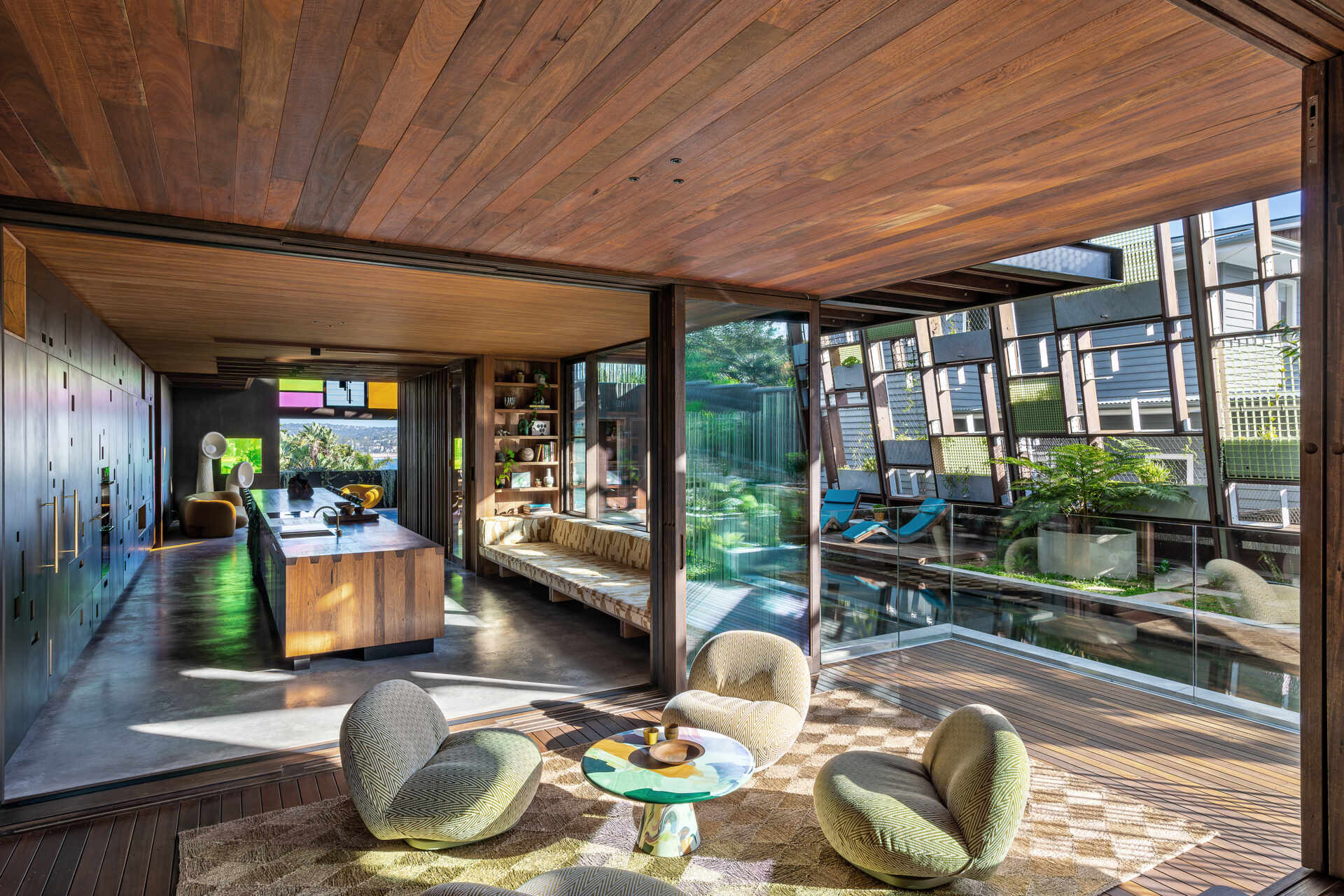
The deck runs beside the pool, forming a flowing outdoor living area. Protected by the plant canopy and open to air, wind and rain, it shifts with the weather.
Photo by Michael Lassman
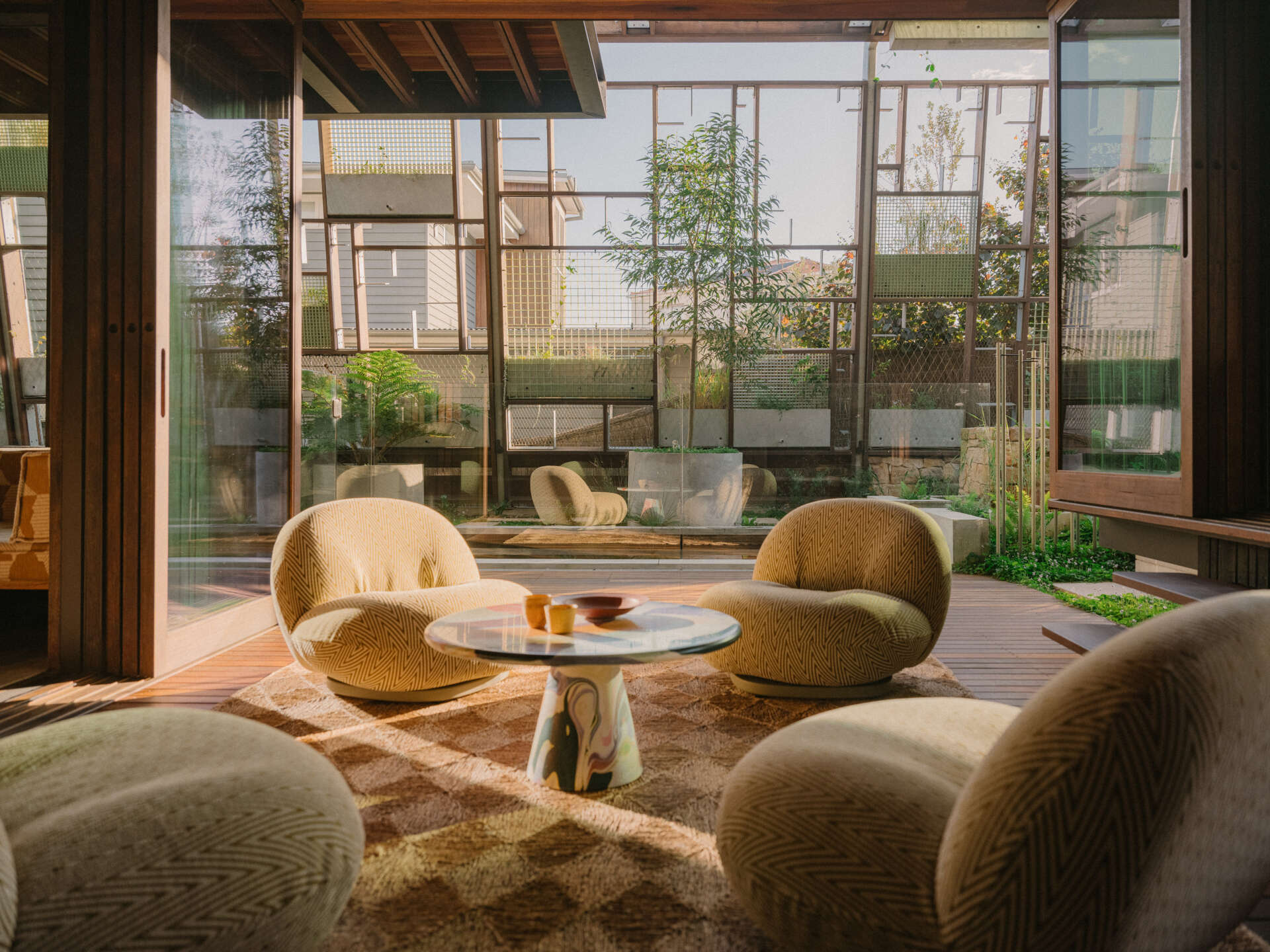
The deck runs beside the pool, forming a flowing outdoor living area. Protected by the plant canopy and open to air, wind and rain, it shifts with the weather.
Photo by Renata Dominik
The deck runs beside the pool, forming a flowing outdoor living area. Protected by the plant canopy and open to air, wind and rain, it shifts with the weather.
Photo by Renata Dominik

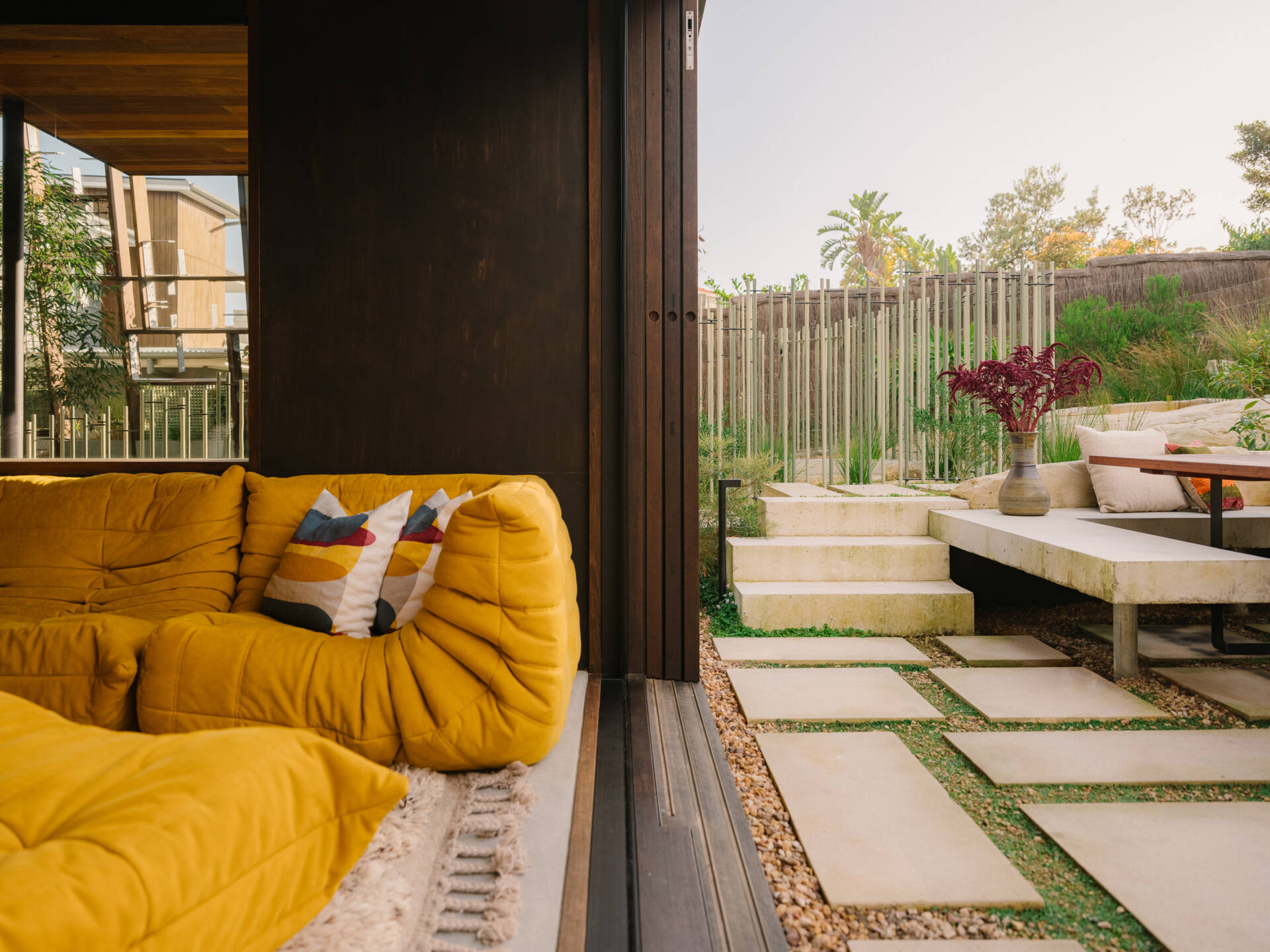
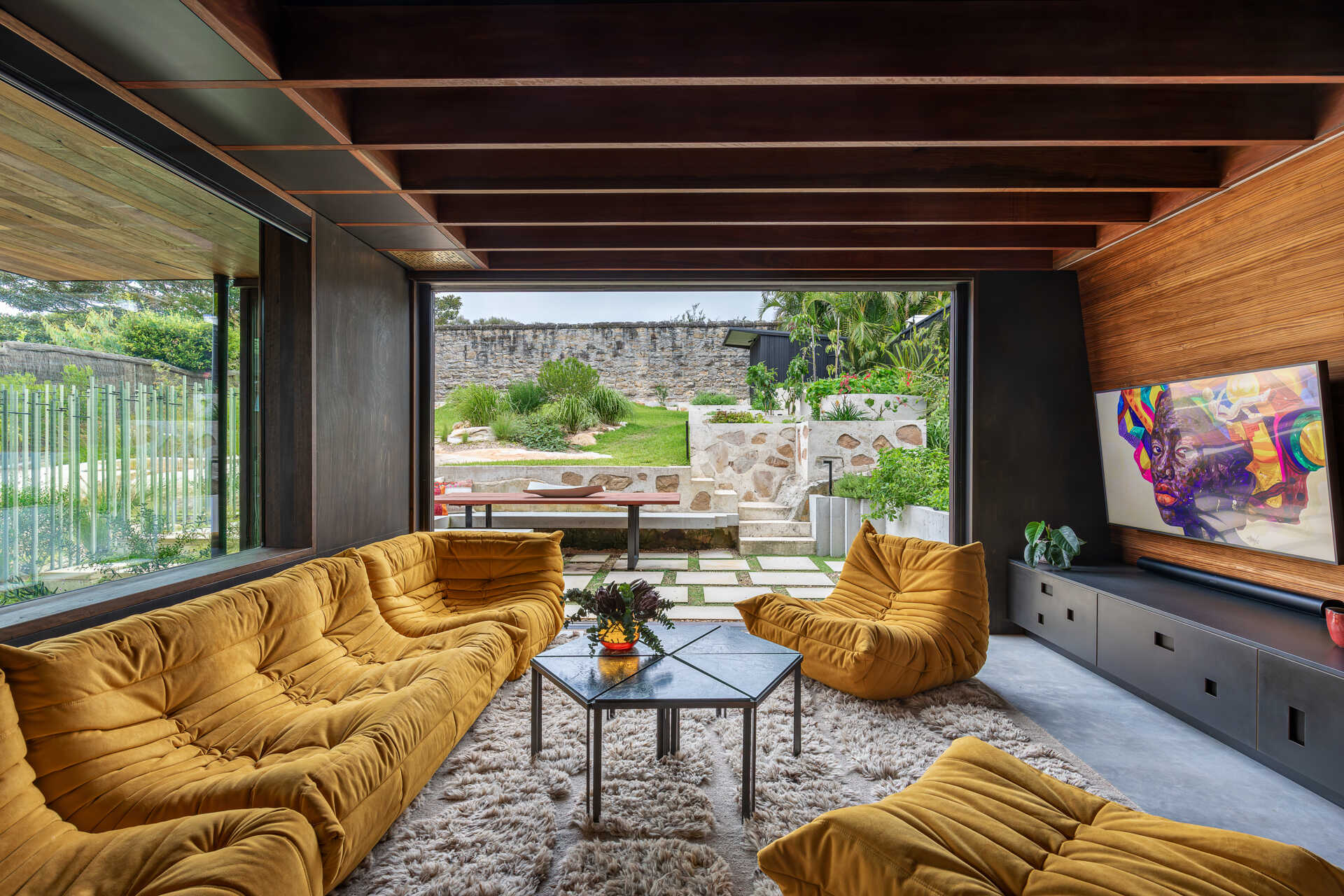
On the other side of the outdoor living room is a generous room designed for relaxing and easy access to the pool and back yard.
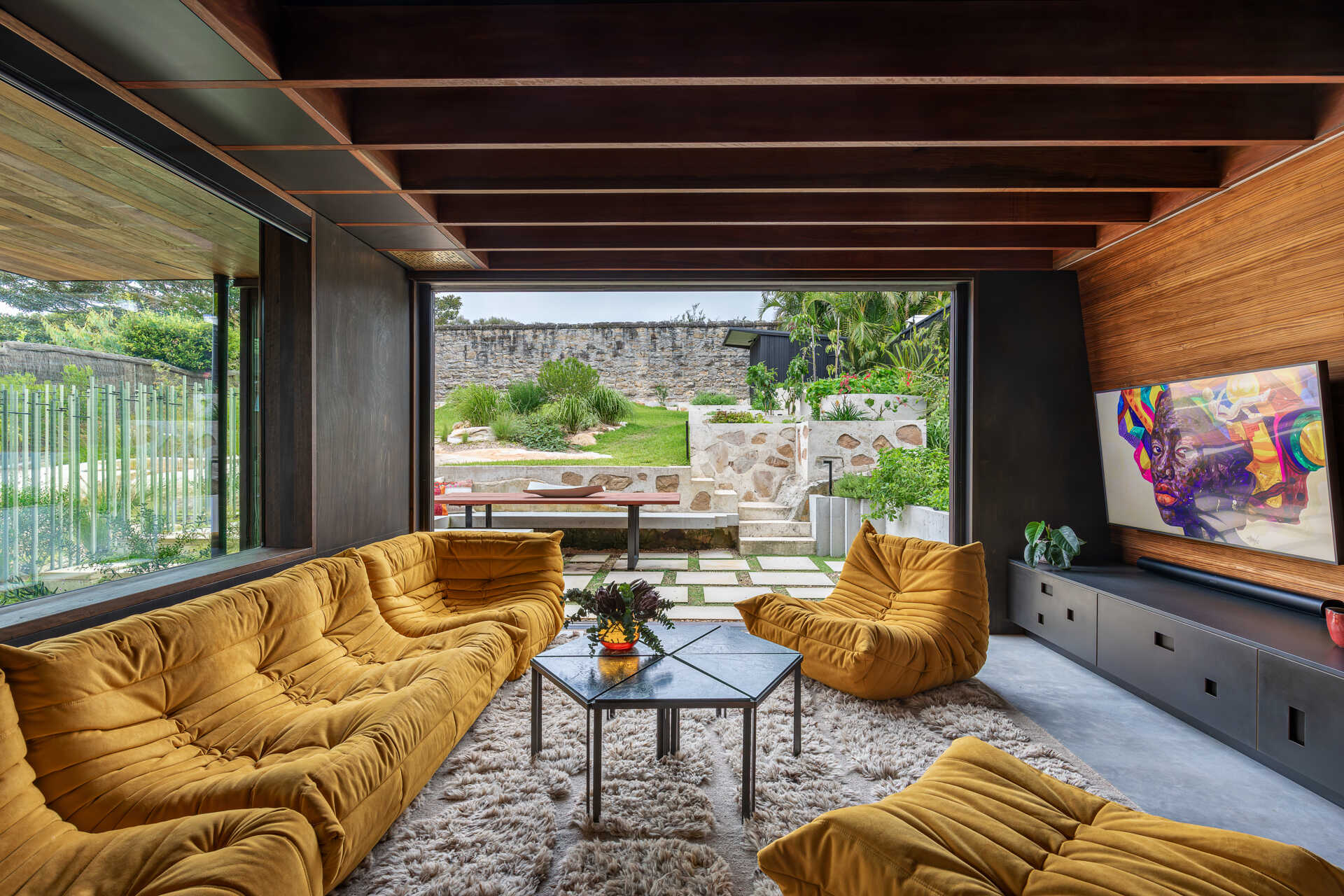
A casual living room with direct access to the garden and outdoor dining area.
Photo by Michael Lassman
A casual living room with direct access to the garden and outdoor dining area.
Photo by Renata Dominik

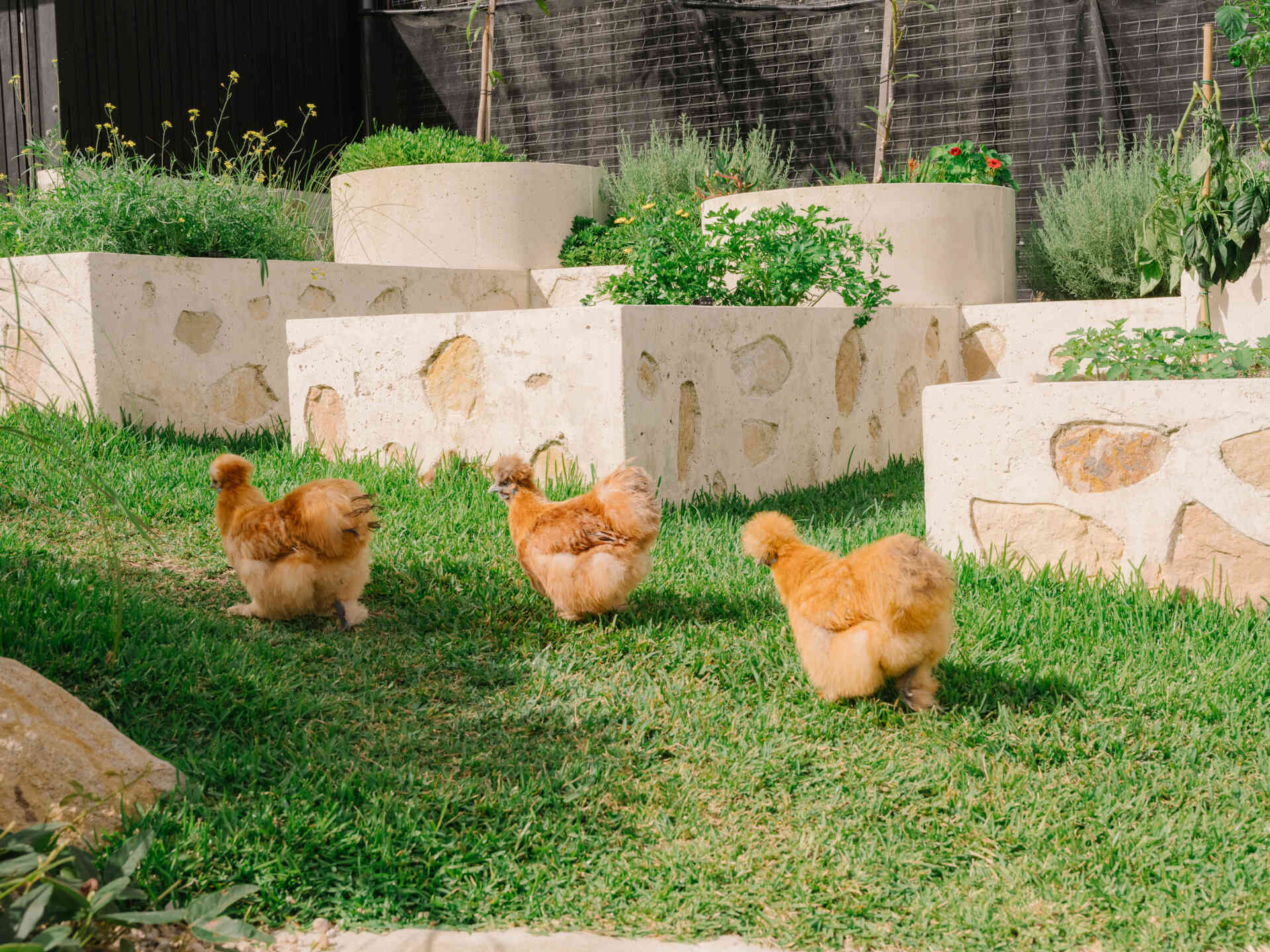
The garden supports self sufficiency with fruit trees, vegetables and herbs, while composting and mulching feed the soil, and food scraps support chickens. Rainwater and grey water systems irrigate the landscape. Outdoor dining areas sit within this productive garden, surrounded by plants selected to strengthen local ecology and support bandicoot habitat.
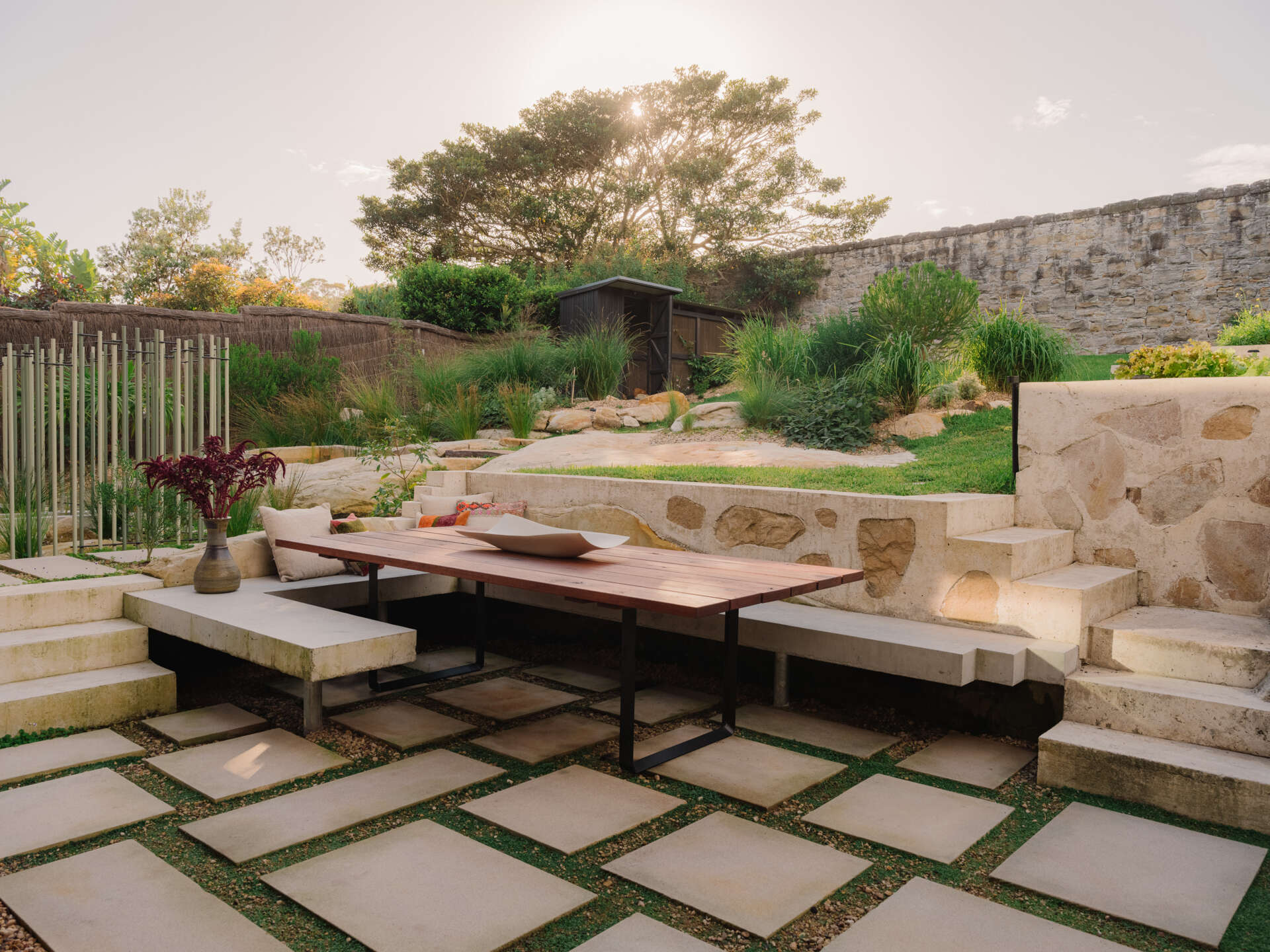
This garden supports self sufficiency with fruit trees, vegetables and herbs, while composting and mulching feed the soil, and food scraps support chickens. Rainwater and grey water systems irrigate the landscape. Outdoor dining areas sit within this productive garden, surrounded by plants selected to strengthen local ecology and support bandicoot habitat.
Photo by Renata Dominik
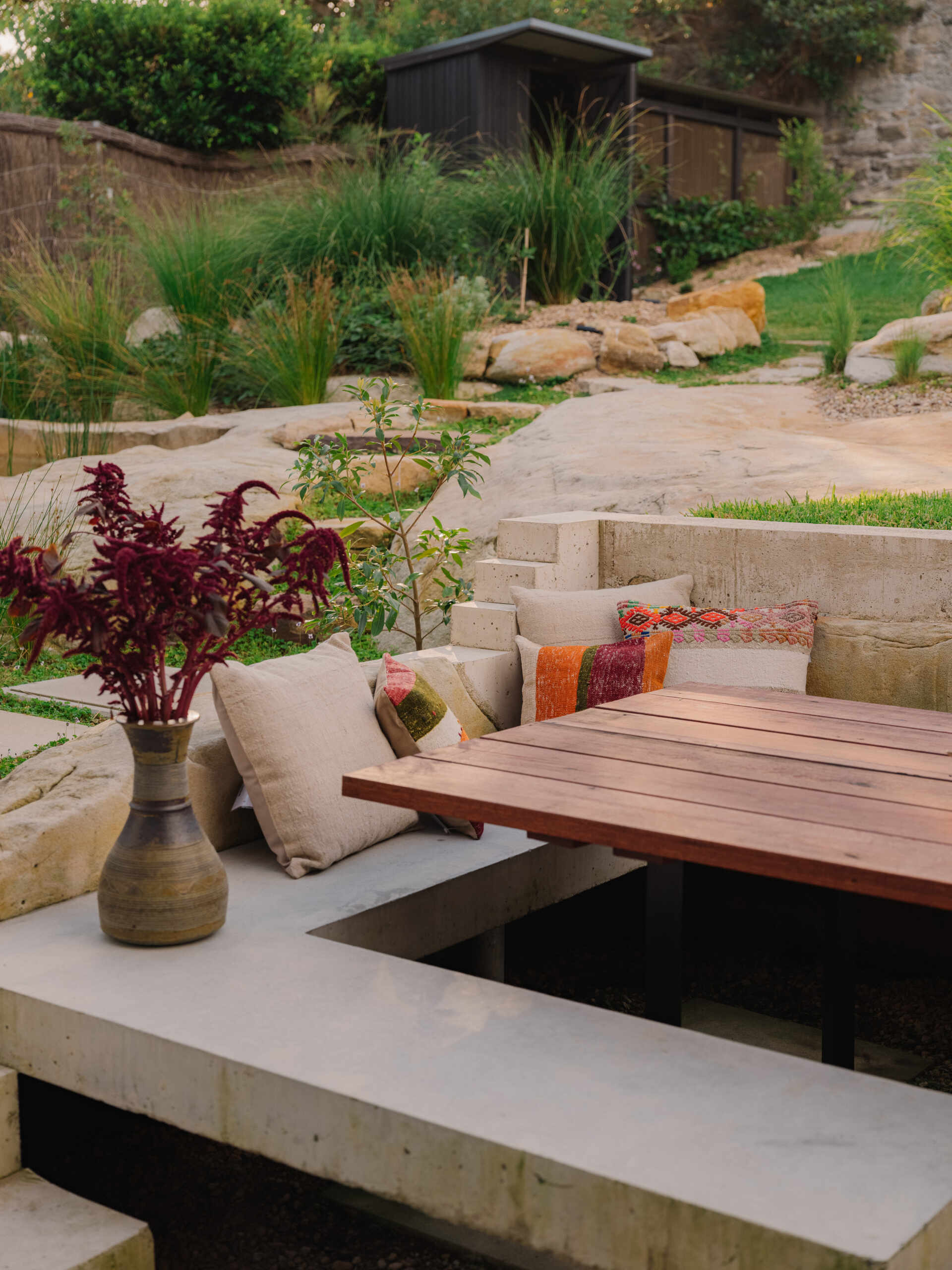
This garden supports self sufficiency with fruit trees, vegetables and herbs, while composting and mulching feed the soil, and food scraps support chickens. Rainwater and grey water systems irrigate the landscape. Outdoor dining areas sit within this productive garden, surrounded by plants selected to strengthen local ecology and support bandicoot habitat.
Photo by Renata Dominik
This garden supports self sufficiency with fruit trees, vegetables and herbs, while composting and mulching feed the soil, and food scraps support chickens. Rainwater and grey water systems irrigate the landscape. Outdoor dining areas sit within this productive garden, surrounded by plants selected to strengthen local ecology and support bandicoot habitat.
Photo by Renata Dominik
This garden supports self sufficiency with fruit trees, vegetables and herbs, while composting and mulching feed the soil, and food scraps support chickens. Rainwater and grey water systems irrigate the landscape. Outdoor dining areas sit within this productive garden, surrounded by plants selected to strengthen local ecology and support bandicoot habitat.
Photo by Renata Dominik

Back inside and upstairs, the library leads to the bedrooms and guest room. Every door opens toward the canopy and deck overlooking the pool. Movement through the upper floor always reconnects residents with the central watercourse.
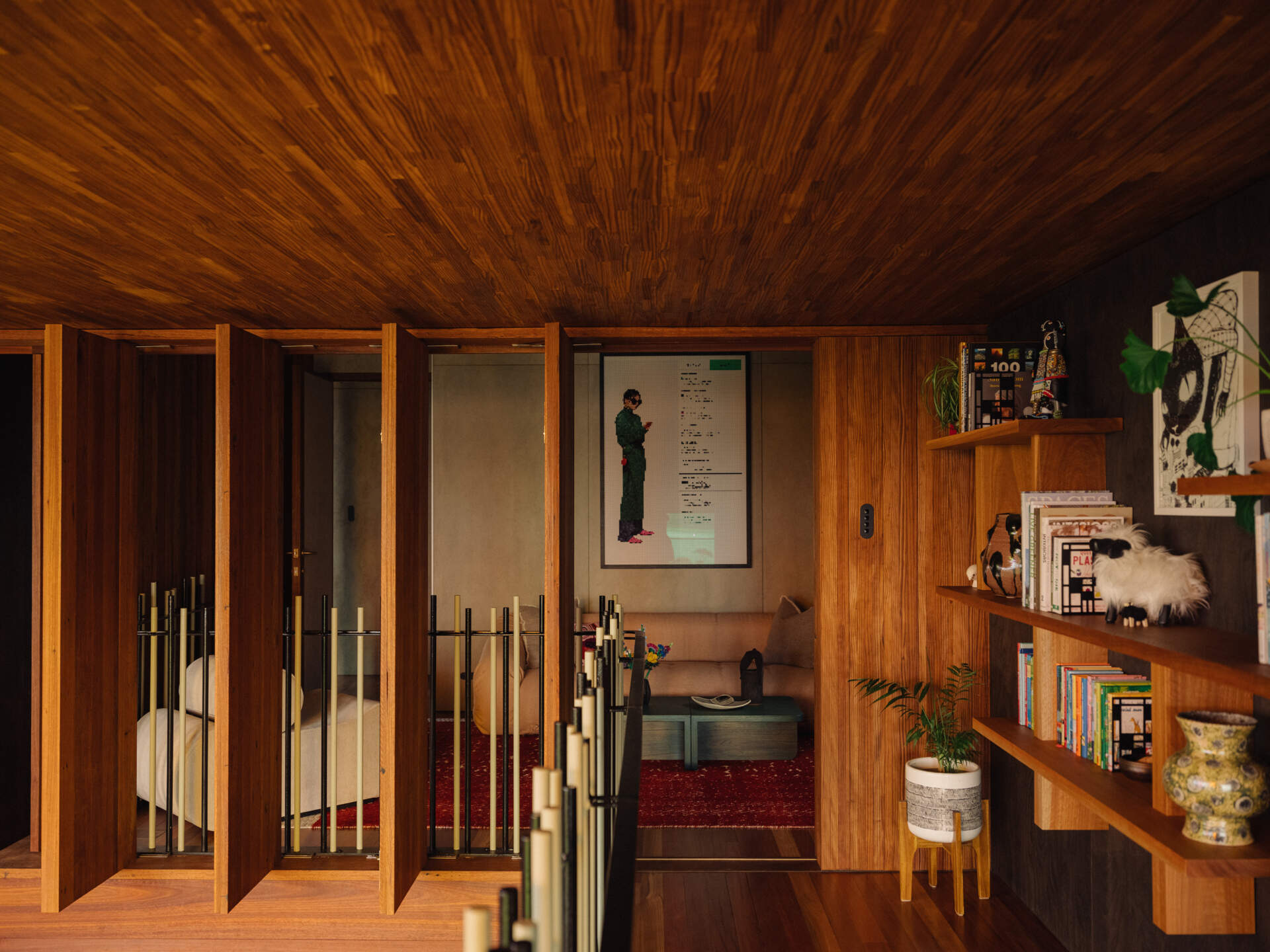
A modern home library provides a place to pause before entering the bedrooms.
Photo by Renata Dominik

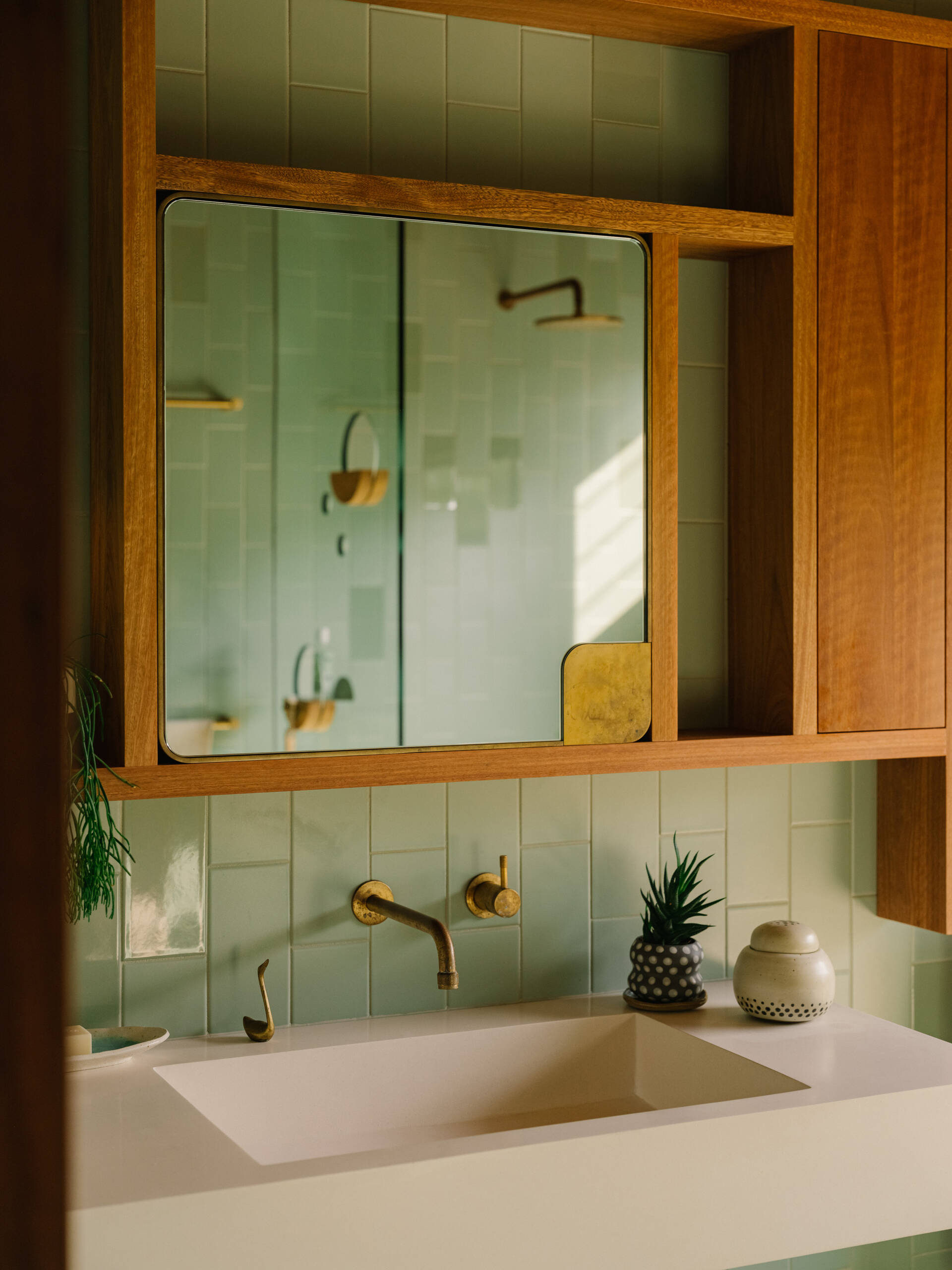
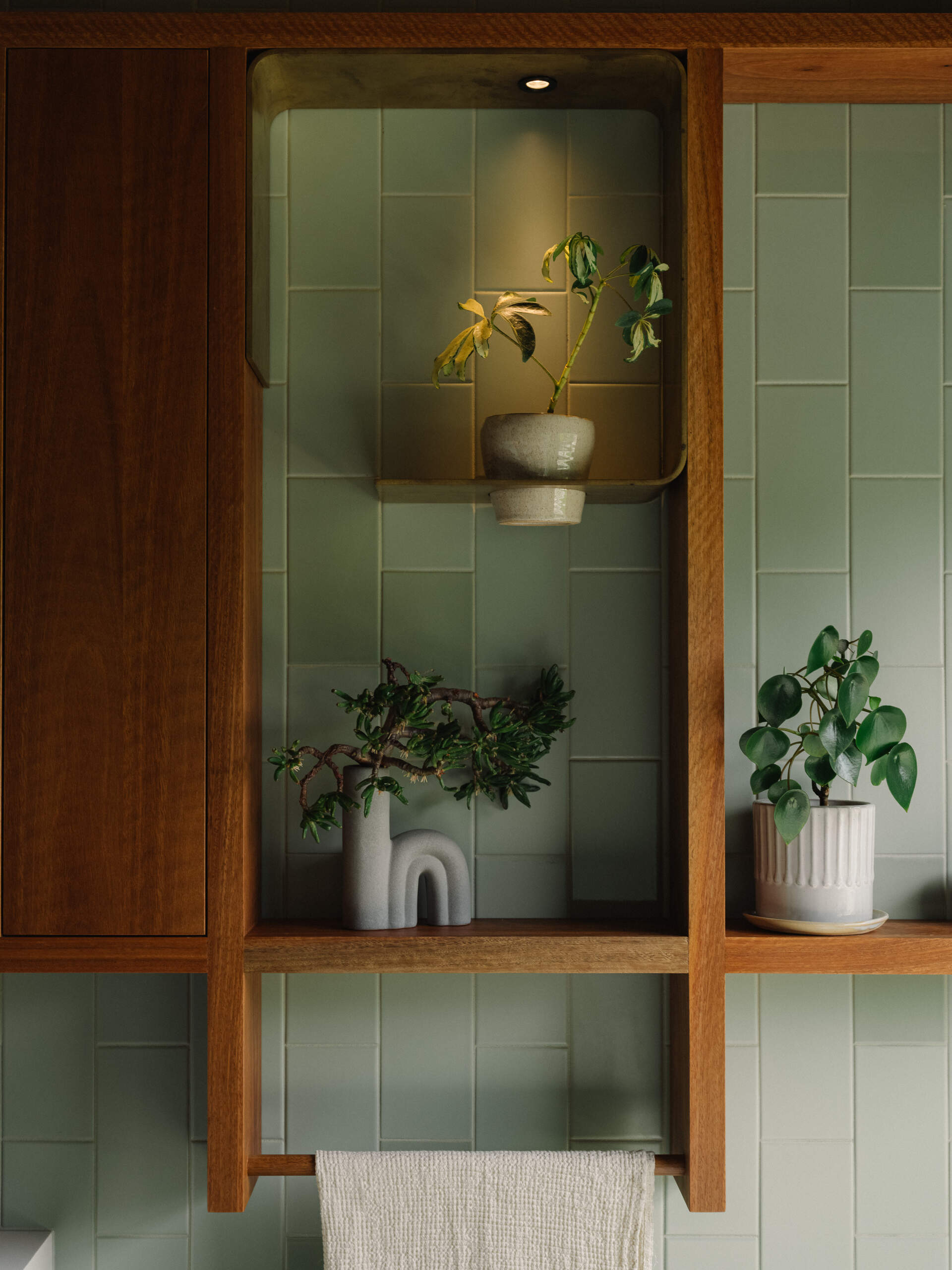
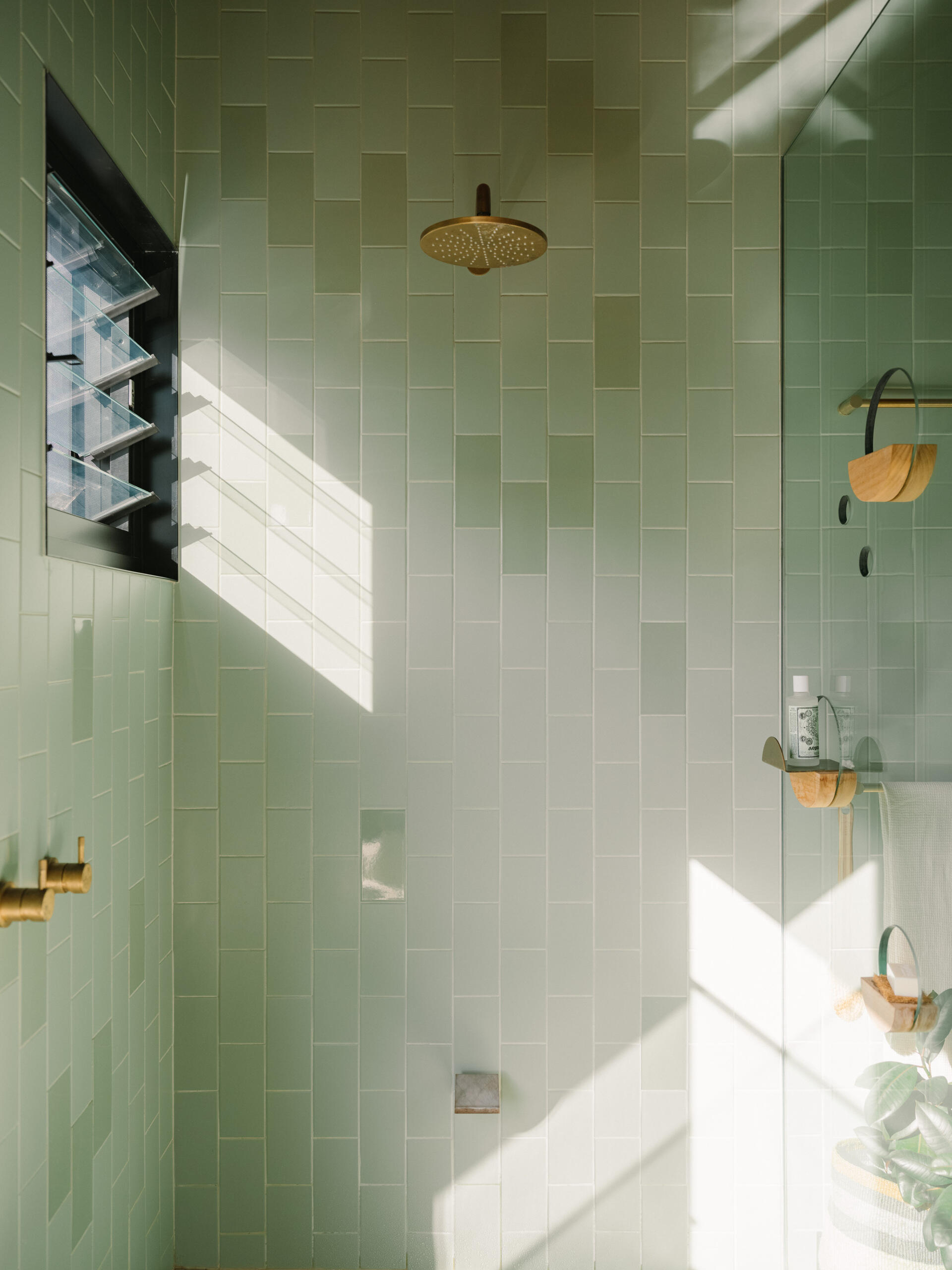
Three ensuite bathrooms serve the bedrooms. Materials are low toxicity throughout, echoing the home’s wider emphasis on breathable, chemical conscious construction.
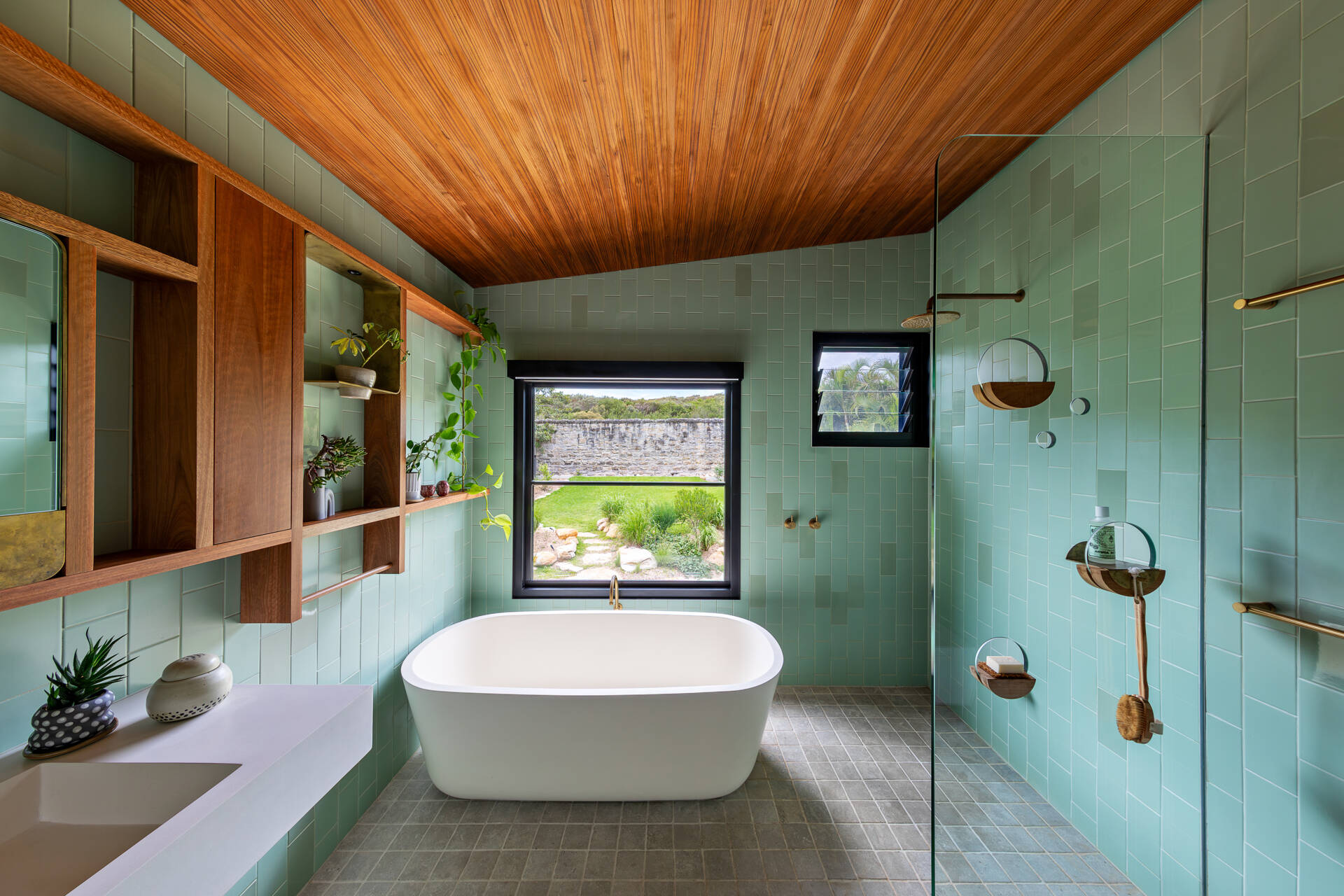
A modern bathroom lined with green-blue and grey tiles, and warm wood accents.
Photo by Michael Lassman
A modern bathroom lined with green-blue and grey tiles, and warm wood accents.
Photo by Renata Dominik
A modern bathroom lined with green-blue and grey tiles, and warm wood accents.
Photo by Renata Dominik
A modern bathroom lined with green-blue and grey tiles, and warm wood accents.
Photo by Renata Dominik

Take a tour through Holocene House to see how the pool, canopy, and living spaces flow seamlessly together.

Cinematography by Alexander Lee

Holocene House looks to the Holocene era for inspiration: a time when humans lived in closer balance with the planet. Instead of bigger and more, it asks what architecture can become when nature shapes every decision. With water running through its centre, gardens producing food and a structure that breathes, it sets a new intention for family living on a fragile planet.


Architecture firm: CplusC Architects + Builders | CplusC Team: Hayden Co’burn (Project Architect), Nathan Krstevski (Foreman), Alex Bonic (Leading Hand), Damien Arnup (Skilled Labour), Tallon Creber (Skilled Labour), Loretta Law (Project Manager), Clinton Cole (Architect + Builder) | Landscape Architect: Duncan Gibbs | Interior Stylist: Jase Sullivan | Structural Engineer: ROR Consulting Engineers | Geotechnical Engineer: Witt Consulting | Plumbing: JH Gordon | Electrical: D2E Hybrid Automation | Landscaping: Land Forms | Doors & Windows: AHJ Architectural Hardwood Joinery | Carpentry: Red Oak Carpentry, North South Carpentry | Painting: Orange Painting | Glazing: Gerrys Glass | Tiling: North Set Tiling | Structural Steel: Tenze Engineering | Roofing: Flash Metal Roofing | Photovoltaics: SolarPro

Source: Contemporist