
Design Skill
Meet the Home That Uses Brickwork as Both Structure and Sculpture
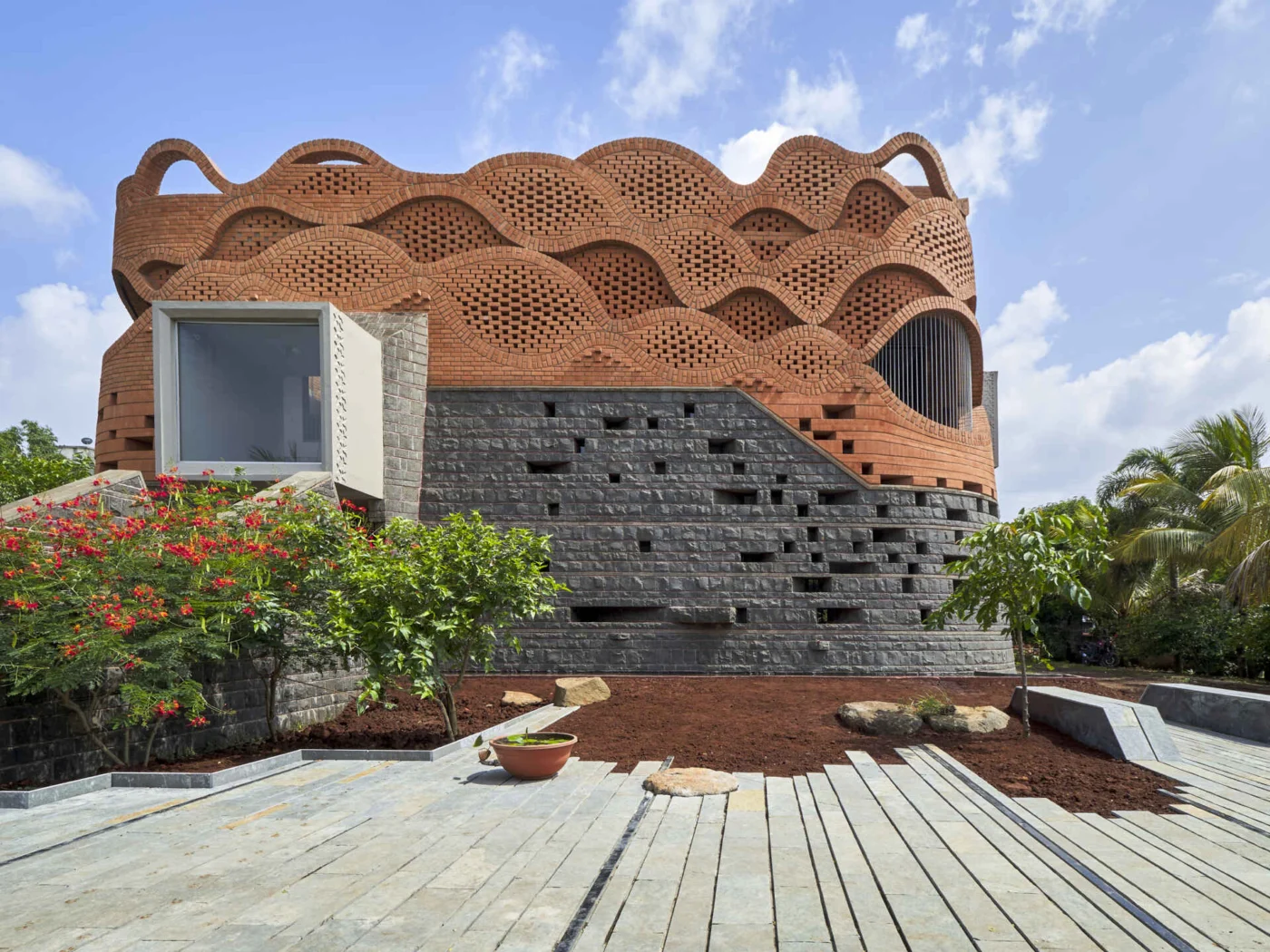
Gadi House in Talegaon Dhabade, India, is a family home by PMA Madhushala built for two brothers who wanted a house that honours their Maratha lineage. Drawing on the fortified Gadi houses of the region, it rises from a 1.2-acre site with thick stone walls, handmade brick bands and a crown of sculpted openings, making brickwork both structure and sculpture.
A modern take on the fortified Gadi
A traditional Gadi is a compact fortress: thick protective walls, inner courts and semi-open spaces that keep a family safe while supporting daily life. The architects kept that inward-looking logic and organised the house with the traditional Khand module.
The modules are laid out in a cruciform plan and climb upward as ascending volumes linked by shifting steps. The corners are left open to the sky, breaking up the mass and letting light and air reach the heart of the house.
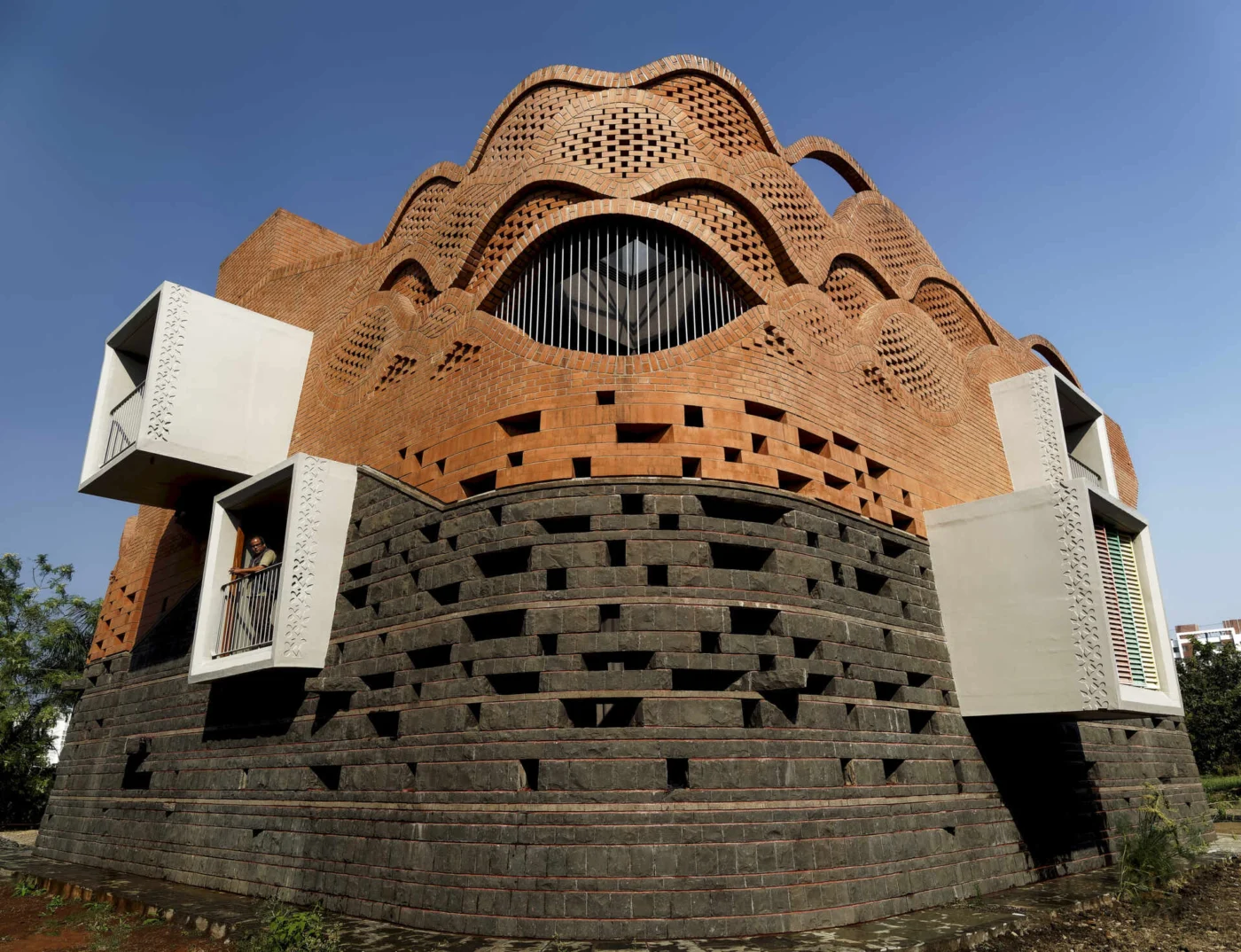
Stone below, brick above
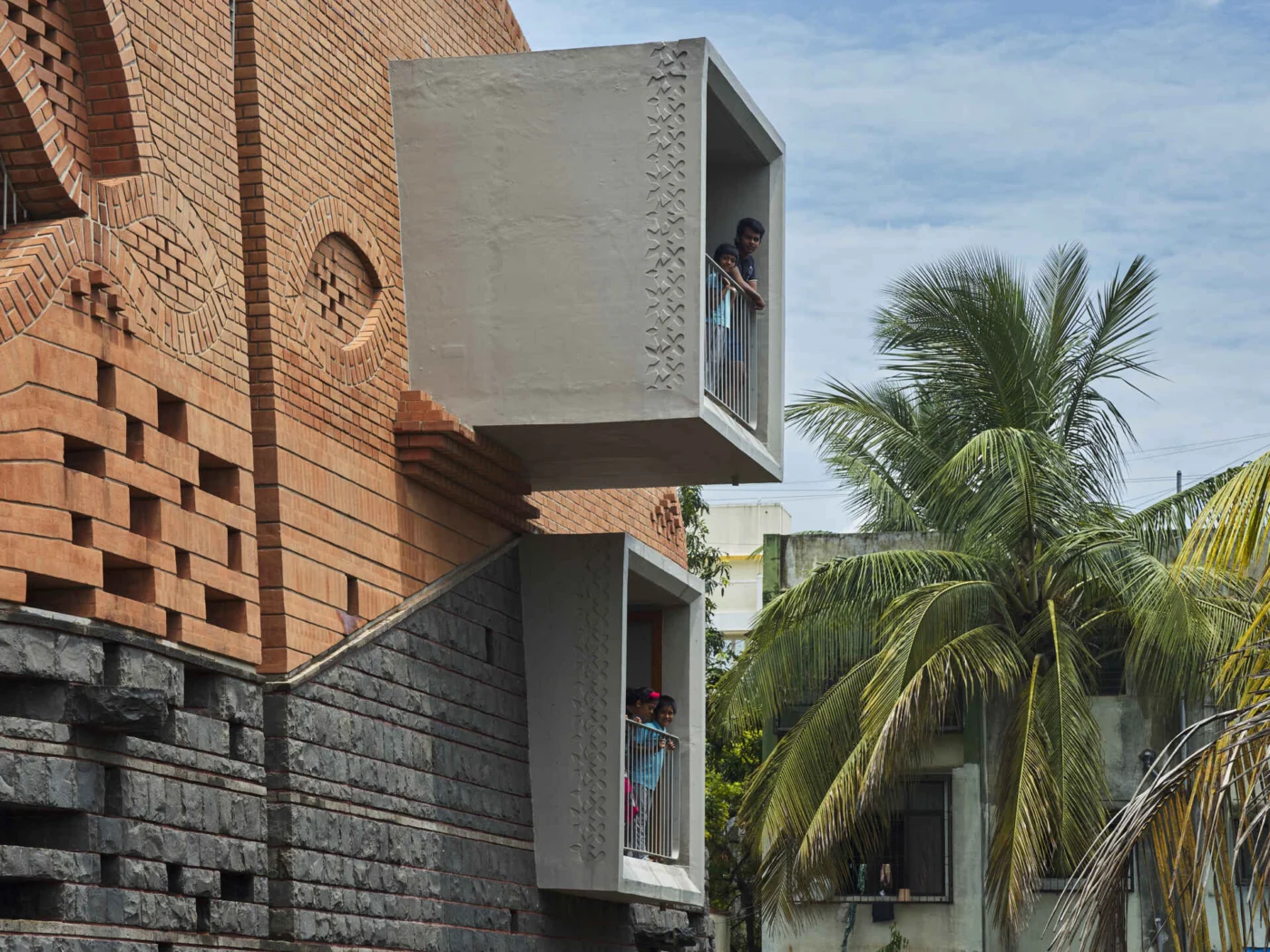
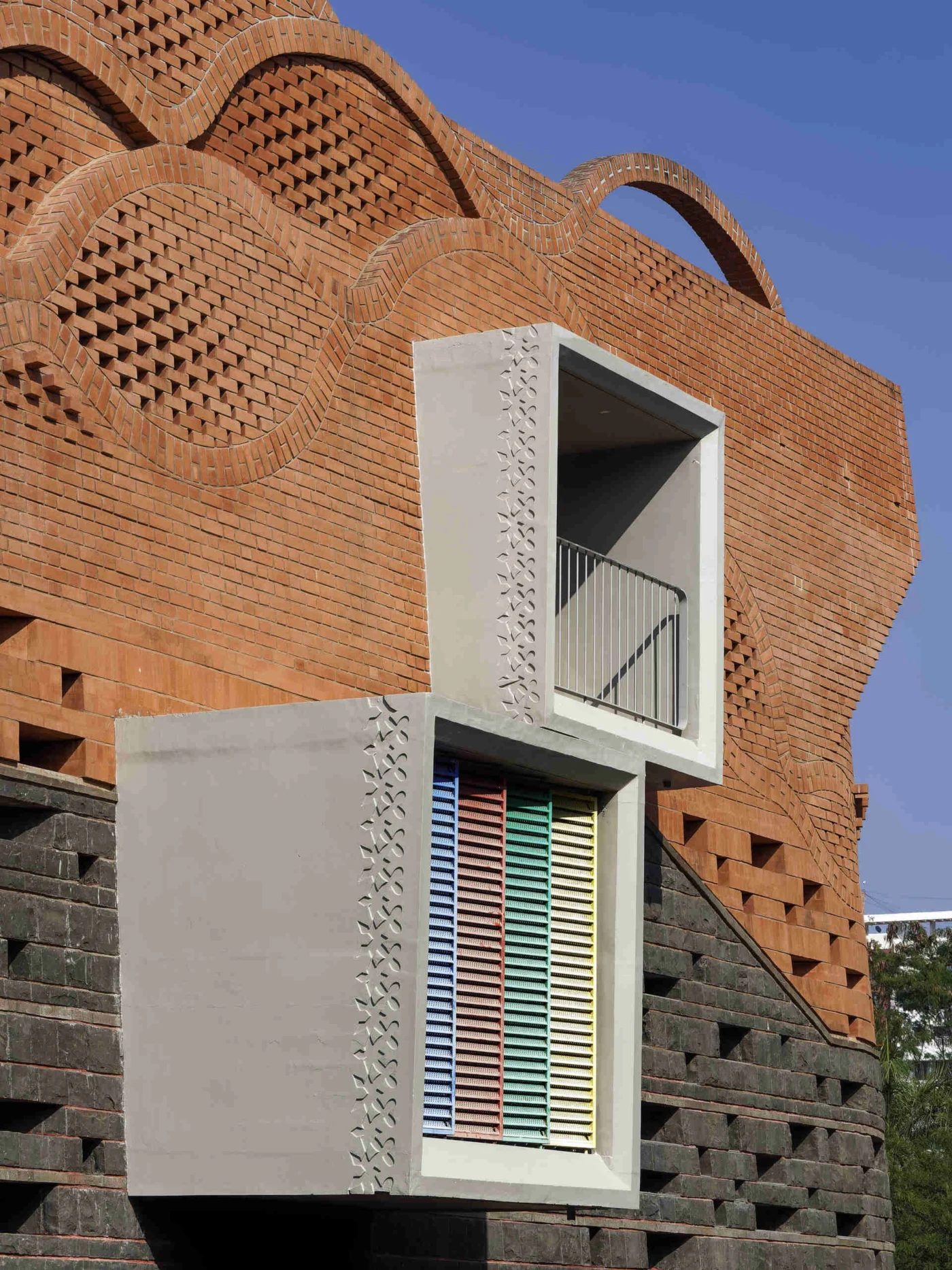
Local stone forms the heavy base, and brick becomes the lighter, more detailed upper body. The outer wall is built in horizontal bands, a method taken from traditional craft and treated with a contemporary eye.
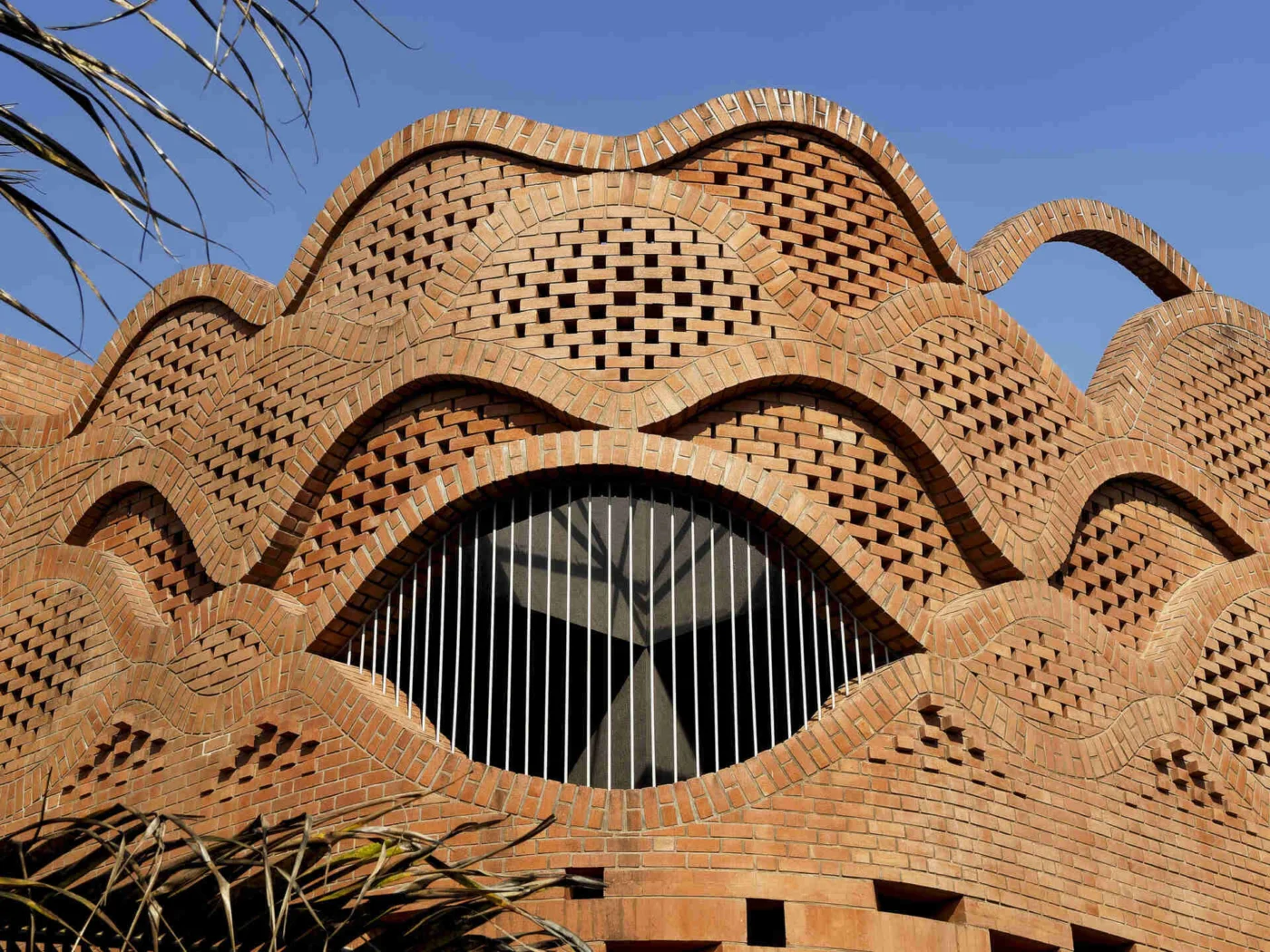
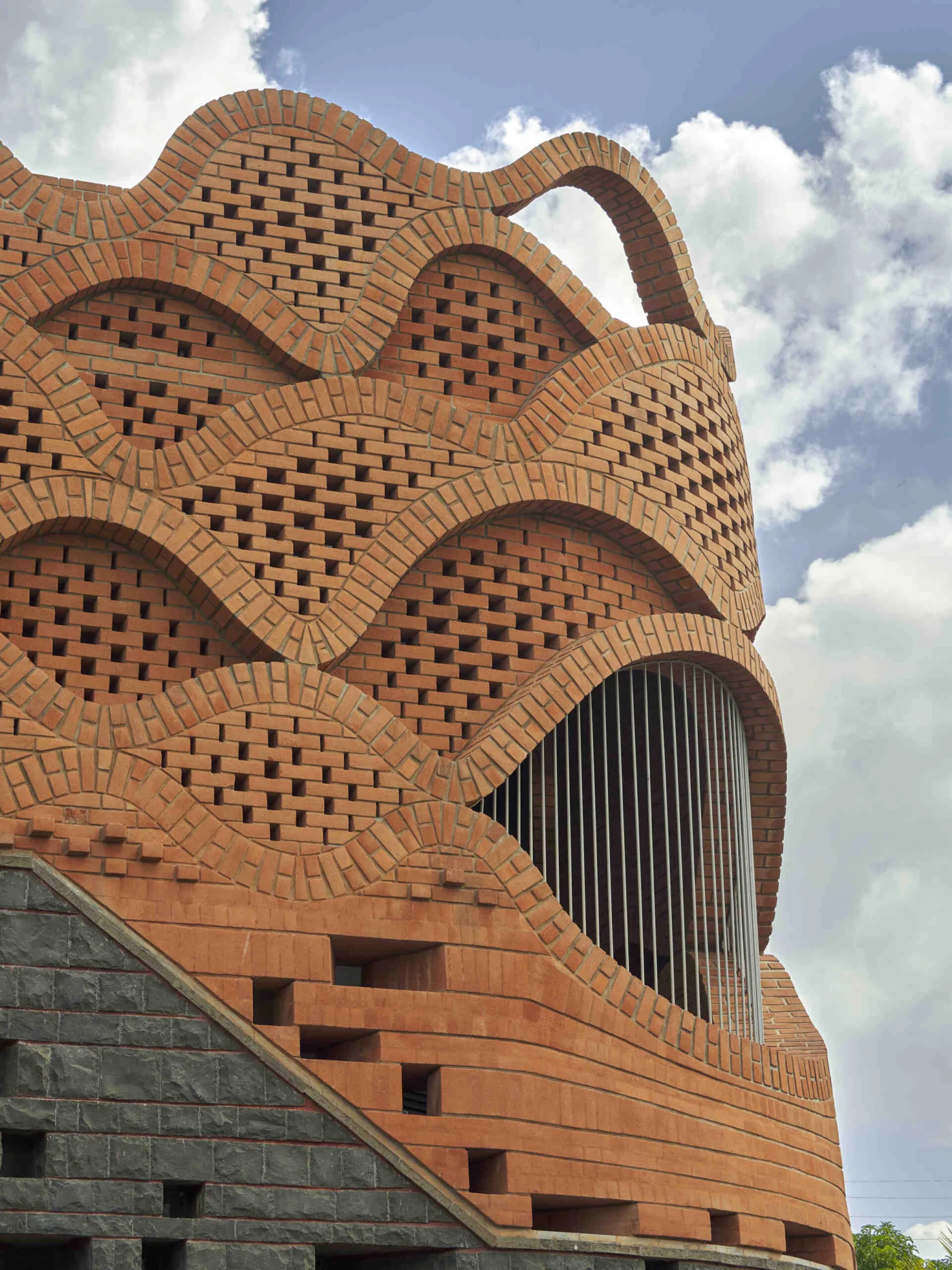
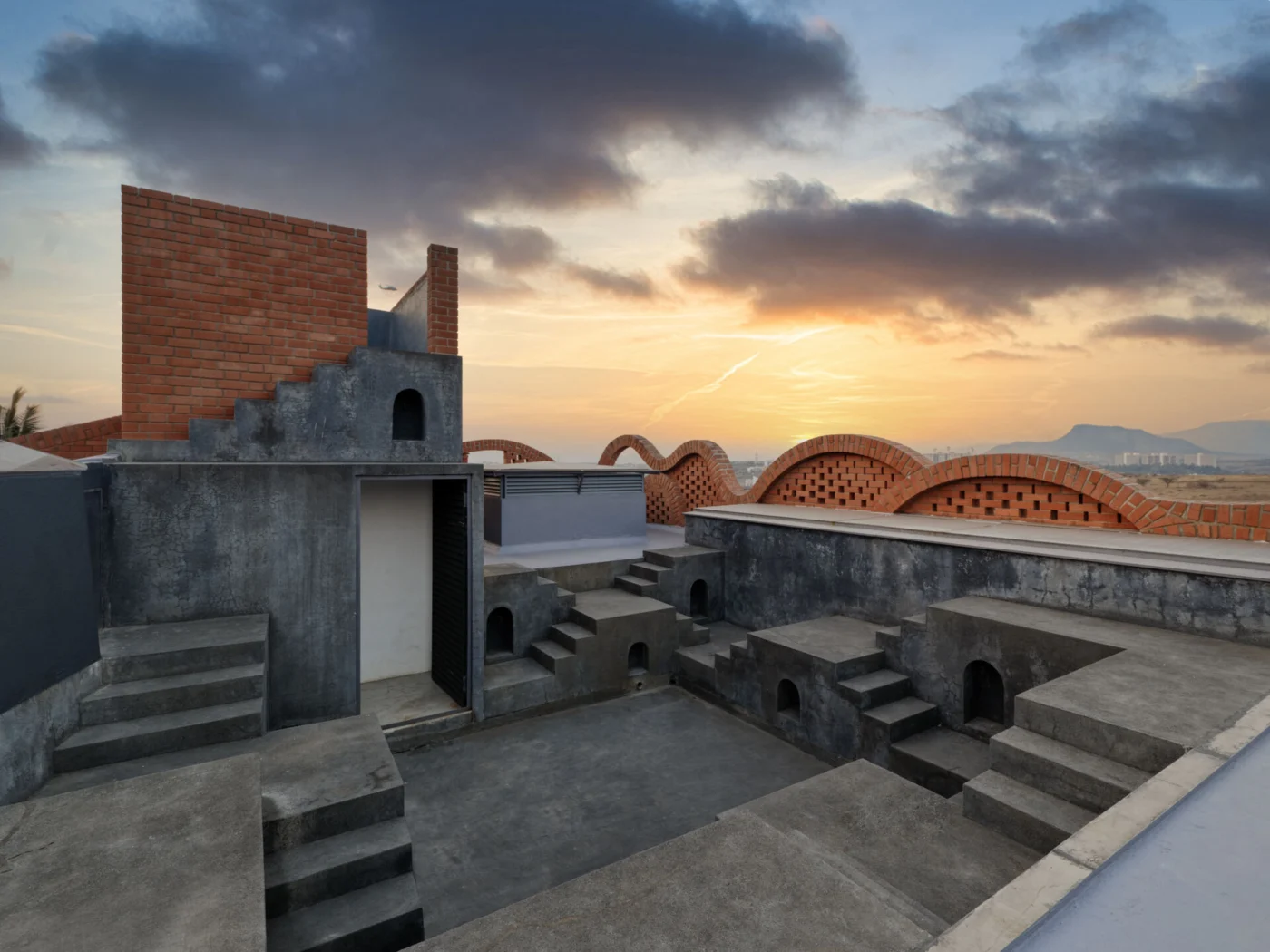
At the top, the house is crowned with curved brick openings arranged in a honeycomb loop. The crown is more than decoration: it shows how brick carries load while giving the building its identity, so the whole envelope reads as a handmade sculpture.
Windows shaped by the brickwork
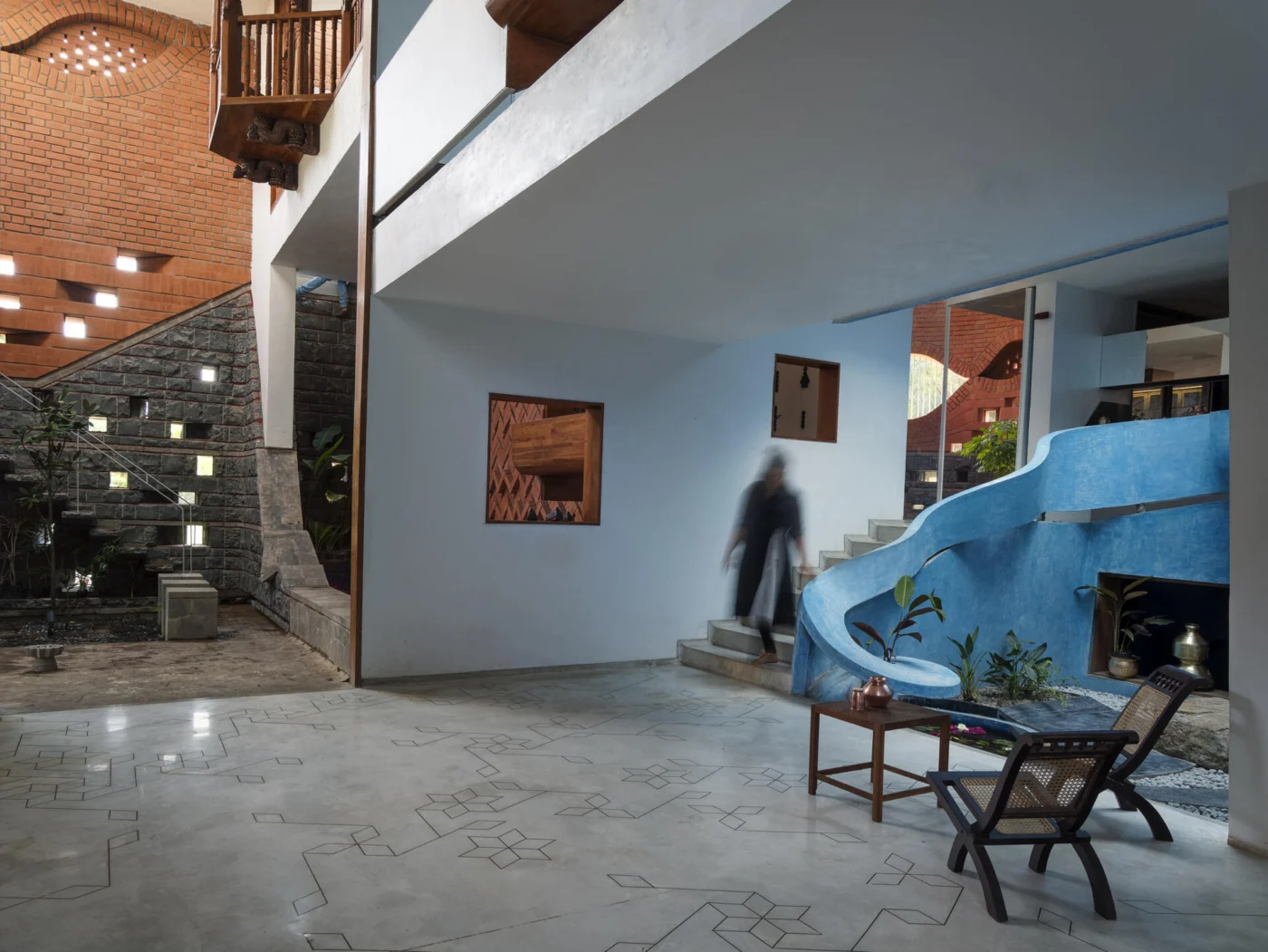
On the stone levels, the openings follow the widths of the traditional bands, giving the base a grounded, fortress-like look. Higher up, the honeycomb geometry lets windows change in size, position and rhythm without losing structural strength, so each room gets the openings it needs while the facade stays coherent. Light passes through the curved patterns in soft, textured beams.
Quiet interiors in lime stucco
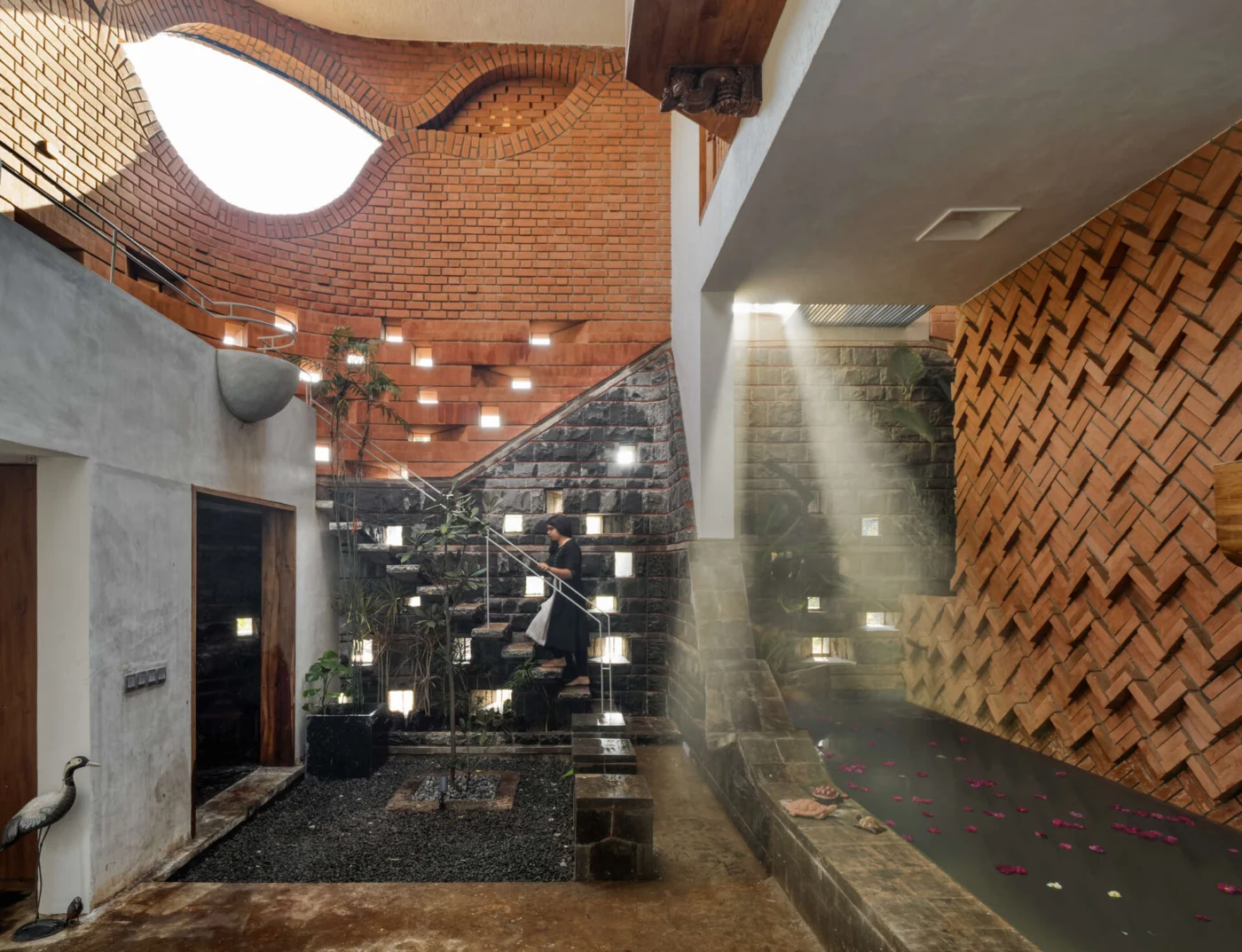
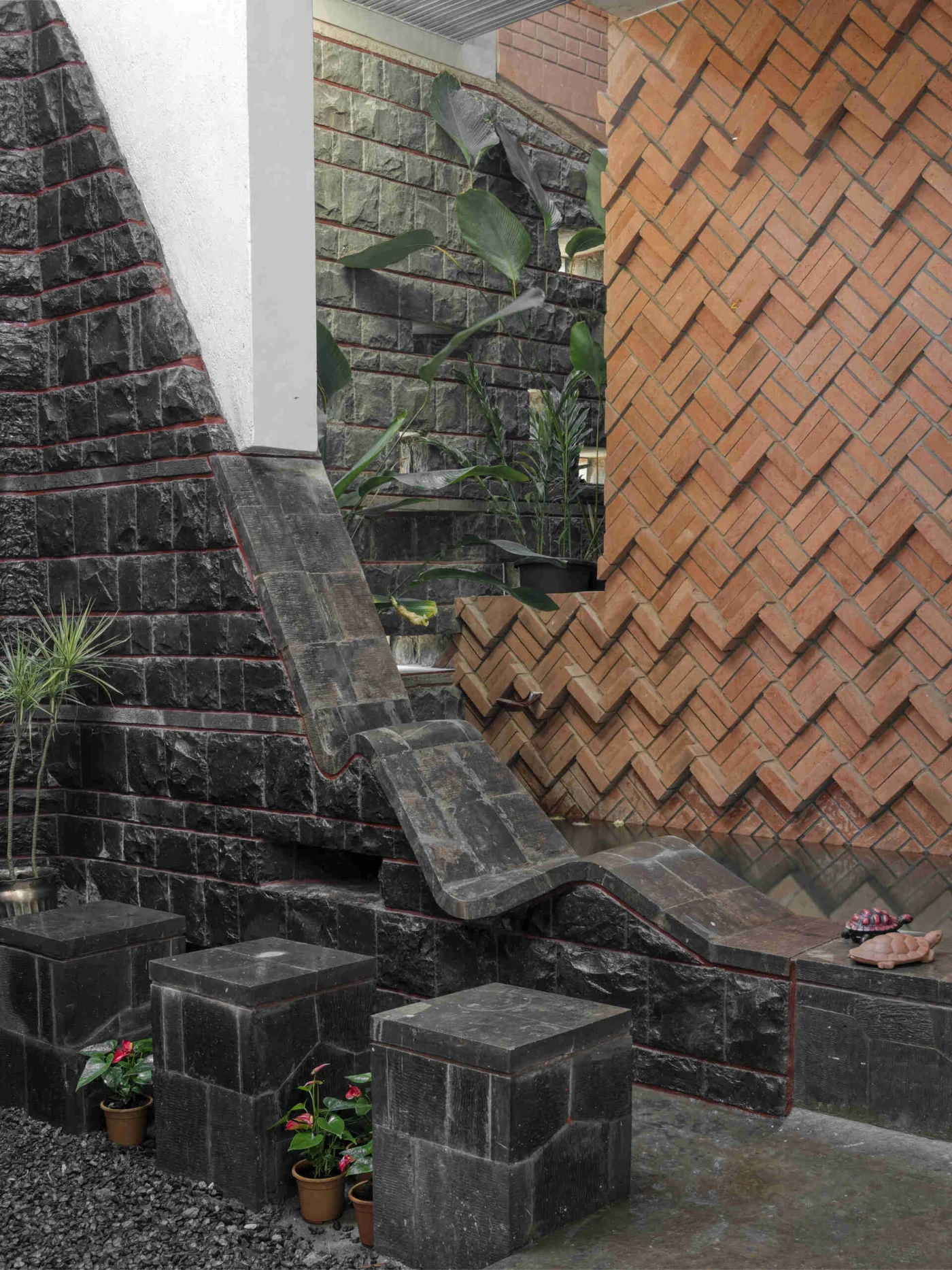
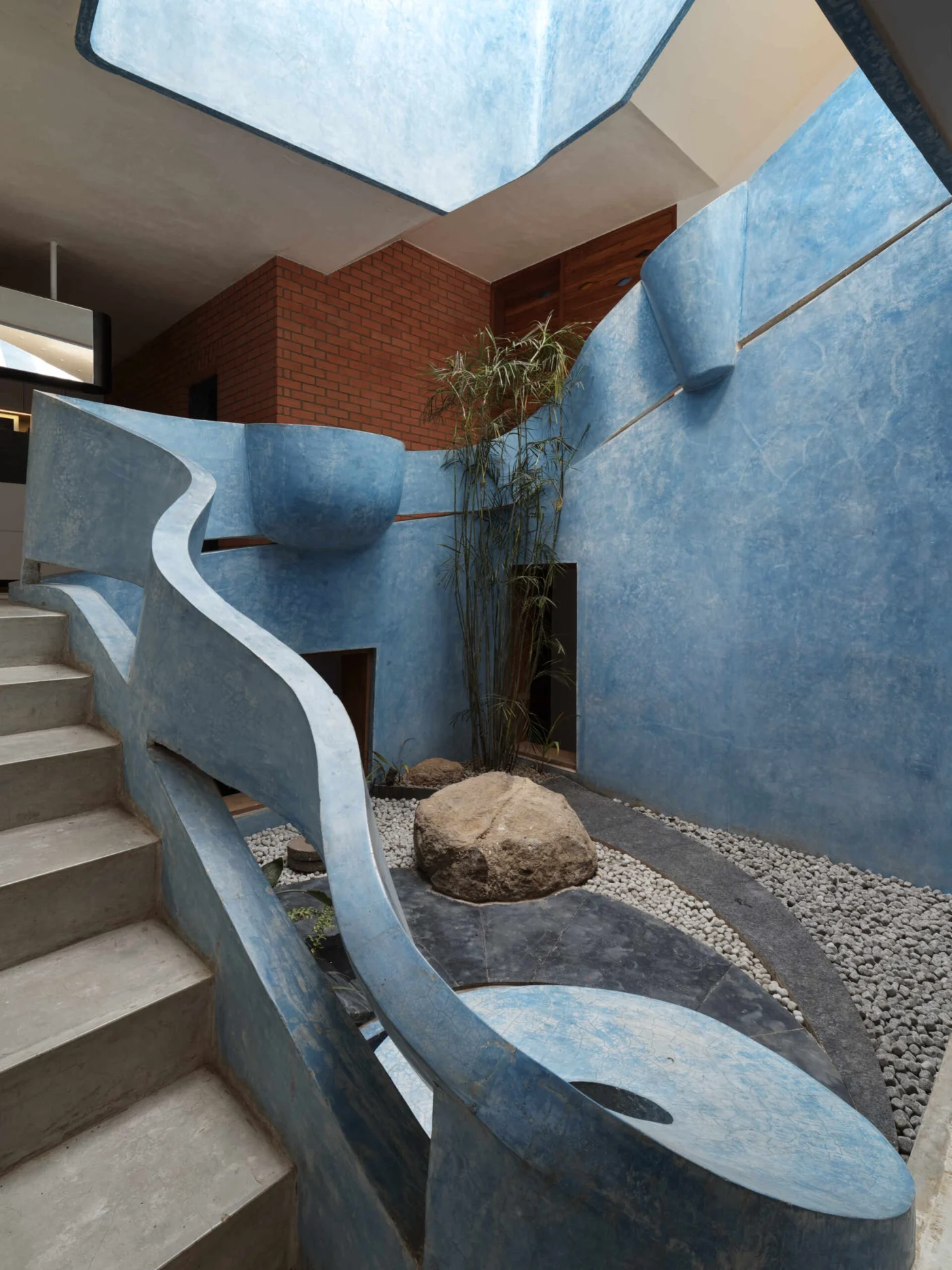
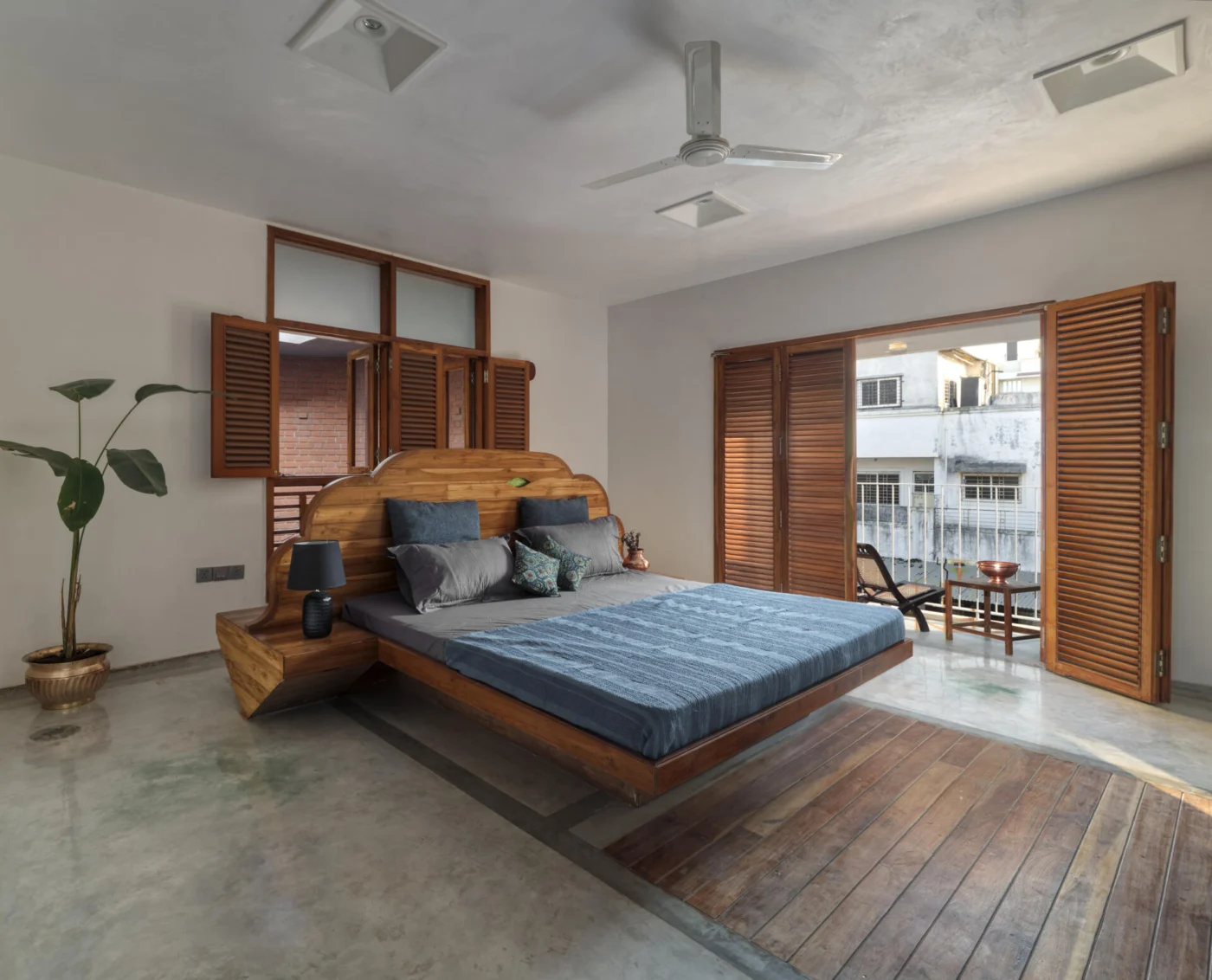
Inside, the mood is calm. Reinforced concrete block construction creates clean, open volumes, and partitions of lightweight wood or stone keep the rooms adaptable. Traditional lime stucco gives the walls a seamless finish, letting the brick exterior take the lead while the interior supports everyday life for several generations.
Light stairs and breathing cutouts
Staircases made with the Ferrogami method, a technique that reduces structural weight, follow the shifting levels of the cruciform plan and lead residents upward through the house.
The honeycomb cutouts are the defining feature. They ventilate the rooms, bring in light and cast moving shadows, showing how a traditional material can meet modern performance needs.
A self-sustaining homestead
Above the brick crown, sloping roofs and a parking shed carry photovoltaic panels that help the house produce its own power. Rainwater harvesting and a sewage treatment system support the kitchen garden, completing the idea of a homestead meant to serve the family for generations.
Project credits
- Project: Gadi House, Talegaon Dhabade, India
- Architect: PMA Madhushala
- Design team: Naresh Shivakoti, Darshan, Divya Jyoti, Prasanna Morey
- Built by: Chetan Khandge
- Structural design: Subduction Zone Consultants
- Stone work: Dnyaneshwar Dhotre and team
- Brick work: Shakeel and team
- IPS flooring: Bhagwandas and team
- Photography: Hemant Patil
- Source: Contemporist